
Charles Edward Stuart, while back in France, …
Years: 1759 - 1759
Charles Edward Stuart, while back in France, had had numerous affairs; the one with his first cousin Marie Louise de La Tour d'Auvergne, wife of Jules, Prince of Guéméné, resulted in a short-lived son Charles (1748–1749).
In 1748 Charles had been expelled from France under the terms of the Treaty of Aix-la-Chapelle, which brought the war between Britain and France to an end.
Charles lives for several years in exile with his Scottish mistress, Clementina Walkinshaw, whom he met, and may have begun a relationship with, during the 1745 rebellion.
In 1753, the couple have a daughter, Charlotte.
Charles's inability to cope with the collapse of the cause leads to his problem with drink, and mother and daughter leave Charles with his father James's connivance.
Charlotte will go on on to have three illegitimate children with Ferdinand, an ecclesiastical member of the Rohan family.
Their only son is Charles Edward Stuart, Count Roehenstart.
Clementina is suspected by many of Charles's supporters of being a spy planted by the Hanoverian government of Great Britain.
After his defeat, Charles had indicated to the remaining supporters of the Jacobite cause in England that, accepting the impossibility of his recovering the English and Scots crowns while he remained a Roman Catholic, he was willing to commit himself to reigning as a Protestant.
Accordingly, he visited London incognito in 1750 and conformed to the Protestant faith by receiving Anglican communion, likely at one of the remaining non-juring chapels.
Bishop Robert Gordon, a staunch Jacobite whose house in Theobald's Row was one of Charles's safe-houses for the visit, is the most likely to have performed the communion, and a chapel in Gray's Inn was suggested as the venue as early as 1788 [Gentleman's Magazine, 1788].
This rebuts David Hume's suggestion that it was a church in the Strand.
Unusually, the news of this conversion was not advertised widely, and Charles had seemingly returned to the Roman Catholic faith by the time of his marriage.
In 1759, at the height of the Seven Years' War, Charles is summoned to a meeting in Paris with the French foreign minister, the Duc De Choiseul.
Charles fails to make a good impression, being argumentative and idealistic in his expectations.
Choiseul is planning a full-scale invasion of England, involving upwards of one hundred thousand men—to which he hopes to add a number of Jacobites led by Charles.
However, he is so little impressed with Charles, he dismisses the prospect of Jacobite assistance.
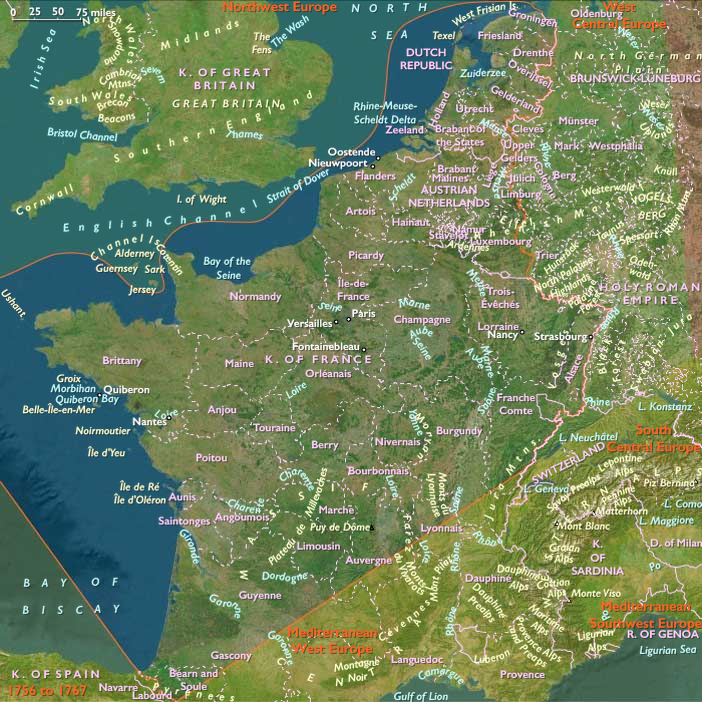
The French invasion, which is Charles's last realistic chance to recover the British throne for the Stuart dynasty, is ultimately thwarted by naval defeats at Quiberon Bay and Lagos.
In 1748 Charles had been expelled from France under the terms of the Treaty of Aix-la-Chapelle, which brought the war between Britain and France to an end.
Charles lives for several years in exile with his Scottish mistress, Clementina Walkinshaw, whom he met, and may have begun a relationship with, during the 1745 rebellion.
In 1753, the couple have a daughter, Charlotte.
Charles's inability to cope with the collapse of the cause leads to his problem with drink, and mother and daughter leave Charles with his father James's connivance.
Charlotte will go on on to have three illegitimate children with Ferdinand, an ecclesiastical member of the Rohan family.
Their only son is Charles Edward Stuart, Count Roehenstart.
Clementina is suspected by many of Charles's supporters of being a spy planted by the Hanoverian government of Great Britain.
After his defeat, Charles had indicated to the remaining supporters of the Jacobite cause in England that, accepting the impossibility of his recovering the English and Scots crowns while he remained a Roman Catholic, he was willing to commit himself to reigning as a Protestant.
Accordingly, he visited London incognito in 1750 and conformed to the Protestant faith by receiving Anglican communion, likely at one of the remaining non-juring chapels.
Bishop Robert Gordon, a staunch Jacobite whose house in Theobald's Row was one of Charles's safe-houses for the visit, is the most likely to have performed the communion, and a chapel in Gray's Inn was suggested as the venue as early as 1788 [Gentleman's Magazine, 1788].
This rebuts David Hume's suggestion that it was a church in the Strand.
Unusually, the news of this conversion was not advertised widely, and Charles had seemingly returned to the Roman Catholic faith by the time of his marriage.
In 1759, at the height of the Seven Years' War, Charles is summoned to a meeting in Paris with the French foreign minister, the Duc De Choiseul.
Charles fails to make a good impression, being argumentative and idealistic in his expectations.
Choiseul is planning a full-scale invasion of England, involving upwards of one hundred thousand men—to which he hopes to add a number of Jacobites led by Charles.
However, he is so little impressed with Charles, he dismisses the prospect of Jacobite assistance.
The French invasion, which is Charles's last realistic chance to recover the British throne for the Stuart dynasty, is ultimately thwarted by naval defeats at Quiberon Bay and Lagos.
Locations
People
- Charles Edward Stuart
- James Francis Edward Stuart
- Étienne-François, comte de Stainville, duc de Choiseul
Groups
- Christians, Roman Catholic
- Anglicans (Episcopal Church of England)
- France, (Bourbon) Kingdom of
- Britain, Kingdom of Great
- Scotland
Topics
Subjects
Regions

Subregions
Related Events
Showing 10 events out of 26500 total
Years: 1759 - 1759
Locations
People
- Charles Edward Stuart
- James Francis Edward Stuart
- Étienne-François, comte de Stainville, duc de Choiseul
Groups
- Christians, Roman Catholic
- Anglicans (Episcopal Church of England)
- France, (Bourbon) Kingdom of
- Britain, Kingdom of Great
- Scotland
Topics
Subjects
Regions
Subregions