
Antonio de Ulloa, appointed by the Spanish…
1766 CE
Ulloa is the first person to write a scientific description of the element platinum, as he had worked in Ecuador from 1736 to 1744, during which time the two Spaniards discovered the metal in the area.
In 1745, having finished their scientific labors, Ulloa and his brother Jorge Juan prepared to return to Spain, agreeing to travel on different ships in order to minimize the danger of losing their important samples and records.
The ship upon which Ulloa was traveling had been captured by the British, and he was taken to England as a prisoner.
In this country, through his scientific attainments, Ulloa had gained the friendship of the men of science, and had been made a Fellow of the Royal Society of London.
In a short time, through the influence of the president of this society, he was released and able to return to Spain.
He had published an account of the people and countries he had encountered during the French Geodesic Mission (1748), which will be translated into English and published as A Voyage to South America (1806).
Ulloa had become prominent as a scientist and has been appointed to serve on various important scientific commissions.
He is credited with the establishment of the first museum of natural history, the first metallurgical laboratory in Spain, and the observatory of Cadiz.
In 1751, de Ulloa was elected a foreign member of the Royal Swedish Academy of Sciences.
In 1758 he returned to South America as governor of Huancavelica in Peru and the general manager of the quicksilver mines there.
He held this position until 1764, after France was defeated by the English in the Seven Years' War, it ceded its territories west of the Mississippi River to Spain.
Groups
Subjects
Regions
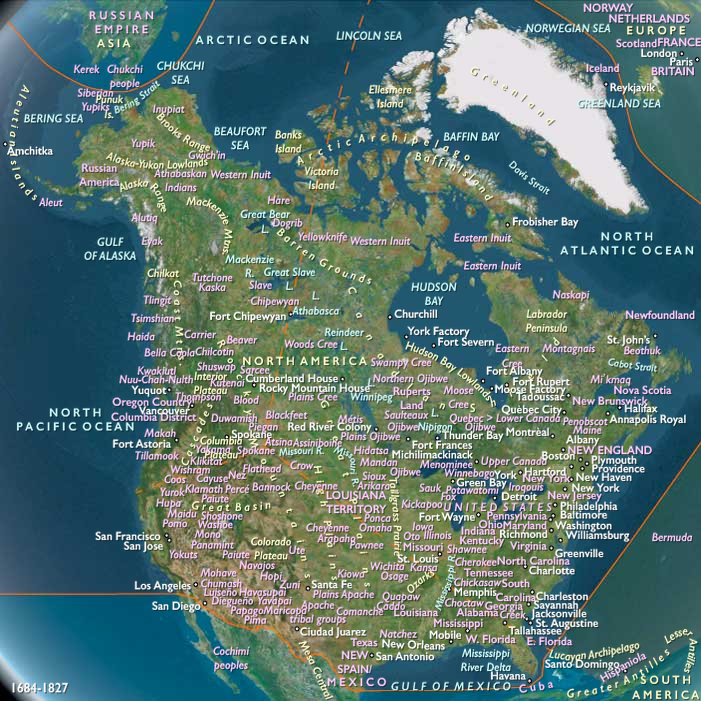
Northern North America
View →Subregions
