
Riverine-adapted people who make and use microblade…
7821 BCE to 7678 BCE
Riverine-adapted people who make and use microblade technology had moved to the northwest coast as the ice sheets began to melt.
Archaeological evidence suggests that the Pacific Northwest was one of the first populated areas in North America.
A second migration of the Denali culture at around circa 10,700 B.P brought peoples down the coast from Alaska.
Others have argued for a coastal migration from Alaska pre-10,000 B.P. that predates the migration of Clovis people moving south through an ice-free corridor located near the continental divide.
These people were followed by the Clovis culture, which some archaeologists believe moved south from Alaska through an ice-free corridor located between modern British Columbia and Alberta.
Recent dating of Clovis and similar Paleo-Indian sites in Alaska suggest that Clovis technology actually moved from the south into Alaska following the melting of the continental glaciers in the mid-eleventh millennium.
Animal and human bones thirteen thousand years old have been found across Washington and evidence of human habitation in the Olympic Peninsula dates back to approximately 9,000 BCE, three thousand to five thousand years after the massive flooding of the Columbia River that carved the Columbia Gorge.
Regions
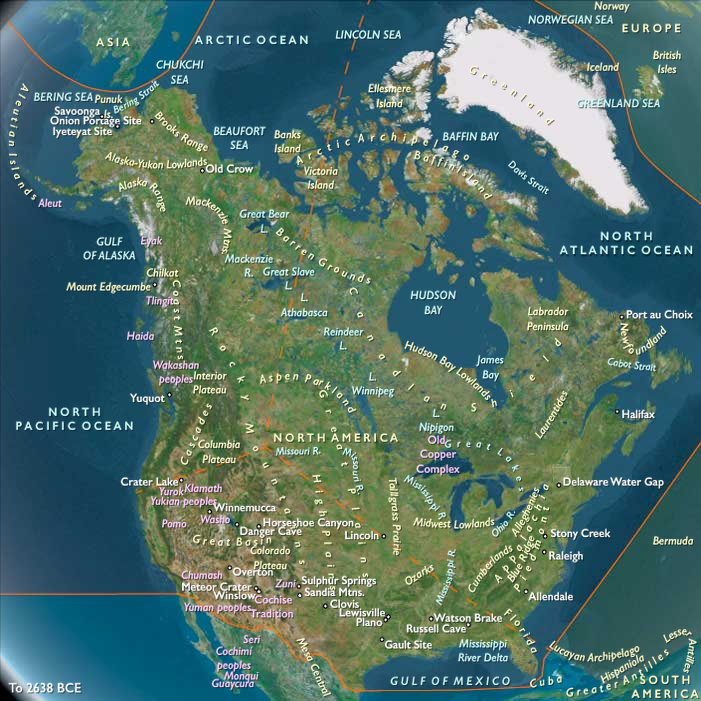
Northern North America
View →Subregions
