
Filters:
Numerous archaeological sites in central Kansas near …
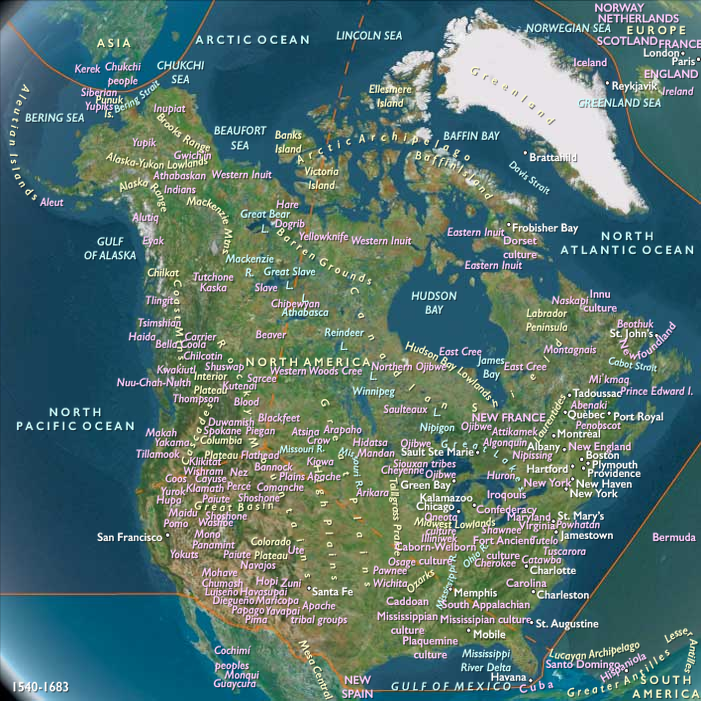
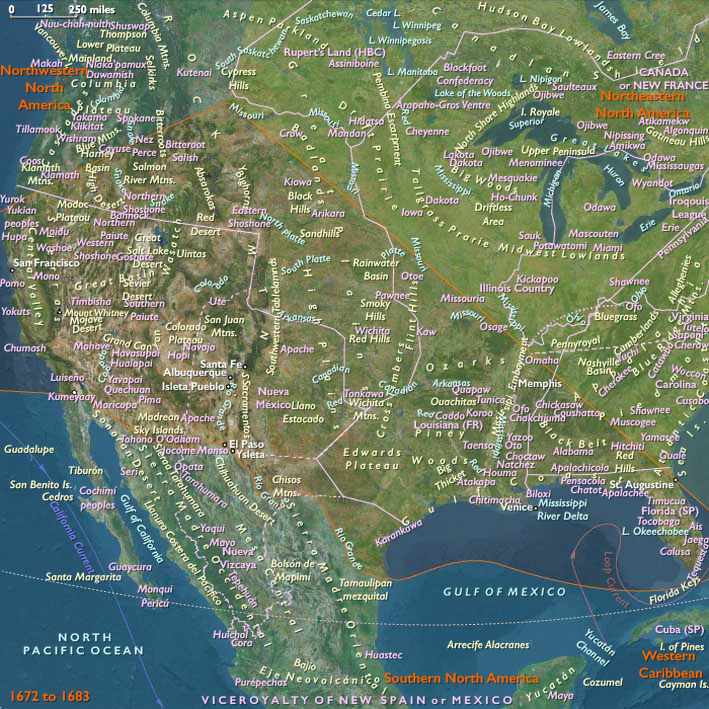
Years: 1540 - 1683
Numerous archaeological sites in central Kansas near the Great Bend of the Arkansas River share common traits and are collectively known as the "Great Bend aspect."
Radiocarbon dates from these sites range from CE 1450 to 1700.
Great Bend aspect sites are generally accepted as ancestral to the Wichita peoples described by Francisco Vásquez de Coronado and other early European explorers.
The discovery of limited quantities of European artifacts, such as chain mail and iron axe heads at several Great Bend sites, suggests contact of these people with early Spanish explorers.
Great Bend aspect peoples' subsistence economy includes agriculture, hunting, gathering, and fishing.
Villages are located on the upper terraces of rivers, and crops appear to have been grown on the fertile floodplains below.
Primary crops are maize, beans, squash, and sunflowers, cultivated for their seeds.
Gathered foods included walnut and hickory nuts, and the fruits of plum, hackberry, and grape.
Remains of animal bones in Great Aspect sites include bison, elk, deer, pronghorn, and dog, one of the few domesticated animals in the pre-Contact Plains.
Several village sites contain the remains of unusual structures called "council circles," located at the center of settlements.
Archaeological excavations suggest they consist of a central patio surrounded by four semi-subterranean structures.
The function of the council circles is unclear.
Archaeologist Waldo Wedel suggested in 1967 that they may be ceremonial structures, possibly associated with solstice observations.
Recent analysis suggests that many non-local artifacts occur exclusively or primarily within council circles, implying the structures were occupied by political and/or ritual leaders of the Great Bend aspect peoples.
Other archaeologists will leave open the possibility that the council circle earthworks served a defensive role.
One of these sites is the city Etzanoa, located in present-day Arkansas City, Kansas, near the Arkansas River, that flourishes between 1450 and 1700.
Radiocarbon dates from these sites range from CE 1450 to 1700.
Great Bend aspect sites are generally accepted as ancestral to the Wichita peoples described by Francisco Vásquez de Coronado and other early European explorers.
The discovery of limited quantities of European artifacts, such as chain mail and iron axe heads at several Great Bend sites, suggests contact of these people with early Spanish explorers.
Great Bend aspect peoples' subsistence economy includes agriculture, hunting, gathering, and fishing.
Villages are located on the upper terraces of rivers, and crops appear to have been grown on the fertile floodplains below.
Primary crops are maize, beans, squash, and sunflowers, cultivated for their seeds.
Gathered foods included walnut and hickory nuts, and the fruits of plum, hackberry, and grape.
Remains of animal bones in Great Aspect sites include bison, elk, deer, pronghorn, and dog, one of the few domesticated animals in the pre-Contact Plains.
Several village sites contain the remains of unusual structures called "council circles," located at the center of settlements.
Archaeological excavations suggest they consist of a central patio surrounded by four semi-subterranean structures.
The function of the council circles is unclear.
Archaeologist Waldo Wedel suggested in 1967 that they may be ceremonial structures, possibly associated with solstice observations.
Recent analysis suggests that many non-local artifacts occur exclusively or primarily within council circles, implying the structures were occupied by political and/or ritual leaders of the Great Bend aspect peoples.
Other archaeologists will leave open the possibility that the council circle earthworks served a defensive role.
One of these sites is the city Etzanoa, located in present-day Arkansas City, Kansas, near the Arkansas River, that flourishes between 1450 and 1700.
Locations
People
Groups
Topics
Commodoties
Subjects
Regions
Subregions
Years: 1540 - 1683
Locations
People
Groups
Topics
Commodoties
Subjects
Regions
Subregions