The city of the archaeological layer known…
1197 BCE to 1054 BCE
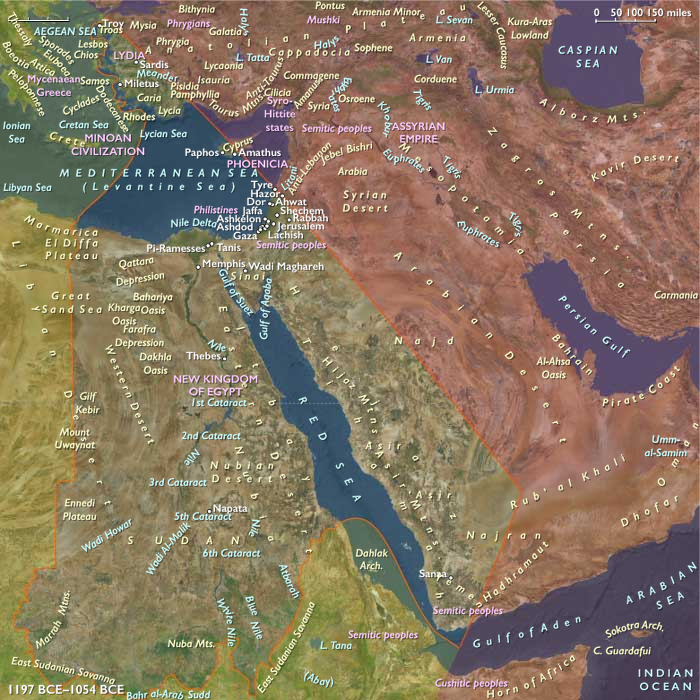
The city of the archaeological layer known as Troy VIIa is dated by pottery styles to the mid-to late- thirteenth century BCE
Lasting for about a century, with a destruction layer at about 1190 BCE, Troy VIIa is the most often-cited candidate for the Troy of Homer and is believed to correspond to Assuwan Wilusa known from Hittite sources dating to the period of roughly 1300–1250 BCE.
Troy VIIa appears to have been destroyed by a war, perhaps the source of the legendary Trojan War, and there are traces of a devastating fire.
Partial human remains were found in houses and in the streets, and near the northwestern ramparts a human skeleton with skull injuries and a broken jawbone.
Three bronze arrowheads were found, two in the fort and one in the city, strengthening the impression that the town had been captured, looted, and burnt by enemies.
However, only small portions of the city have been excavated, and the finds are too scarce to clearly favor destruction by war over a natural disaster.
According to Homer, Illium (Troy) fell to the “Achaioi,” or Achaeans, at the end of the Trojan War.
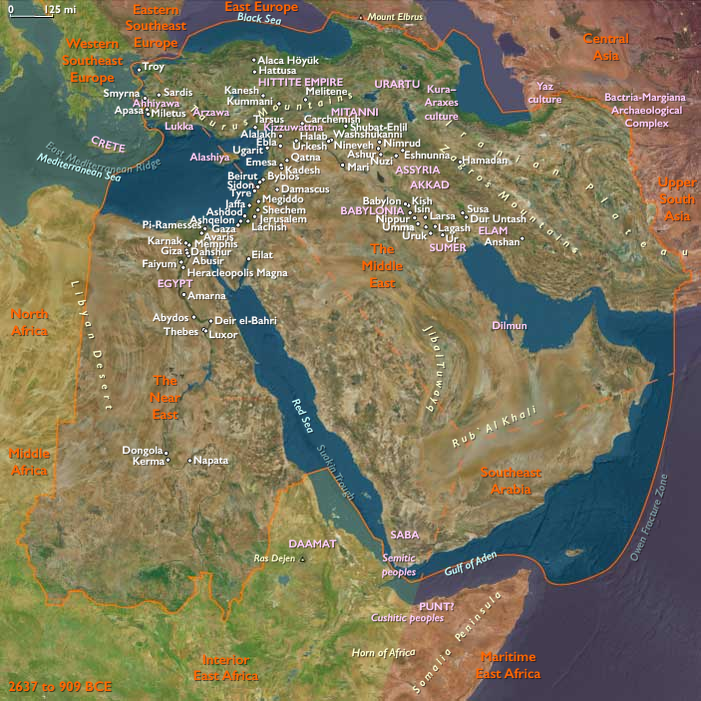
“Ahhiyava,” which occurs in contemporary texts of the Hittite empire of Anatolia, appears to be the same word, and possibly refers to the Mycenaean empire or to some lesser state.
These Greeks, or proto-Greeks, appear to be a component of the Sea Peoples, the groups of aggressive seafarers who invade eastern Anatolia, Syria, Palestine, Cyprus, and Egypt toward the end of the Bronze Age, especially in the thirteenth century BCE, raiding eastward by land and sea.
According to Homer’s Iliad, Paris, a son of King Priam of Troy, had kidnapped the incomparably gorgeous Helen, wife of King Menelaus of Sparta, with help from Aphrodite, whom Paris had chosen as the fairest of three goddesses (the others being Hera and Athena) in a bribe-ridden beauty contest he judged at their request.
Menelaus had called on other city-state leaders to help, among them his rich and powerful brother, King Agamemnon of Mycenae, who is to direct the war against Troy.
Before the invasion fleet embarks from Aulis, Agamemnon sacrifices his daughter, Iphigenia, in order to gain favorable winds.
The Achaean warriors besiege Troy for nine years, with neither side able to achieve victory.
In the tenth year (1184, according to Greek tradition; the archaeological evidence supports a date of about 1190 for the destruction of Troy VIIa), Achilles kills Hector, a son of Priam and the greatest of the Trojan warriors, bringing the Achaean Greeks closer to victory.
Employing a stratagem devised by Odysseus, the Achaeans retreat to their ships, debark, and sail over the horizon, leaving behind as a "gift" the so-called Trojan Horse.
The relieved Trojans drag the enormous wooden horse into the city.
When night falls, a squad of Greek soldiers, hidden inside the horse, emerges to open the gates of the unsuspecting city as the Greek fleet stealthily lands and disgorges the main body of the army.
The soldiers enter Troy, slaughter most of the inhabitants, and carry off many Trojan women, including members of the royal family, into captivity.
In the Iliad, Homer ascribes red hair to the hero Meleager, who as a young man had accompanied Jason and the Argonauts in the Quest of the Golden Fleece.
To the semi-divine hero Achilles, Homer attributes fiery hair.
In the Odyssey, Homer describes the crafty Odysseus as having russet locks.
In both the Iliad and the Odyssey, Homer describes Menelaus as the red-haired king.
Shortly after the destruction of Troy VIIa, resettlement follows (according to archaeological evidence) on a small scale (during the phase known as Troy VIIb).
The partly rebuilt city shows evidence of new settlers with a lower level of material culture; they vanish altogether by 1100 BCE.
For about the next four centuries, the site will be virtually abandoned.
Groups
Topics
Commodities
Subjects
Regions
The Near and Middle East
View →Subregions