Rivalry among the Mongol imperial heirs, natural…
1396 CE to 1539 CE
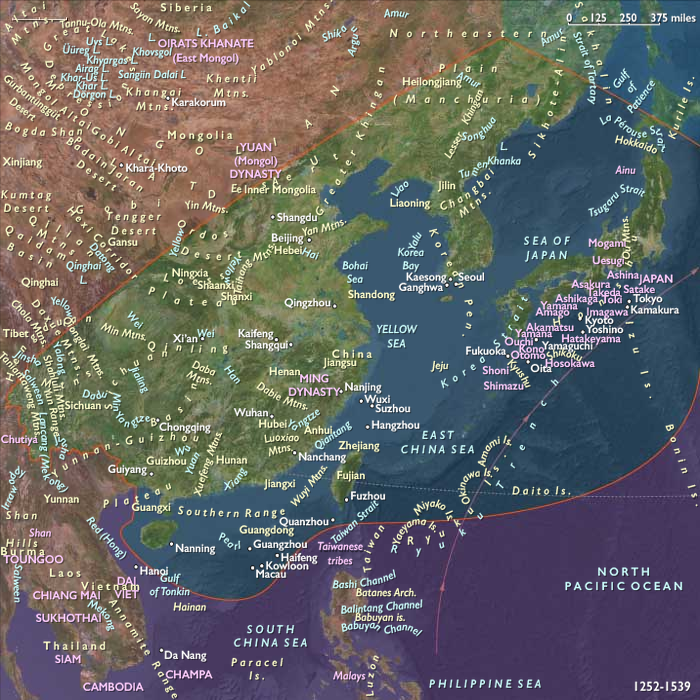
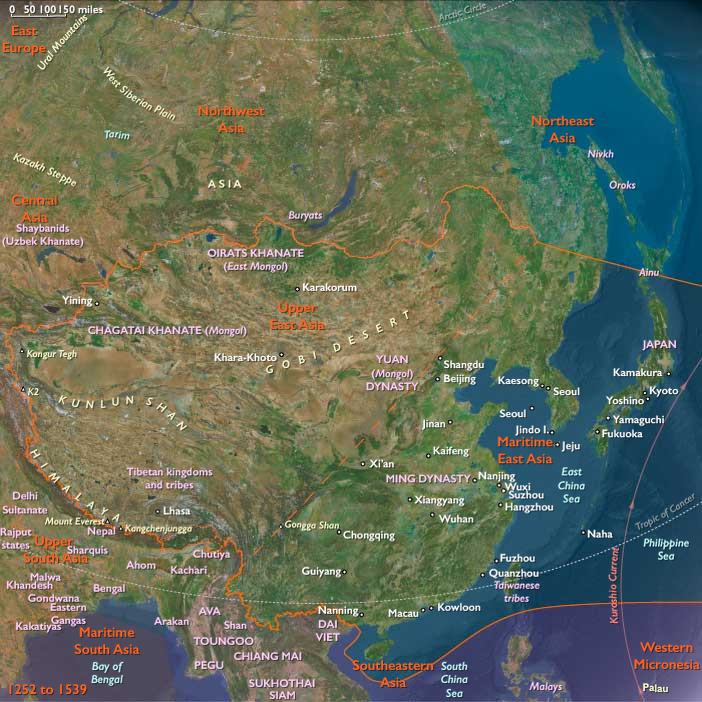
Rivalry among the Mongol imperial heirs, natural disasters, and numerous peasant uprisings had led to the collapse of the Yuan dynasty.
The Ming dynasty (1368-1644) had been founded by a Han Chinese peasant and former Buddhist monk turned rebel army leader.
Having its capital first at Nanjing (which means Southern Capital) and later at Beijing (Northern Capital), the Ming reach the zenith of power during the first quarter of the fifteenth century.
The Chinese armies reconquer Annam, as northern Vietnam is known at this time, in Southeast Asia and keep back the Mongols, while the Chinese fleet sails the China seas and the Indian Ocean, cruising as far as the east coast of Africa.
The maritime Asian nations send envoys with tribute for the Chinese emperor.
Internally, the Grand Canal is expanded to its farthest limits and proves to be a stimulus to domestic trade.
Groups
Topics
Subjects
Regions
East Asia
View →Subregions