The greatest controversy develops, however, over Maimonides's…
December 1191 CE
The greatest controversy develops, however, over Maimonides's major philosophical work, Moreh Nebukhim (“Guide for the Perplexed”), in which he endeavors to interpret several biblical and rabbinic themes in the light of the philosophy of Aristotle as known to him through the Arabic philosophers al-Farabi and Avicenna.
He is prepared, in certain contexts, to abandon his Aristotelian commitment—for example, concerning the eternity of the world, because he regards this doctrine as restricting God's absolute freedom of will to create or not to create the world.
In offering allegorically philosophic translations of the anthropomorphic expressions used with reference to God in many biblical passages, Maimonides departs from literal reading of the sacred text and thus becomes deeply resented by many of the religious leaders of the age.
In other works, Maimonides replies to queries in which he attacks the claims of astrology and condemns the attempts to calculate the time of the coming of the Messiah.
People
Regions
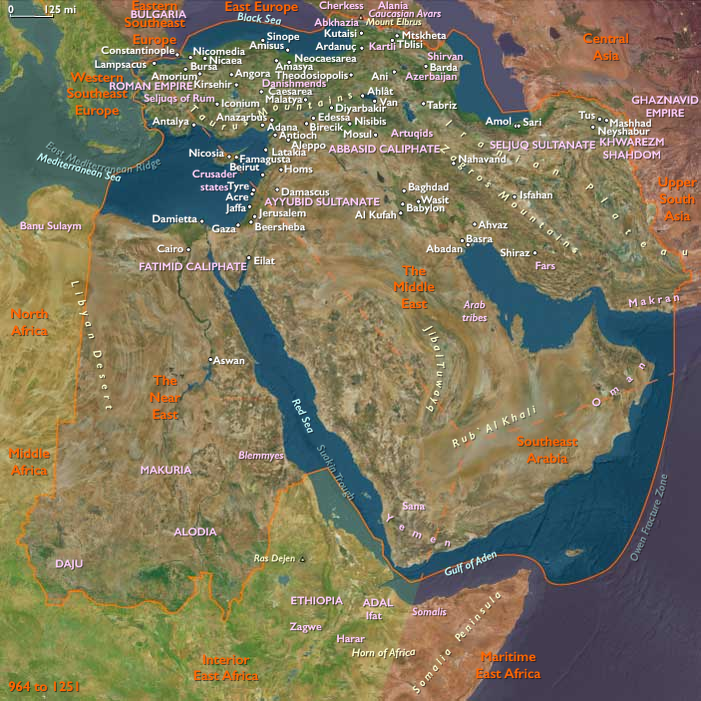
The Near and Middle East
View →Subregions