James Wolfe had expected to lead twelve…
July 1759 CE
Wolfe's troops are supported by a fleet of forty-nine ships and one hundred and forty smaller craft led by Admiral Charles Saunders.
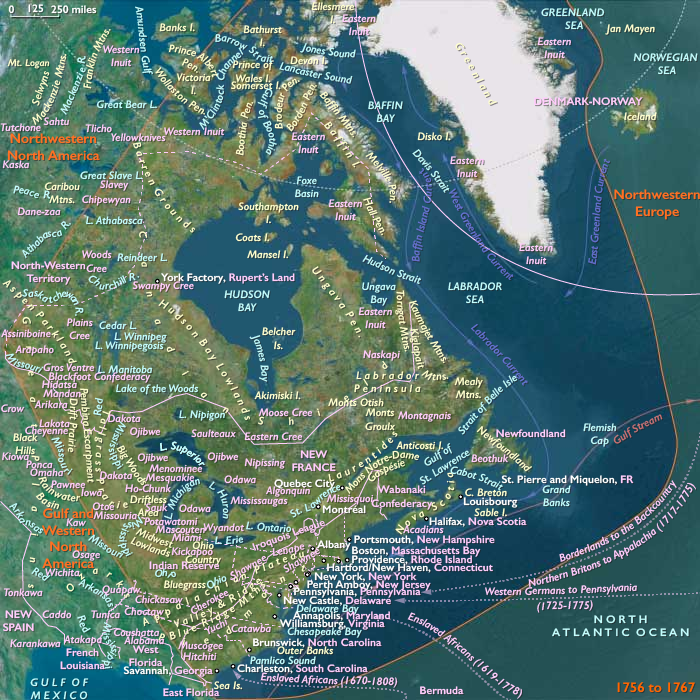
In preparation for the fleet's approach to Quebec, James Cook has surveyed a large portion of the river, including a dangerous channel known as The Traverse.
Cook's ship had been one of the first ships up the river, sounding the channel and guiding the fleet as it moves up, eventually landing Wolfe and his men on the Île d'Orléans on June 28.
The French had attempted to attack the fleet by sending seven fire ships downriver to disrupt the landing, but the ships had fired too early and British sailors in longboats were able to pull the flaming craft clear of the fleet.
The following day, Wolfe's troops had landed on the south bank of the river at Point Levis, nearly directly across the river from Quebec; an artillery battery is established there in early July that nearly levels the lower town by bombardment.
People
François-Charles de Bourlamaque
View →
James Cook
View →
James Wolfe
View →
Jeffery Amherst, 1st Baron Amherst
View →
Louis-Joseph de Montcalm
View →
Pierre de Rigaud de Vaudreuil de Cavagnal, Marquis de Vaudreuil
View →
Robert Rogers
View →
Thomas Gage
View →
William Johnson, 1st Baronet
View →
William Pitt
View →
Groups
Iroquois (Haudenosaunee, also known as the League of Peace and Power, Five Nations, or Six Nations)
View →
New France (French Colony)
View →
France, (Bourbon) Kingdom of
View →
Ohio Country
View →
Friends, Religious Society of (Quakers)
View →
Connecticut (English Crown Colony)
View →
New York, Province of (English Colony)
View →
Pennsylvania, Province of (English Colony)
View →
Massachusetts, Province of (English Crown Colony)
View →
New Jersey (English Colony)
View →
Britain, Kingdom of Great
View →
Rogers' Rangers
View →
Topics
Commodities
Regions
Northern North America
View →Subregions