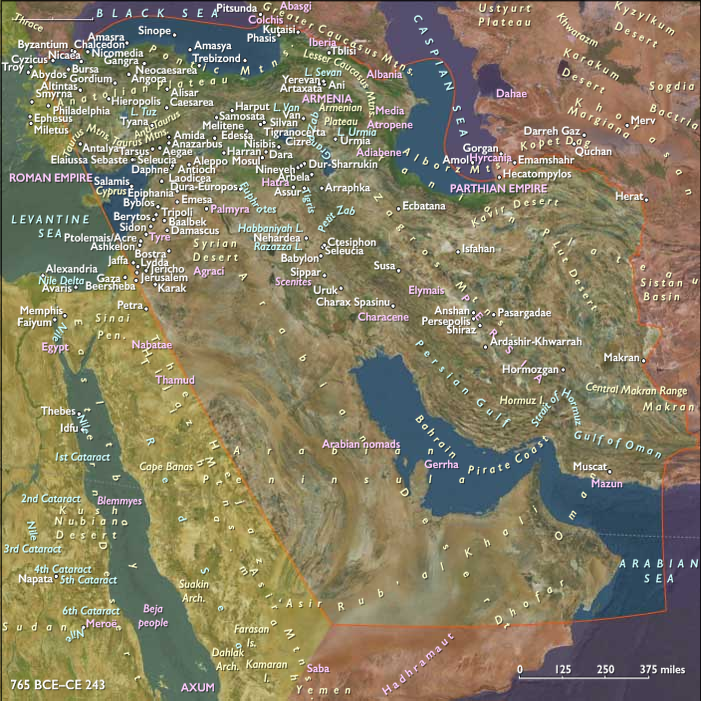
Assyria had been a minor kingdom of…
909 BCE to 898 BCE
Assyria had been a minor kingdom of northern Mesopotamia in the Middle Assyrian period, competing for dominance with Babylonia to the south.
The Neo-Assyrian Empire, which succeeded the Middle Assyrian period (fourteenth to tenth century BCE), is usually considered to have begun in 911 BCE with the accession of Adad-nirari II, whose campaigns set Assyria on the path to becoming great regional power.
During this period, Aramaic is also made an official language of the empire, alongside the Akkadian language.
Mesopotamia has come fully into the Iron Age by 900 BCE.
Some scholars, such as Richard Nelson Frye, regard the Neo-Assyrian Empire to be the first real empire in human history.
Adad-nirari II's father was Ashur-dan II, whom he had succeeded.
Because of the existence of full eponym lists from the reign of Adad-nirari II down to the middle of the reign of Ashurbanipal in the seventh century BCE, year one of his reign in 911 BCE is perhaps the first event in ancient Near Eastern history which can be dated to an exact year, although the Assyrian King List is generally considered to be quite accurate for several centuries before Adad-nirari's reign, and scholars generally agree on a single set of dates back to Ashur-resh-ishi I in the late twelfth century BCE.
After two wars with Assyria’s southern rival, Babylonia, in which Adad-nirari had subjugated the Aramaean cities of Kadmuh and Nisibin, along with vast amounts of treasure collected, he also secures the Khabur river region.
He firmly subjugates the areas previously under only nominal Assyrian vassalage, deporting populations in the north to far-off places.
Apart from pushing the boundary with Babylonia slightly southward, he does not engage in actual expansion, and the borders of the empire he consolidates reach only as far west as the Khabur River.
Locations
People
Groups
Topics
Commodities
Subjects
Regions
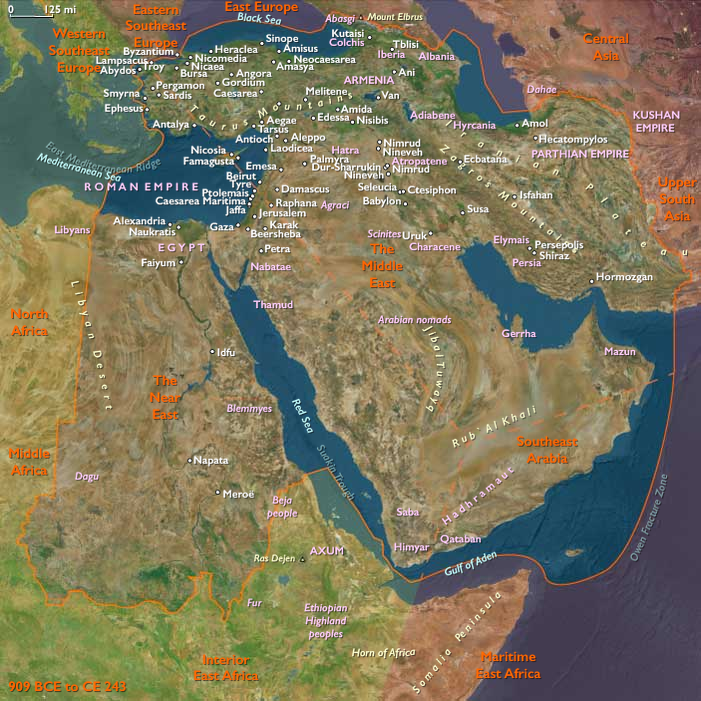
The Near and Middle East
View →Subregions