Havana is formally established in 1607 as…
1540 CE to 1683 CE
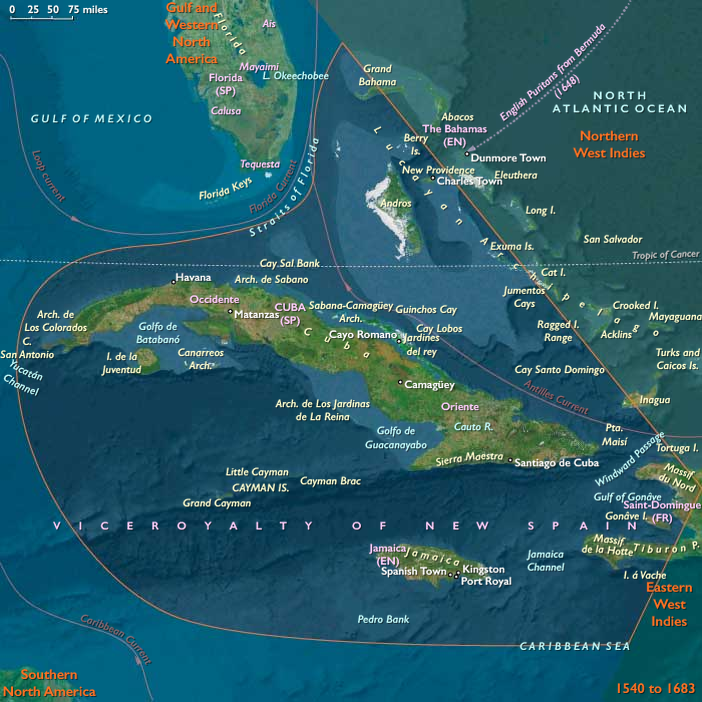
Havana is formally established in 1607 as the capital of Cuba, and the island is divided into two provinces with capitals at Santiago and Havana.
The governor-captain general at Havana rules in military matters over the entire island, but the governor at Santiago was able to exercise considerable political independence.
Although the governor-captain is nominally subject to the viceroy of New Spain, the viceroy exerts little control over the affairs of the island.
Of more direct influence, and a powerful check on the governor, is the audiencia of Santo Domingo.
This tribunal hears criminal and civil cases appealed over the decisions of the governor, but it soon, as in Spain, becomes more than a court of law; it is also an advisory council to the governor and always exercises its right to supervise and investigate his administration.
At the local level, the most important institution is the cabildo, a town council, usually composed of the most prominent citizens.
The alcaldes (judges) act as judges of first instance, and, in the absence of the governor or his lieu- tenant, preside at meetings of the cabildo.
They also visit the territories under their jurisdiction and dispense justice in rural areas.
As royal government becomes better organized and more entrenched in Cuba, the powers and prerogatives of the cabildo are progressively curtailed.
Groups
Subjects
Regions
West Indies
View →Subregions