Event
The disturbed debris of the archaeological site…
The disturbed debris of the archaeological site of ancient Mycenae in the Eastern Peloponnesus, a future capital of the Greek world, yields only scattered sherds datable to the Neolithic (prior to 3500 BCE).
The site was inhabited but the stratigraphy has been destroyed by later construction.
It is believed that Indo-Europeans who practiced farming and herding settled Mycenae close to 2000 BCE.
Scattered sherds dating to 2100-1700 BCE have been found, when Mycenae interacted with Minoan Crete.
Other theories suggest the settling of Mycenae a thousand years earlier.
The first burials in pits or cist graves begin to the west of the acropolis at about 1800-1700 BCE.
The earliest circuit wall encloses the acropolis at least partially.
During the Bronze Age, the pattern of settlement at Mycenae is a fortified hill surrounded by hamlets and estates, in contrast to the dense urbanity on the coast in such cities as Argos.
The rulers must value this less populated and more remote region for its defensive value.
-
{# Image navigates to the detail page; the magnifying-glass chip is the only Fancybox lightbox trigger (kept a separate sibling — anchors can't nest). #}
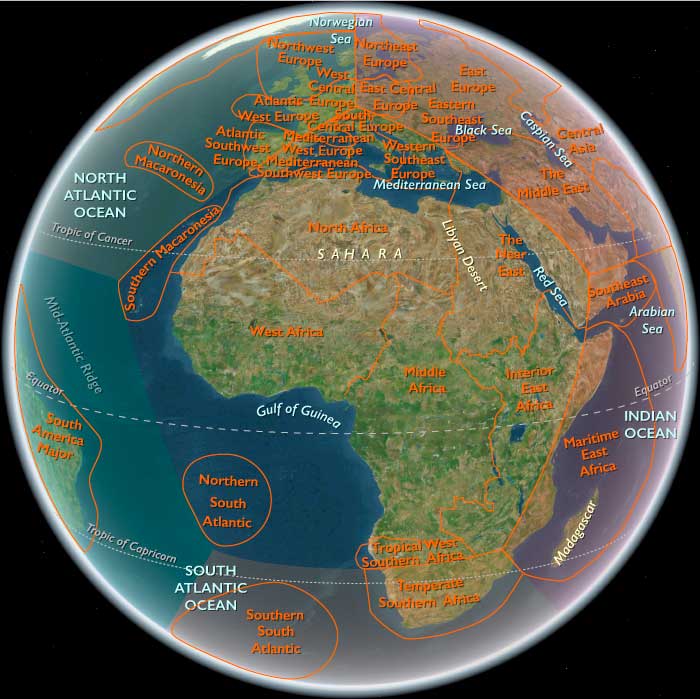
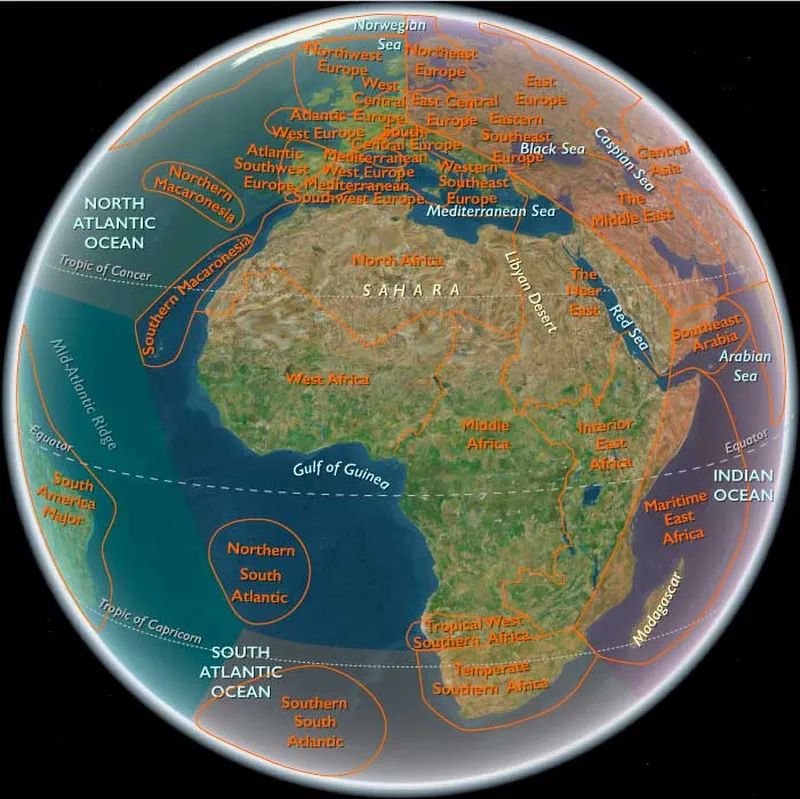 The Middle of The Earth
World
-
{# Image navigates to the detail page; the magnifying-glass chip is the only Fancybox lightbox trigger (kept a separate sibling — anchors can't nest). #}
 Southeast Europe
Region
-
{# Image navigates to the detail page; the magnifying-glass chip is the only Fancybox lightbox trigger (kept a separate sibling — anchors can't nest). #}
 Western Southeast Europe
Subregion