
Filters:
Still shaken in the days following the …
Years: 1756 - 1756
October
Still shaken in the days following the battle, Frederick had decided his only political option was to proclaim Lobositz as a victory by eighteenth century rules of combat (since Browne had left the field of battle).
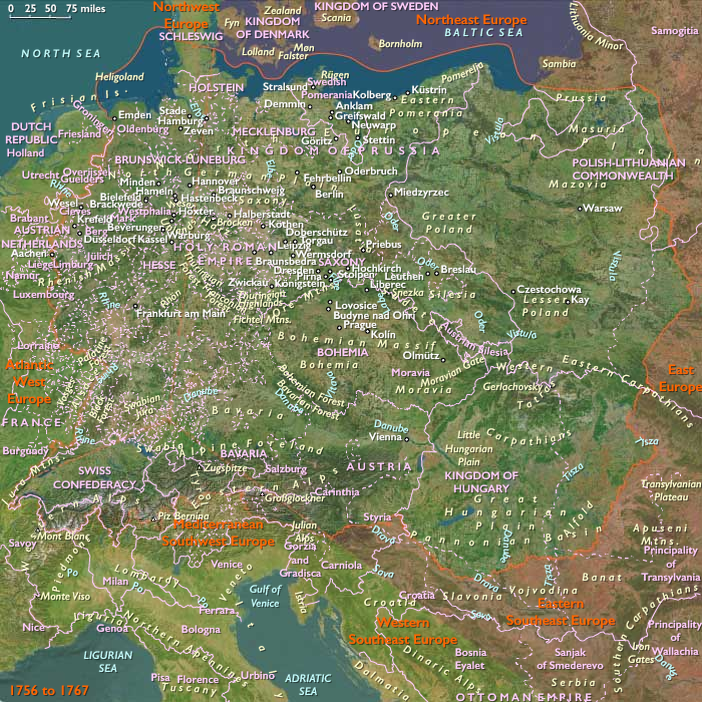
However, Browne had done exactly what he had set out to do: stop Frederick at Lobositz and cover his own crossing of the Elbe further upstream to go and rescue the Saxon army at Pirna.
Indeed, Frederick, though he sat on the "field of victory", never advanced beyond Lobositz and within two weeks had ordered a general retreat back into Saxony.
So, strategically, with his army intact, Bohemia safe, and his way north to the Saxons unhindered, Browne can be thought of as having won a strategic victory at Lobositz.
In the aftermath, Browne had led his rescue mission north, with a picked force of eight thousand men, down the right (eastern) bank of the Elbe.
Though suffering from tuberculosis himself and coughing up blood, Browne had driven himself and his men through rain and mountain passes to arrive at his rendezvous point, Königstein, at precisely the date he promised the Saxons, October 11.
However, the Saxons had not lived up to their own promise to cross the Elbe at Königstein on that date, and procrastinated.
The dissembling Count Bruhl had been negotiating with the Prussians for a better deal and kept sending disingenuous pleas for patience to Browne.
The Prussians, by the fourteenth finally alerted to the presence of the Austrians waiting on the right bank opposite Königstein, had crossed with a blocking force themselves.
Bruhl and the Saxon King Augustus III, as well as the senior Saxon general staff, had by this time surrendered the entire Saxon army to Frederick, and had negotiated some fairly lucrative compensation arrangements for themselves.
The Saxon regiments are all swiftly and forcibly incorporated whole into the Prussian army, an act that sparks widespread protest even from Prussians.
This political-military coup will prove short-lived, however, for most of the infantry regiments will defect within a year, and the Saxon cavalry regiments take it upon themselves (including Count Bruhl's own chevauleger regiment) to escape and fight intact for the Austrians.
However, Browne had done exactly what he had set out to do: stop Frederick at Lobositz and cover his own crossing of the Elbe further upstream to go and rescue the Saxon army at Pirna.
Indeed, Frederick, though he sat on the "field of victory", never advanced beyond Lobositz and within two weeks had ordered a general retreat back into Saxony.
So, strategically, with his army intact, Bohemia safe, and his way north to the Saxons unhindered, Browne can be thought of as having won a strategic victory at Lobositz.
In the aftermath, Browne had led his rescue mission north, with a picked force of eight thousand men, down the right (eastern) bank of the Elbe.
Though suffering from tuberculosis himself and coughing up blood, Browne had driven himself and his men through rain and mountain passes to arrive at his rendezvous point, Königstein, at precisely the date he promised the Saxons, October 11.
However, the Saxons had not lived up to their own promise to cross the Elbe at Königstein on that date, and procrastinated.
The dissembling Count Bruhl had been negotiating with the Prussians for a better deal and kept sending disingenuous pleas for patience to Browne.
The Prussians, by the fourteenth finally alerted to the presence of the Austrians waiting on the right bank opposite Königstein, had crossed with a blocking force themselves.
Bruhl and the Saxon King Augustus III, as well as the senior Saxon general staff, had by this time surrendered the entire Saxon army to Frederick, and had negotiated some fairly lucrative compensation arrangements for themselves.
The Saxon regiments are all swiftly and forcibly incorporated whole into the Prussian army, an act that sparks widespread protest even from Prussians.
This political-military coup will prove short-lived, however, for most of the infantry regiments will defect within a year, and the Saxon cavalry regiments take it upon themselves (including Count Bruhl's own chevauleger regiment) to escape and fight intact for the Austrians.
Locations
People
- Augustus III of Poland
- Augustus William, Duke of Brunswick-Bevern
- Duke Ferdinand of Brunswick-Wolfenbüttel
- Frederick the Great
- Hans von Lehwaldt
- Heinrich von Brühl
- James Francis Edward Keith
- Kurt Christoph, Graf von Schwerin
- Louis XV of France
- Maria Theresa
- Maximilian Ulysses Browne
- Wenzel Anton, Prince of Kaunitz-Rietberg
Groups
- Austria, Archduchy of
- Brunswick-Wolfenbüttel, Duchy of
- Saxony, Electorate of
- Holy Roman Empire
- Hesse-Kassel, Landgraviate of
- France, (Bourbon) Kingdom of
- Bavaria, Electorate of
- Brunswick-Lüneburg, Electorate of (Electorate of Hanover)
- Spain, Bourbon Kingdom of
- Prussia, Kingdom of
- Britain, Kingdom of Great
- Russian Empire
Topics
Subjects
Regions
Subregions

Years: 1756 - 1756
October
Locations
People
- Augustus III of Poland
- Augustus William, Duke of Brunswick-Bevern
- Duke Ferdinand of Brunswick-Wolfenbüttel
- Frederick the Great
- Hans von Lehwaldt
- Heinrich von Brühl
- James Francis Edward Keith
- Kurt Christoph, Graf von Schwerin
- Louis XV of France
- Maria Theresa
- Maximilian Ulysses Browne
- Wenzel Anton, Prince of Kaunitz-Rietberg
Groups
- Austria, Archduchy of
- Brunswick-Wolfenbüttel, Duchy of
- Saxony, Electorate of
- Holy Roman Empire
- Hesse-Kassel, Landgraviate of
- France, (Bourbon) Kingdom of
- Bavaria, Electorate of
- Brunswick-Lüneburg, Electorate of (Electorate of Hanover)
- Spain, Bourbon Kingdom of
- Prussia, Kingdom of
- Britain, Kingdom of Great
- Russian Empire
Topics
Subjects
Regions
Subregions