
Atlantic West Europe: 184–195 Between 184 …
Years: 184 - 195
Atlantic West Europe: 184–195
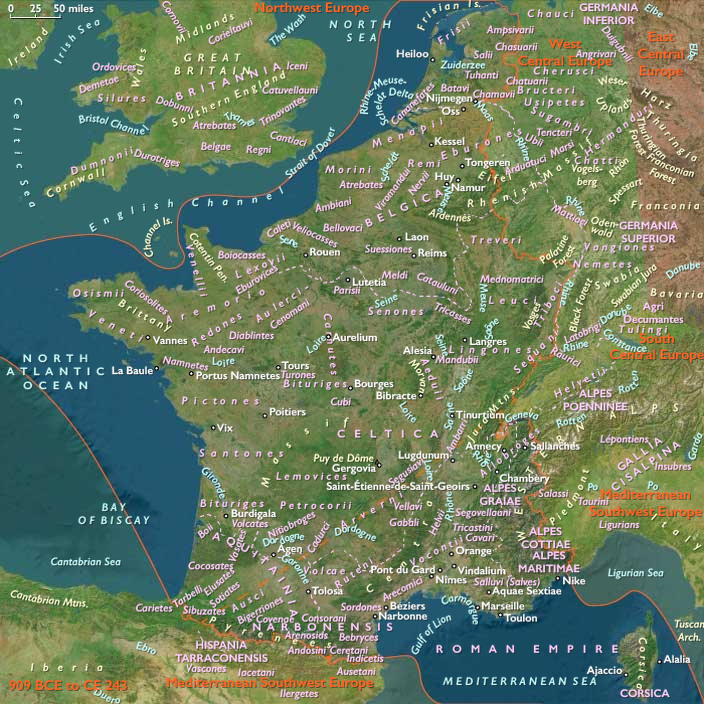
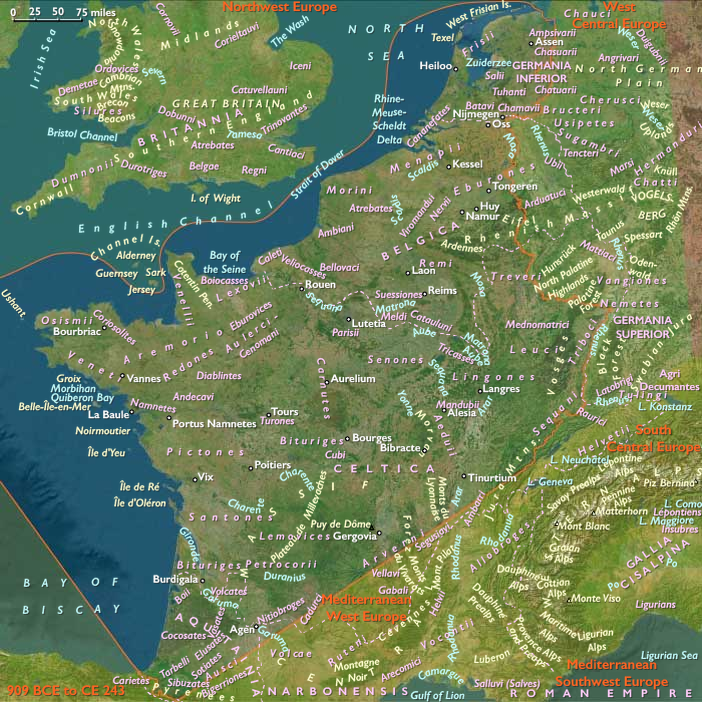
Between 184 and 195 CE, Atlantic West Europe—including Aquitaine, the Atlantic coast, northern and central France, Alsace, and the Low Countries—experienced increasing imperial instability under the reign of Commodus (r. 180–192), his assassination, and the subsequent "Year of the Five Emperors" (193), leading into the beginning of the Severan Dynasty under Septimius Severus. While Lyon (in Mediterranean West Europe) played a significant political role as the western base of Clodius Albinus, its influence impacted the broader stability of Atlantic West Europe during this turbulent era.Political and Military Developments
-
Reign and Fall of Commodus (184–192):
-
Commodus’s rule became increasingly erratic and oppressive, marked by corruption, administrative instability, and loss of trust among provincial elites.
-
The assassination of Commodus (December 192) threw the empire into chaos, significantly affecting provincial administration.
-
-
Year of the Five Emperors (193):
-
A succession crisis followed Commodus’s death, with multiple claimants vying for power.
-
Clodius Albinus, governor of Britannia, gained substantial support in Atlantic West Europe and established his claim in Gaul, briefly ruling as Caesar and then as Augustus, with a power base centered in Lyon.
-
-
Rise of Septimius Severus (193–195):
-
Septimius Severus emerged victorious, consolidating power after defeating rival claimants (Pescennius Niger in the east, Clodius Albinus in the west).
-
Tensions mounted in Gaul as Severus prepared for confrontation with Albinus, a conflict that deeply impacted regional stability.
-
Economic Developments
-
Instability and Economic Disruption:
-
Political instability and civil war temporarily disrupted trade networks, particularly affecting commercial centers along the Rhine and in Lyon.
-
Bordeaux's wine exports to Rome continued, but general economic uncertainty led to cautious investment and temporary decline in prosperity.
-
-
Heightened Military Expenditure:
-
Military expenses rose sharply to fund civil conflicts, increasing taxation and strain on provincial resources.
-
Urban and Rural Developments
-
Provincial Unrest and Urban Tension:
-
Lyon, as Albinus’s western capital, briefly benefited economically but also faced heightened political risk and unrest.
-
Smaller cities faced financial strain, leading to deferred civic improvements and increased local tensions.
-
-
Agricultural Stability Under Pressure:
-
Agricultural productivity largely persisted but was hampered by increased demands from military requisitions and imperial taxation.
-
Cultural and Religious Life
-
Shifts in Local Attitudes:
-
Uncertainty surrounding imperial leadership led to greater local skepticism of central authority, laying subtle foundations for increased regional identities.
-
Traditional Roman religious practices persisted, but the chaotic political environment began to foster openness to new religious movements.
-
Long-term Significance
The era (184–195 CE) was one of heightened instability and transition, marking the decline of Antonine stability and the emergence of Severan rule. These disruptions set the stage for broader provincial and imperial transformations, foreshadowing the political fragmentation and regionalism that would define later centuries in Atlantic West Europe.
People
Groups
- Polytheism (“paganism”)
- Gallia Lugdunensis (Roman province)
- Gallia Aquitania (Roman province)
- Gallia Belgica (Roman province)
- Roman Empire (Rome): Nerva-Antonine dynasty
- Roman Empire (Rome): Severan dynasty
Topics
- Classical antiquity
- Roman Age Optimum
- Roman Civil War of 193-97
- Year of the Five Emperors, or Roman Civil War of 193
Commodoties
Subjects
Regions
Subregions
Related Events
Showing 10 events out of 60915 total
Years: 184 - 195
People
Groups
- Polytheism (“paganism”)
- Gallia Lugdunensis (Roman province)
- Gallia Aquitania (Roman province)
- Gallia Belgica (Roman province)
- Roman Empire (Rome): Nerva-Antonine dynasty
- Roman Empire (Rome): Severan dynasty
Topics
- Classical antiquity
- Roman Age Optimum
- Roman Civil War of 193-97
- Year of the Five Emperors, or Roman Civil War of 193
Commodoties
Subjects
Regions
Subregions