
Atlantic West Europe, 796–807: Consolidation of Carolingian …
Years: 796 - 807
Atlantic West Europe, 796–807: Consolidation of Carolingian Power and Imperial Expansion
The years 796–807 represented a decisive period for the Carolingian Empire in Atlantic West Europe, witnessing Charlemagne’s final expansions, the strengthening of centralized imperial authority, and significant cultural developments. This era solidified Frankish dominance, further defined the imperial administration, and saw enhanced cultural and religious activity across the region.
Political and Military Developments
-
Final Stages of Carolingian Expansion
- Charlemagne conducted successful campaigns to secure the empire’s borders, notably against Saxon resistance (defeating rebellious forces conclusively by 804) and consolidating control along the Atlantic coast.
- Brittany experienced increased Carolingian influence, with strengthened fortifications and improved integration, although local autonomy persisted.
-
Administrative and Territorial Consolidation
- Charlemagne reinforced his administrative structure, appointing trusted counts and missi dominici (imperial envoys) throughout Atlantic West Europe to oversee justice, taxation, and military recruitment.
- Key regions, including Aquitaine, Gascony, and Brittany, were brought under more direct imperial oversight, though local traditions and structures remained resilient.
-
Strengthened Frontier Defenses
- Charlemagne bolstered defenses along vulnerable coastal areas from Normandy to Aquitaine, responding proactively to the growing threat of Viking raids and enhancing naval capabilities in the Bay of Biscay and the English Channel.
Economic and Social Developments
-
Agricultural and Commercial Prosperity
- Agricultural productivity increased, supported by imperial encouragement of land cultivation and forest clearance, boosting rural economies.
- Major trade routes across the Loire and Seine valleys and along the Atlantic coast flourished, facilitating commerce between inland towns and coastal settlements such as Nantes, Bordeaux, and Rouen.
-
Urbanization and Regional Integration
- Towns such as Tours, Poitiers, and Orléans thrived as administrative, ecclesiastical, and trade centers, reinforcing regional economic and social integration.
- The stable currency and improved infrastructure under Charlemagne enhanced economic interconnectivity.
Religious and Cultural Developments
-
Advancement of the Carolingian Renaissance
- Charlemagne actively promoted the cultural and intellectual revival throughout Atlantic West Europe. Influential monastic and cathedral schools, notably in Tours, Saint-Martin, and Saint-Benoît-sur-Loire, produced richly illuminated manuscripts and preserved classical texts.
- Alcuin of York continued to play a central role in organizing educational reforms and intellectual discourse, significantly enhancing the literacy and cultural output of the Frankish Empire.
-
Religious Consolidation and Ecclesiastical Reform
- Charlemagne strengthened ecclesiastical structures, ensuring greater uniformity in liturgical practices and improving clerical education and discipline. This created stronger ties between the imperial administration and the Church hierarchy, particularly in western France and the Low Countries.
Intellectual and Artistic Developments
- Cultural Flourishing under Carolingian Patronage
- Manuscript illumination, exemplified by the Ada Gospels (c. 800), set a new artistic standard, characterized by vivid colors, intricate patterns, and classical motifs, becoming a hallmark of Carolingian art.
- Architectural achievements continued, including early expansions of the Palatine Chapel in Aachen and significant ecclesiastical structures in Tours and other cultural hubs of Atlantic West Europe.
Long-Term Significance
The era 796–807 was pivotal in solidifying Carolingian control and cultural identity in Atlantic West Europe. Charlemagne’s military successes, administrative consolidation, and active cultural patronage established enduring patterns of governance, religious authority, and artistic expression, laying firm foundations for subsequent medieval developments.
People
Groups
- Franks
- Saxons
- Christianity, Chalcedonian
- Aquitaine, (Frankish) Duchy of
- Burgundy, Frankish Kingdom of
- Francia (Carolingians)
Topics
Commodoties
Subjects
Regions
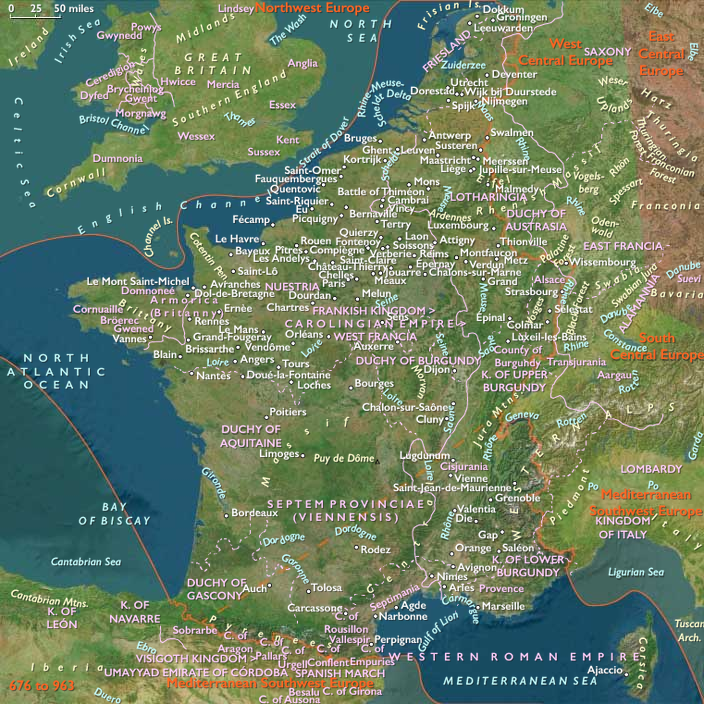
Subregions
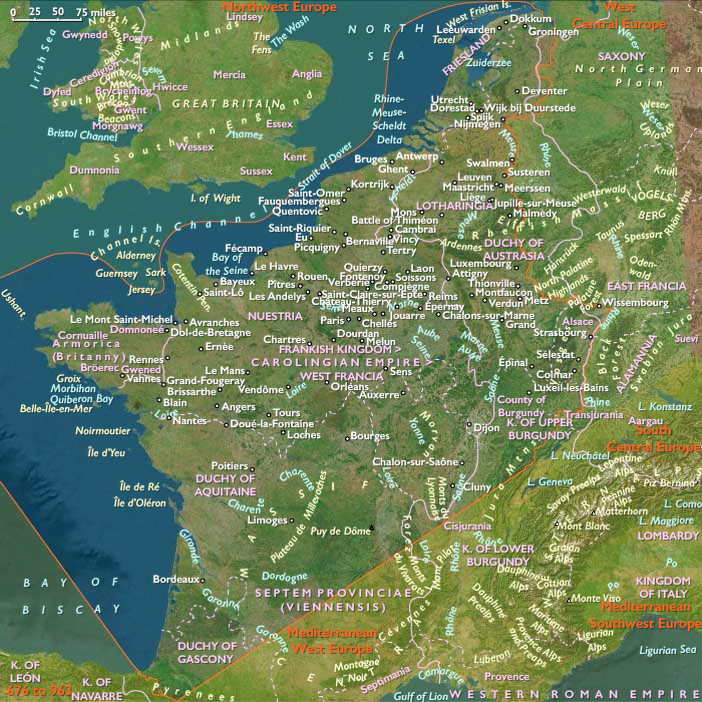
Years: 796 - 807
People
Groups
- Franks
- Saxons
- Christianity, Chalcedonian
- Aquitaine, (Frankish) Duchy of
- Burgundy, Frankish Kingdom of
- Francia (Carolingians)
Topics
Commodoties
Subjects
Regions
Subregions