
Southern Australasia (4,365–2,638 BCE) Late Holocene —…
4365 BCE to 2638 BCE
Southern Australasia (4,365–2,638 BCE)
Late Holocene — Temperate Stewardship, Coastal Stability, and Deep Cultural Continuity
Geographic & Environmental Context
Southern Australasia included southern mainland Australia, Tasmania, Bass Strait, and the temperate coasts bordering the Southern Ocean and Tasman Sea.
By this epoch, sea levels and shorelines had largely stabilized. Estuaries, lagoons, barrier systems, and coastal wetlands reached mature forms. Forested uplands, eucalypt woodlands, heathlands, and peatlands formed an interconnected temperate landscape extending from southwestern Australia through Tasmania and into southeastern coastal regions.
The region had become a stable environmental mosaic shaped by long interaction between climate, ecology, and human stewardship.
Climate & Environmental Shifts
The climatic fluctuations of earlier millennia diminished, giving way to relatively predictable seasonal cycles.
- Westerly systems continued supplying moisture to southern coasts.
- Temperate forests maintained broad distributions.
- Coastal wetlands remained productive and resilient.
- Inland grasslands and woodlands responded to regular fire regimes.
Emerging ENSO variability occasionally influenced rainfall patterns, but major environmental disruptions remained uncommon.
Societies and Cultural Continuities
Aboriginal societies maintained some of the world's longest continuous cultural traditions.
Communities organized movement through seasonal rounds that linked coastlines, forests, rivers, grasslands, and uplands. Kinship systems structured access to resources, ceremonial responsibilities, and social relationships.
The landscape itself functioned as a living archive of law, history, and identity.
Economy and Exchange
Economic life emphasized reciprocity and sustainability.
- Estuarine fisheries remained highly productive.
- Shellfish harvesting continued along sheltered coasts.
- Forest and woodland resources supported diverse regional economies.
- Exchange networks transmitted stone, ochre, shell, ritual objects, and cultural knowledge across southern Australia.
Material exchange reinforced social and ceremonial relationships rather than political hierarchy.
Belief and Symbolism
The spiritual landscape remained inseparable from the physical landscape.
Ancestral beings, ceremonial pathways, sacred sites, and oral traditions connected people to forests, rivers, wetlands, coastlines, and the sky. Seasonal renewal, ecological balance, and custodial responsibility formed central principles of social life.
Adaptation and Resilience
Environmental management remained highly sophisticated.
- Controlled burning maintained habitat diversity.
- Seasonal mobility reduced ecological pressure.
- Resource harvesting followed established cultural protocols.
- Knowledge accumulated across generations strengthened resilience to environmental variability.
These systems maintained ecological productivity while preserving biodiversity.
Long-Term Significance
By 2,638 BCE, Southern Australasia represented one of the world's most enduring examples of cultural and environmental continuity. Stable coastlines, mature ecosystems, and deeply rooted custodial traditions created a resilient temperate landscape that would persist through subsequent millennia.
The forests, estuaries, wetlands, and cultural networks of this era formed the foundation upon which later historical developments would unfold, preserving a remarkable balance between people and place.
Images
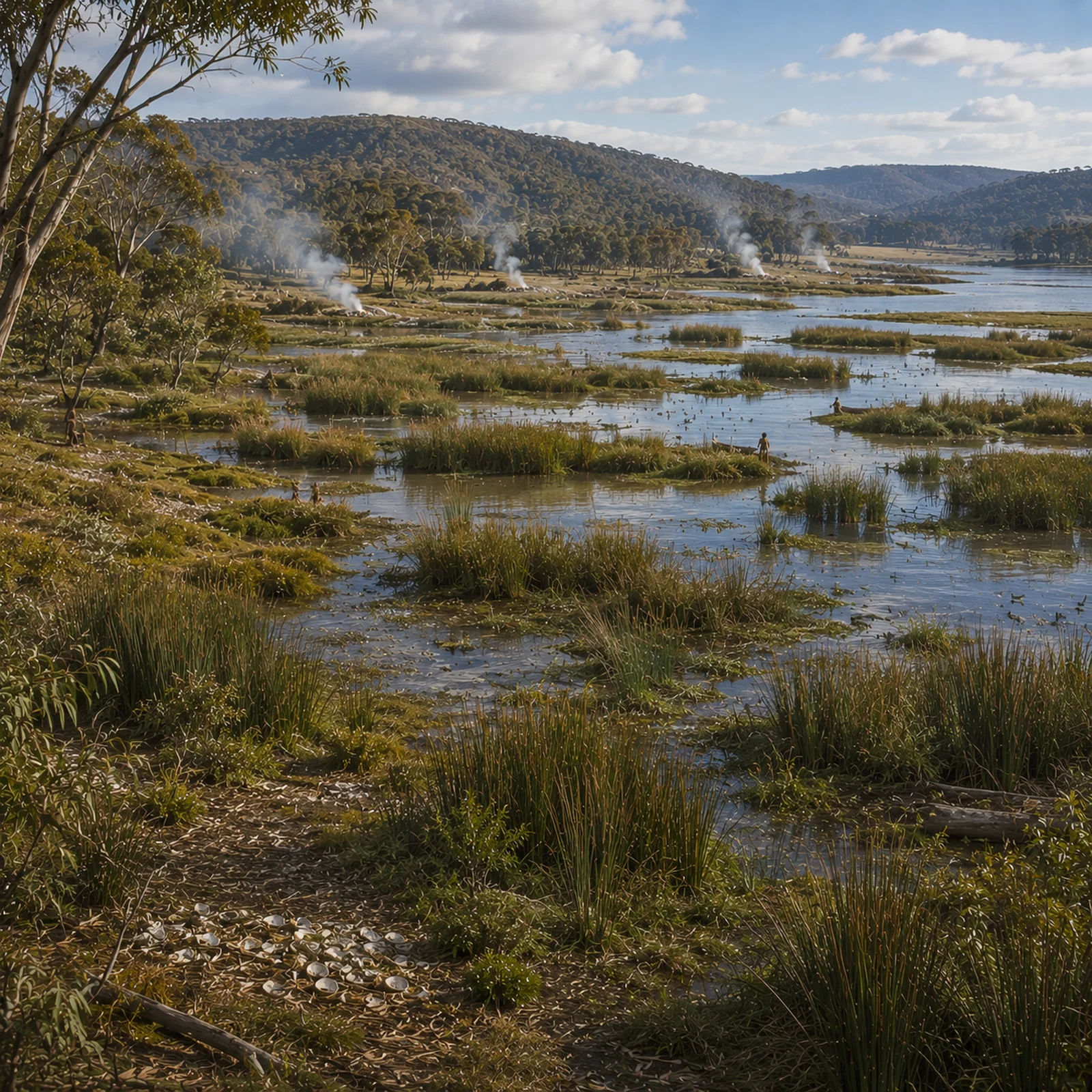
Southern Australasia in the Late Holocene
Topics
Subjects
Regions

Australasia
View →Subregions
