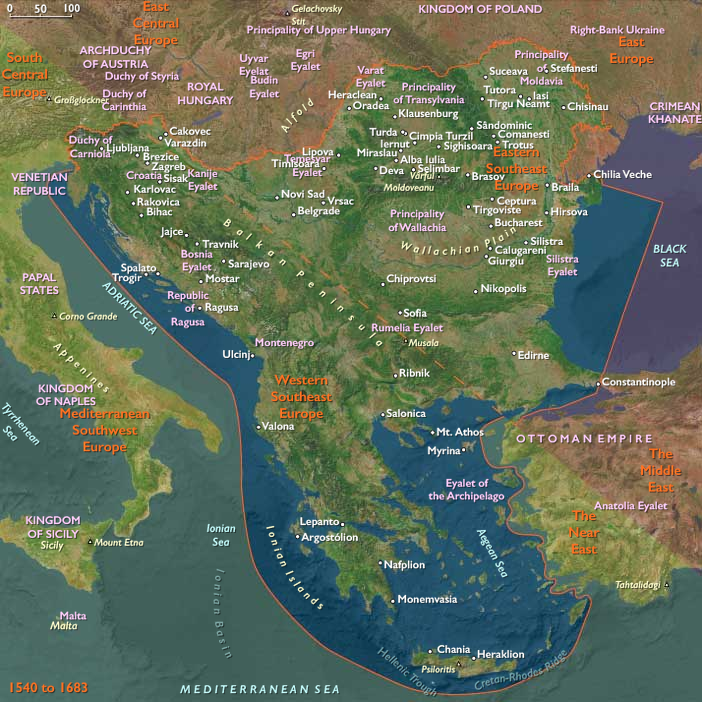
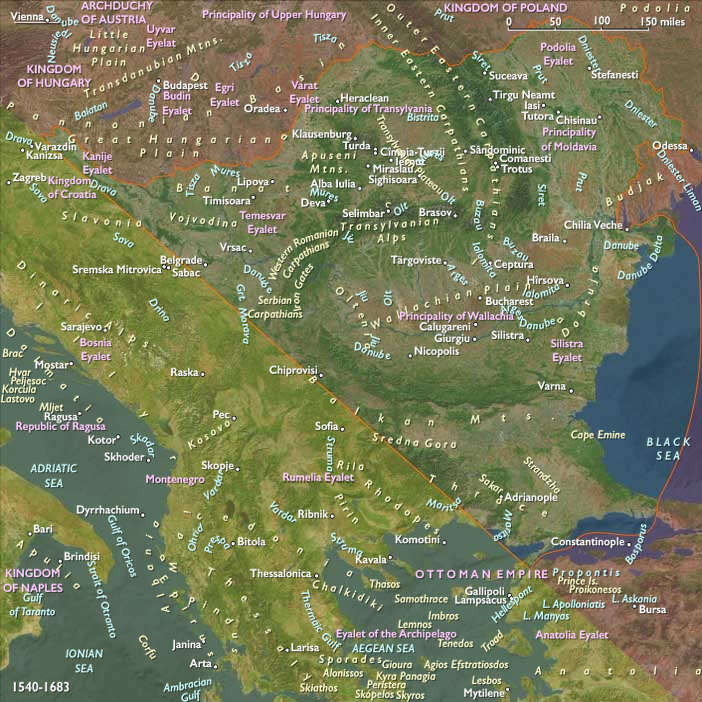
Austria and the Ottoman empire conclude a …
Years: 1563 - 1563
Austria and the Ottoman empire conclude a formal peace in 1563 that merely renews the terms of the 1547 accord, perpetuates the three Hungaries: Austrian (Royal), Buda (Ottoman), and Transylvanian.
Locations
People
Groups
- Austria, Archduchy of
- Ottoman Empire
- Hungary, Royal
- Hungary, Ottoman
- Hungary (Transylvania), Ottoman vassal Kingdom of
Subjects
Regions
Subregions
Related Events
Filter results
Showing 2 events out of 2 total
Northwest Europe (1792–1803): Revolutionary Wars, Industrial Innovations, and Advances in Navigation
Revolutionary Wars and Britain’s Maritime Dominance
Between 1792 and 1803, Northwest Europe was reshaped by turmoil from the French Revolution and ensuing Revolutionary Wars. The execution of Louis XVI in 1793 intensified conflict, bringing Britain into prolonged warfare against revolutionary France. Britain's naval strength, exemplified by Admiral Horatio Nelson’s decisive victory at the Battle of the Nile (1798), secured its maritime supremacy, allowing it to dominate European rivals and control critical global trade routes. Despite continental instability, Britain strengthened its position as the leading maritime and colonial power.
Accelerating Industrial Revolution and Economic Leadership
Britain’s global ascendancy was substantially reinforced by rapid industrial expansion, initially spurred by earlier influxes of Brazilian gold, which provided capital for industrial investment. Wartime demands for commodities, especially from India through the powerful East India Company, drove unprecedented industrial productivity, setting off cycles of prosperity and rising living standards. The mechanization of British industry—facilitated by steam power innovations pioneered by James Watt—further propelled economic growth, solidifying Britain’s position as the undisputed home of the Industrial Revolution.
James Watt and the Steam Power Revolution
The steam engine developments of James Watt and Matthew Boulton reached maturity during this period. Watt’s inventions—including the double-acting engine, the parallel motion mechanism (1784), throttle valve, and centrifugal governor (1788)—proved crucial for efficient manufacturing and mining operations. Boulton & Watt’s steam engines, five times more efficient than the earlier Newcomen designs, became industry standards, significantly enhancing British manufacturing capabilities and driving industrial productivity.
Edmund Cartwright and the Power Loom
A parallel transformative innovation emerged in textile manufacturing through the power loom, devised by English inventor Edmund Cartwright. Cartwright, educated at Queen Elizabeth Grammar School and University College, Oxford, was a Church of England clergyman who sought to mechanize weaving after observing the efficiencies of mechanical spinning. Although his initial loom (patented 1785) was unsuccessful, by 1789 he developed an improved version that inspired further innovations.
Cartwright continuously refined his loom by adding critical mechanical features—positive let-off motion, warp and weft stop motions, crank and eccentric wheels for differential actuation, automatic shuttle-box mechanisms, and automatic stretching temples. Despite these efforts, fundamental challenges, especially the need to size warps while the loom was stationary, limited commercial viability. An attempt by Robert Grimshaw to deploy 500 power looms at Knott Mill near Manchester in 1790 ended disastrously when arson, likely motivated by fears among handloom weavers, destroyed the factory after only thirty looms had been installed.
Cartwright’s remaining technical problems were resolved in 1803 by William Radcliffe and Thomas Johnson, whose beam warper and dressing sizing machine allowed warps to be sized efficiently outside the loom. Although Cartwright’s immediate commercial success was modest, his foundational innovations paved the way for fully mechanized weaving, profoundly impacting textile production and the industrial landscape. Cartwright eventually received parliamentary recognition in 1809 with a grant of £10,000, and later gained election as a Fellow of the Royal Society (1821).
Marine Chronometers and Navigation Improvements
Advances in maritime navigation accelerated dramatically as marine chronometers—initially prohibitively expensive (about 30% of a ship’s cost)—became progressively more accessible. Initially, adoption of chronometers was slow due to their high precision-manufacturing costs and relatively low production volumes. However, after John Arnold introduced simplified marine chronometers around 1783, and following the expiration of Arnold’s patents in the late 1790s, makers like Thomas Earnshaw began producing reliable and significantly less expensive chronometers.
By the early nineteenth century, chronometer prices had fallen dramatically—from initial prohibitive costs to approximately £25 to £100—representing roughly half to two years' wages for a skilled worker. Lower-cost deck chronometers, though somewhat less accurate than their boxed counterparts, provided many merchant vessels with sufficient navigational accuracy. Despite historians noting limited production volumes, as highlighted by David Landes, the chronometers’ long-lasting reliability meant they seldom required replacement. Consequently, even modest production easily met growing merchant marine demands.
Though initially competing against the Lunar Distances method, marine chronometers increasingly overtook alternative navigation techniques. By the early nineteenth century, navigating without a chronometer became "unwise to unthinkable," transforming maritime trade by greatly enhancing safety, reliability, and economic efficiency. Insurance incentives, practical necessity, and growing maritime commerce accelerated their universal adoption, cementing the marine chronometer as an essential instrument for global navigation and trade.
Adam Smith’s Influence and Economic Liberalism
Economic liberalism, epitomized by Adam Smith’s Wealth of Nations (1776), continued shaping British policy even during revolutionary upheavals. Smith’s advocacy of free markets, limited state interference, and trade liberalization became deeply embedded in British economic thought, underpinning Britain’s thriving industrial and commercial networks amid global conflict.
Cultural Flourishing: Art, Literature, and Leisure
British culture flourished through elegant Rococo portraiture by masters like Joshua Reynolds and Thomas Gainsborough, while literature transitioned toward Romanticism, marked notably by Wordsworth and Coleridge’s Lyrical Ballads (1798). Public leisure evolved at seaside resorts equipped with bathing machines, and culinary convenience was epitomized by the widespread adoption of the sandwich, popularized by the Earl of Sandwich.
Ireland’s Union and Danish-Norwegian Stability
Ireland experienced political upheaval culminating in the 1798 rebellion, which led to the Acts of Union (1800), formally integrating Ireland into Great Britain in 1801. Concurrently, Denmark-Norway maintained cautious neutrality under Frederick VI, fostering domestic stability through agricultural modernization, education reforms, and measured trade liberalization.
Maritime Exploration: Vancouver’s Pacific Voyages
British exploration continued with Captain George Vancouver’s Pacific expeditions (1791–1795), significantly enhancing geographical knowledge and British strategic interests in the Pacific Northwest, vital for subsequent colonial and commercial expansion.
Financial Innovations and Life Insurance Maturity
Financial institutions matured further, driven by actuarial innovations pioneered by institutions like the Society for Equitable Assurances. Life insurance practices increasingly relied on rigorous mortality calculations, underpinning Britain’s expanding middle-class investment and reinforcing economic stability amid wartime uncertainties.
Between 1792 and 1803, Northwest Europe was profoundly reshaped by revolutionary wars, accelerated industrial innovation—particularly in textiles and steam power—and critical advances in maritime navigation driven by more affordable and widespread adoption of marine chronometers. Edmund Cartwright’s power loom, James Watt’s steam engines, and Arnold’s and Earnshaw’s marine chronometers collectively catalyzed Britain's dominance in global commerce, manufacturing, and maritime trade, solidifying its position as an industrial powerhouse at the dawn of the nineteenth century.
Northwest Europe (1804–1815): Napoleonic Wars, Industrial Consolidation, and Cultural Refinement
The Napoleonic Wars and Britain’s Maritime Supremacy
Between 1804 and 1815, Northwest Europe was dramatically reshaped by the Napoleonic Wars, triggered when Napoleon Bonaparte crowned himself Emperor of France in 1804. Britain, Napoleon’s most persistent adversary, relied heavily on naval supremacy to counter French dominance. This maritime power was decisively demonstrated at the Battle of Trafalgar (1805), where Admiral Horatio Nelson secured British naval superiority at the cost of his life. Britain's maritime blockade severely constrained French trade, contributing significantly to Napoleon’s eventual downfall.
The wars culminated in 1815 at the Battle of Waterloo, where British forces under the Duke of Wellington, alongside Prussian troops under Marshal Blücher, defeated Napoleon decisively, ending French dominance and affirming Britain's strategic primacy in Europe.
Industrial Expansion and Technological Refinement
The British Industrial Revolution accelerated dramatically during this era. Innovators such as Richard Trevithick, whose successful railway steam locomotive debuted in 1804, transformed transportation and industry. Coal mining, iron production, and textile manufacturing thrived, elevating living standards and promoting rapid urbanization.
Edmund Cartwright’s Power Loom and Textile Mechanization
Textile mechanization advanced significantly, building upon earlier developments by Edmund Cartwright. By 1803, critical improvements from William Radcliffe and Thomas Johnson solved earlier technical challenges, making power looms commercially viable. Cartwright received parliamentary recognition in 1809 with a £10,000 grant, acknowledging his contributions. The resulting factory-scale weaving dramatically increased textile productivity, reinforcing Britain's global dominance in textile manufacturing.
Marine Chronometers: Revolutionizing Navigation
Marine chronometers became essential to maritime trade during this period. Initially expensive—early chronometers costing nearly 30% of a ship’s value—their affordability increased dramatically by the early 1800s. Innovations by makers like John Arnold and Thomas Earnshaw significantly reduced costs, bringing chronometers within reach of the merchant marine. By this period, prices ranged from £25 to £100, representing approximately half a year's to two years' wages for skilled workers.
Though production volumes remained relatively modest, the exceptional durability of chronometers allowed few replacements to meet growing demand. Lower-cost deck chronometers, slightly less accurate but sufficiently reliable for merchant use, became common. By the early nineteenth century, navigating without a chronometer was considered irresponsible, significantly reducing maritime accidents and boosting global trade and insurance confidence.
James Watt’s Steam Engine Legacy
Steam engine innovations by James Watt became deeply embedded in British industry. Watt’s inventions—double-acting engines, parallel-motion mechanisms, centrifugal governors, and throttle valves—dramatically improved efficiency and reliability. Although Watt restricted steam pressures due to safety concerns, subsequent improvements gradually overcame limitations, making steam engines central to Britain's factories, mines, and mills.
Economic Liberalism and the Influence of Adam Smith
The economic philosophies articulated by Adam Smith in The Wealth of Nations (1776) remained influential. Smith’s ideas of free trade and limited government intervention underpinned Britain’s wartime economic strategies, sustaining industrial growth and enabling wartime prosperity. British prosperity was thus increasingly built upon these liberal economic principles.
Cultural Elegance and the Rise of Beau Brummell
In early nineteenth-century Britain, cultural sophistication and fashion reached new heights, epitomized by Beau Brummell, the celebrated dandy and recognized arbiter of style. A bachelor residing in Mayfair, Brummell set the standard as the best-dressed, best-mannered English gentleman in Europe, influencing fashion and manners profoundly. His sartorial meticulousness became legendary: coats, waistcoats, and breeches were each crafted by different specialist tailors, ensuring impeccable fit. His elaborate neckcloths required hours of attention by his valet, reflecting a level of elegance and precision never before seen.
Brummell's unmatched influence extended into the highest circles, notably shaping the attire of his close associate George, Prince of Wales (Regent from 1811, later King George IV), who emulated Brummell’s style. However, Brummell's extravagant lifestyle—marked by excessive gambling and relentless spending—exhausted his inherited fortune. Additionally, his acerbic wit eventually alienated even his royal patron. A decisive quarrel with the Prince Regent in 1812 signaled the beginning of Brummell’s decline. Although he initially retained social standing, mounting debts marked the decline of his influence.
East India Company: Global Economic Peak
The East India Company reached peak influence during this era, driven by the insatiable British demand for raw materials and commodities necessary for its industrial economy and wartime efforts. The Company's vast trade networks sustained Britain's global economic dominance, supplying critical resources such as textiles, spices, cotton, and indigo, and underpinning Britain's wartime finances.
Romantic Movement and Artistic Flourishing
Britain’s cultural scene flourished with Romantic literature, including influential works by William Wordsworth, Samuel Taylor Coleridge, Lord Byron, Percy Bysshe Shelley, and John Keats. Artists such as Thomas Lawrence succeeded earlier masters like Reynolds and Gainsborough, capturing the refined elegance of Britain’s ruling class.
Ireland: Union and Persistent Tensions
Ireland remained unsettled following the Acts of Union (1801), with economic hardships exacerbated by war. Tensions continued to simmer, driven by political disenfranchisement and poverty, sowing seeds for future unrest.
Denmark-Norway: Neutrality Shattered
Denmark-Norway’s cautious neutrality ended abruptly in 1807 when Britain bombarded Copenhagen to prevent its fleet from falling into French hands. Forced into an alliance with France, Denmark-Norway suffered economically from British blockades, ultimately leading to Denmark’s cession of Norway to Sweden in 1814, reshaping the geopolitical landscape.
Financial Innovations
British financial services continued to evolve, with robust actuarial methods securing the growing life insurance industry, underpinning middle-class financial security and investments in Britain's expanding industrial and economic sectors.
Maritime Exploration and Strategic Mapping
Britain continued maritime exploration and improved navigation methods during this era, driven by accurate chronometer-based longitude measurements. Admiralty charts facilitated safer maritime trade routes and strengthened Britain's strategic global dominance.
From 1804 to 1815, Northwest Europe experienced transformative changes driven by the Napoleonic Wars, industrial innovations in steam power, textile mechanization, and maritime navigation, as well as the rise of cultural refinement exemplified by figures such as Beau Brummell. Britain's victories at Trafalgar and Waterloo, combined with cultural and economic developments, secured its position as the leading global power, setting the stage for continued nineteenth-century expansion and influence.

Years: 1563 - 1563
Locations
People
Groups
- Austria, Archduchy of
- Ottoman Empire
- Hungary, Royal
- Hungary, Ottoman
- Hungary (Transylvania), Ottoman vassal Kingdom of