
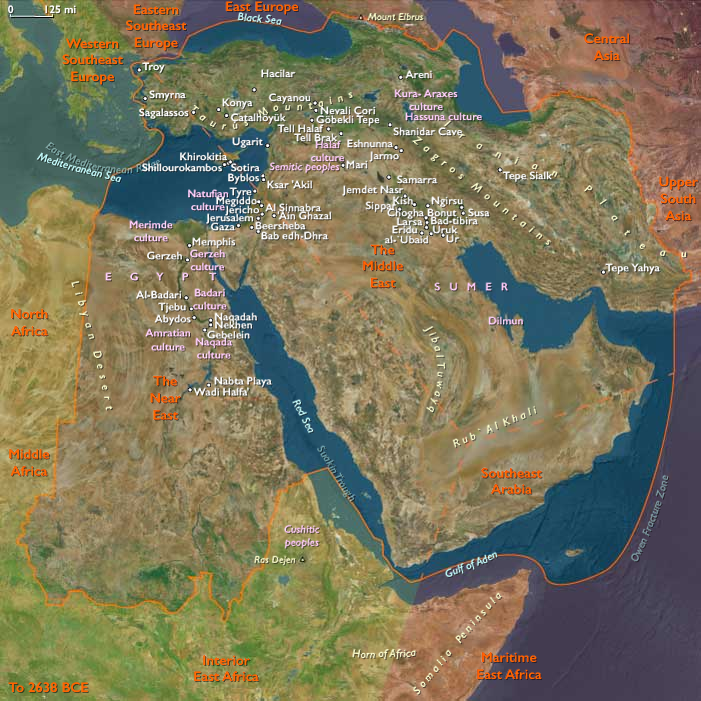
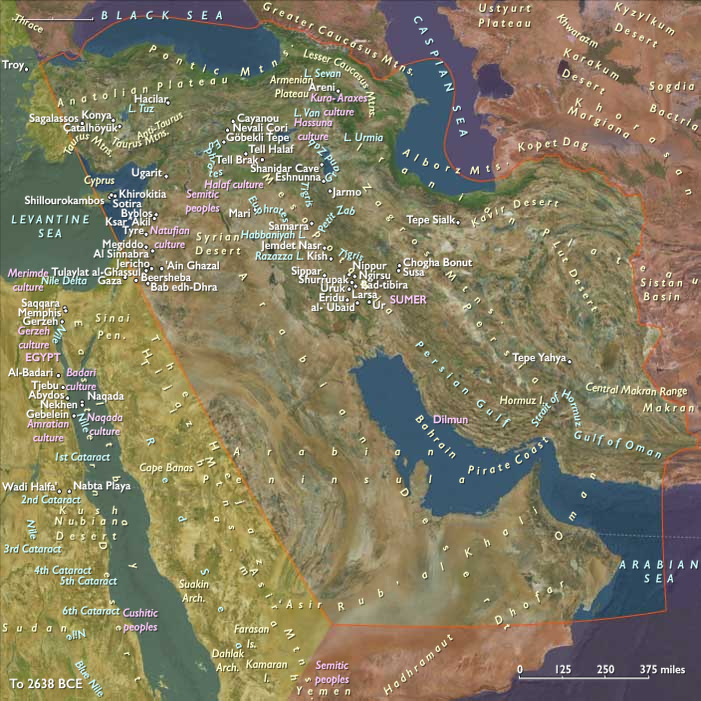
…Bad-tibira (probably Tell al-Madain). According to …
Years: 3069BCE - 2926BCE
…Bad-tibira (probably Tell al-Madain).
According to the Sumerian King List, Bad-tibira was the second city to "exercise kingship" in Sumer before the flood, following Eridu.
These kings were said to be En-men-lu-ana, En-men-gal-ana and Dumuzid the Shepherd.
The early Sumerian text known as Inanna's descent to the netherworld mentions the city's temple, E-mush-kalamma.
In this tale, Inanna dissuades demons from the netherworld from taking Lulal, patron of Bad-tibira, who was living in squalor.
They eventually take Dumuzid king of Uruk instead, who lived in palatial opulence.
This Dumuzid is called "the Shepherd,” but on the King List, Dumuzid the Fisherman reigns in Uruk some time after the flood, between Lugalbanda and Gilgamesh.
The hierarchy of the gods grows more stratified, paralleling Mesopotamian society.
Recognizable class divisions and royal dynasties appear in Sumer consolidating women's exclusion from politics, although women, according to class position, continue to exercise varied roles and to enjoy some legal protection for property.
Locations
Groups
- Polytheism (“paganism”)
- Eridu, City-state of
- Nippur, city-state of
- Kish, City-state of
- Jemdet Nasr period
- Isin, city-state of
Topics
- Piora Oscillation ending the Neolithic Subpluvial
- Early Bronze Age II (Near and Middle East)
- Subboreal Period
Subjects
Regions
Subregions
Years: 3069BCE - 2926BCE
Locations
Groups
- Polytheism (“paganism”)
- Eridu, City-state of
- Nippur, city-state of
- Kish, City-state of
- Jemdet Nasr period
- Isin, city-state of
Topics
- Piora Oscillation ending the Neolithic Subpluvial
- Early Bronze Age II (Near and Middle East)
- Subboreal Period
Subjects
Regions
Subregions