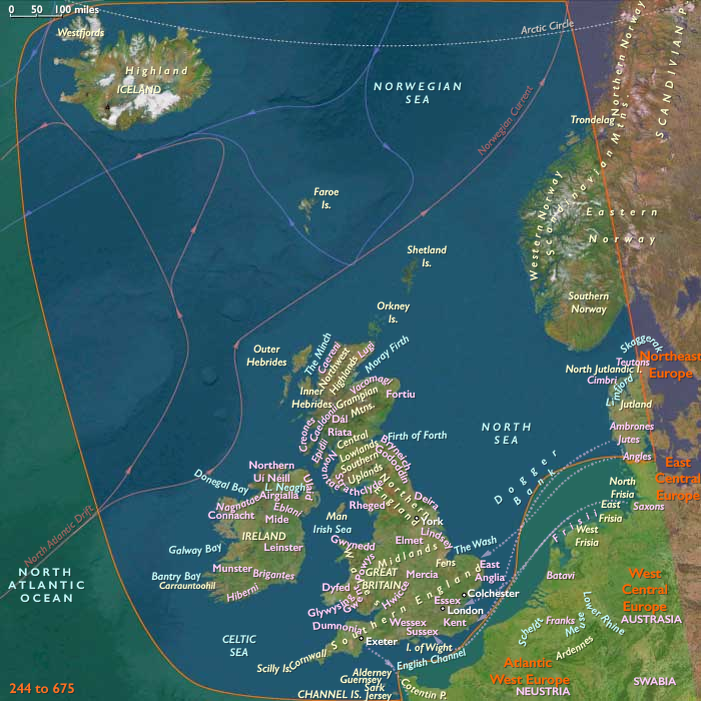
The Great Conspiracy is a term given…
364 CE to 375 CE
The Great Conspiracy is a term given to a yearlong war that occurs in Roman Britain in 367-368, near the end of the Roman occupation of the island.
The historian Ammianus Marcellinus describes it as a barbarica conspiratio that capitalized on a depleted military force in the province brought about by Magnentius' losses of the Battle of Mursa Major after his unsuccessful bid to become emperor.
It is difficult to ascertain the exact chronology of what happened during the conspiracy because the main source—Ammanianus—appears to have been in Antioch when it happened, meaning his information is second hand and thus is confused.
Also other sources of conspiracy are inconsistent with Ammianus.
Therefore, there are several different views of what happened.
Emperor Valentinian I is campaigning against the Alamanni at the time and unable to respond personally.
A series of commanders to act in his stead are chosen but swiftly recalled.
The first is Severus, the emperor's comes domesticorum, soon recalled and replaced by Jovinus, the magister equitum.
Jovinus then writes back to Valentinian requesting reinforcements.
The Emperor recalls Jovinus—mostly likely to take part in a campaign along the Rhine, which is a higher priority—then sends out Count Theodosius.
In any case, the barbarians—Picts, Scoti, Attacotti, Saxons, and Franks—have by the end of the year been driven back to their homelands; the mutineers have been executed; Hadrian's Wall is retaken and order returns to the diocese.
Theodosius returns to Rome a hero, and is made senior military advisor to Valentinian I, replacing Jovinus.
His son will become emperor a decade later.
The Romans are able to end much of the chaos, though raids by all of the peoples listed above do continue.
People
Groups
Subjects
Regions

North Europe
View →Subregions