
Bartolomé de las Casas was born in …
Years: 1511 - 1511
Bartolomé de las Casas was born in Seville in 1484, on November 11.
His father, Pedro de las Casas, a merchant, descended from one of the families that had migrated from France to found the town of Seville; his family also spelled the name Casaus.
According to one biographer, his family were of converso heritage, although others refer to them as ancient Christians who migrated from France.
Following the testimony of Las Casas's biographer Antonio de Remesal, tradition has it that Las Casas studied a licentiate at Salamanca, but this is never mentioned in Las Casas's own writings.
As a young man, in 1507, he had journeyed to Rome where he observed the Festival of Flutes.
With his father, Las Casas had immigrated to the island of Hispaniola in 1502 on the expedition of Nicolás de Ovando.
Las Casas had become a hacendado and slave owner, receiving a piece of land in the province of Cibao.
He had participated in slave raids and military expeditions against the native Taíno population of Hispaniola.
In 1510, he is ordained a priest, the first one to be ordained in the Americas.
In September 1510, a group of Dominican friars had arrived in Santo Domingo led by Pedro de Córdoba; appalled by the injustices they saw committed by the slaveowners against the Indians, they decided to deny slave owners the right to confession.
Las Casas had been among those denied confession for this reason.
In December 1511, a Dominican preacher Fray Antonio de Montesinos preaches a fiery sermon that implicates the colonists in the genocide of the native peoples.
He is said to have preached, "Tell me by what right of justice do you hold these Indians in such a cruel and horrible servitude?
On what authority have you waged such detestable wars against these people who dealt quietly and peacefully on their own lands?
Wars in which you have destroyed such an infinite number of them by homicides and slaughters never heard of before.
Why do you keep them so oppressed and exhausted, without giving them enough to eat or curing them of the sicknesses they incur from the excessive labor you give them, and they die, or rather you kill them, in order to extract and acquire gold every day."
Las Casas himself argues against the Dominicans in favor of the justice of the encomienda.
The colonists, led by Diego Columbus, dispatch a complaint against the Dominicans to the King, and the Dominicans are recalled from Hispaniola.
Las Casas begins what will become a lifelong effort to improve conditions for the harshly treated Indians and to make the Spanish court and church aware of the immoral and genocidal oppression by the Spanish colonizers of the New World.
Locations
People
Groups
- Tajik people
- Christians, Roman Catholic
- Aragon, Crown of
- Dominicans, or Order of St. Dominic
- Castile, Crown of
- Santo Domingo, Captaincy General of
Topics
Commodoties
Subjects
Regions
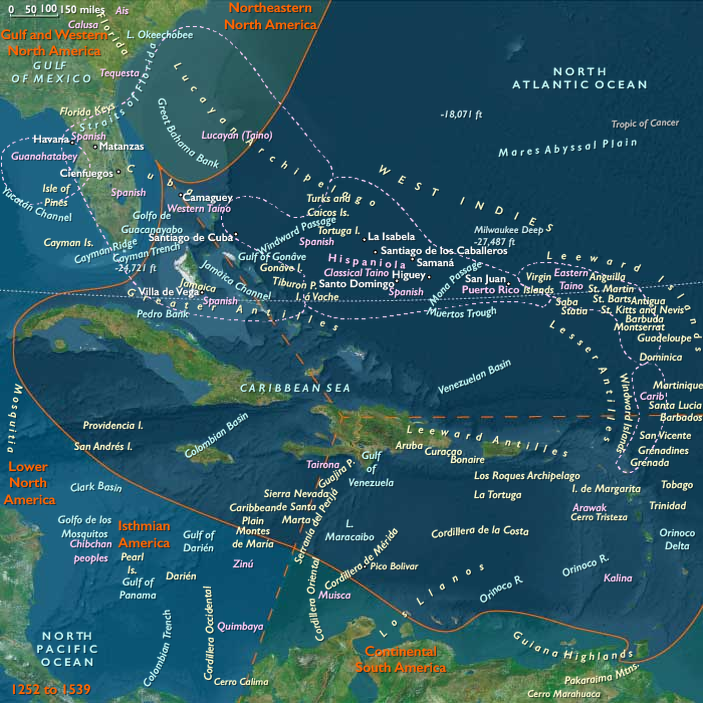
Subregions
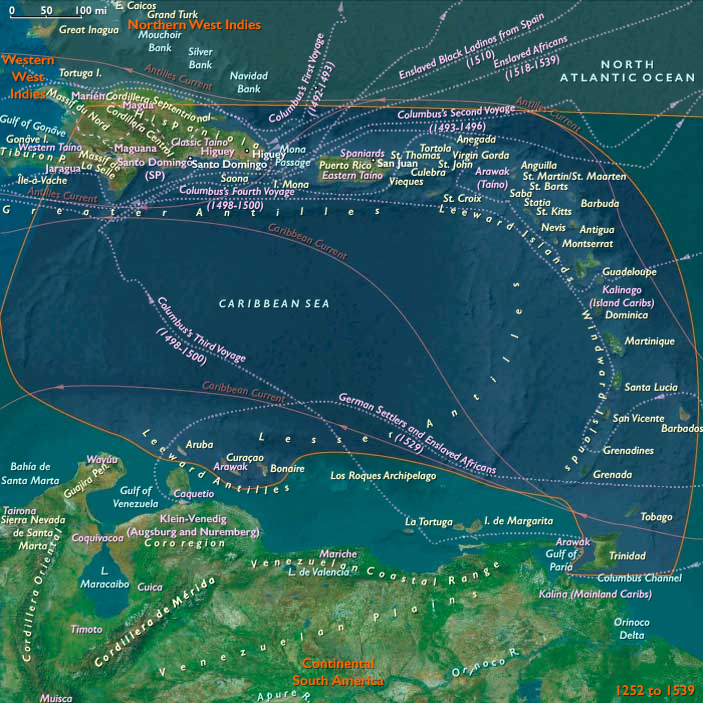
Related Events
Showing 5 events out of 5 total
Years: 1511 - 1511
Locations
People
Groups
- Tajik people
- Christians, Roman Catholic
- Aragon, Crown of
- Dominicans, or Order of St. Dominic
- Castile, Crown of
- Santo Domingo, Captaincy General of
Topics
Commodoties
Subjects
Regions
Subregions