Mongke, on becoming Great Khan, had immediately set out to implement his grandfather Genghis Khan's plan for world empire.
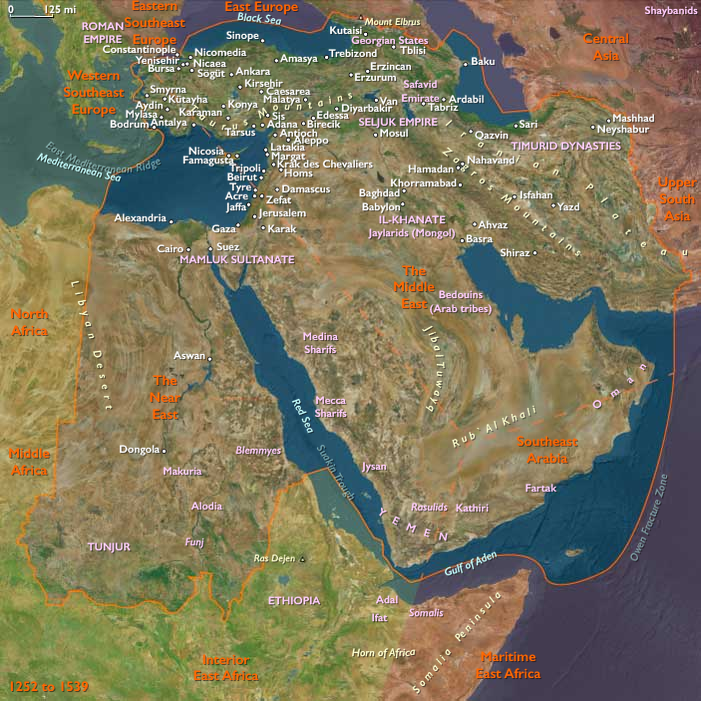
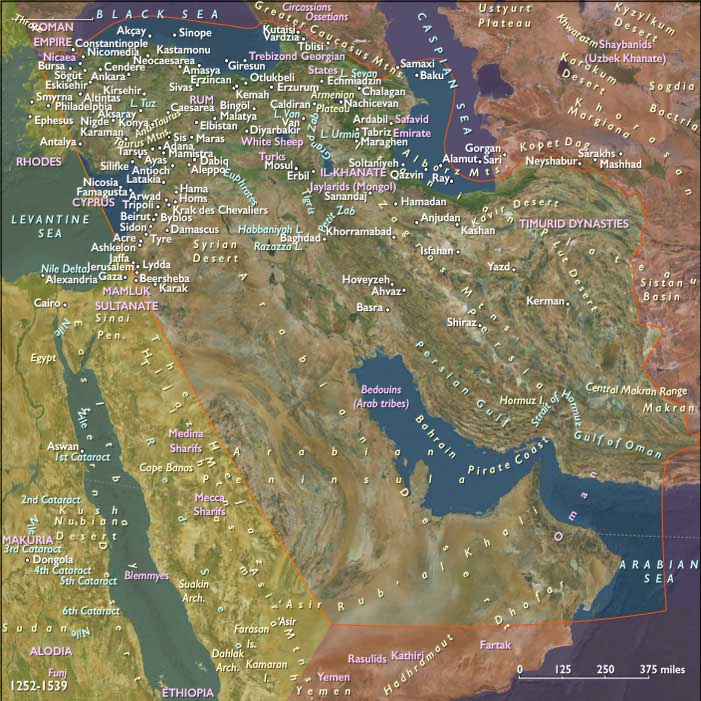
Mongke’s brother Hulagu Khan, who now takes over from Bayju in 1256, has been charged by Mongke with subduing the Muslim kingdoms to the west "as far as the borders of Egypt."
Compiling the army has taken five years, and it is not until 1256 that Hulagu is prepared to begin the invasions.
Mongke has ordered good treatment for those who yield without resistance, and utter destruction for those who do not.
In this way, Hulagu and his army are to conquer some of the most powerful and long standing dynasties of the time.
Other countries in the Mongols' path will submit to Mongol authority, and contribute forces to the Mongol army.
Hulagu's descendants, the Il-khanids, are to rule Persia for the next eighty years, beginning as shamanists, then Buddhists and ultimately converting to Islam.
The term il-Khan means "subordinate khan" and refers to the Ilkhanate dynasty’s initial deference to Mongke as great khan and ultimate sovereign of the entire empire.
Operating from the Mongol base in Persia, Hulagu proceeds south.