
A number of local caudillos keep the …
Years: 1816 - 1827
A number of local caudillos keep the independence movement alive in Venezuela.
One, Jose Antonio Paez, a mestizo, is able to convince his fellow llaneros along the Rio Apure that Boves (who had been killed in battle in late 1814) had been mistaken: that the Spanish, not the criollo patriots, are the true enemies of social equality.
The alliance of his fierce cavalrymen with Bolivar proves indispensable during the critical 1816-20 stage of the independence struggle.
Another caudillo chief named Manuel Piar, after outspokenly encouraging his black and pardo troops to assert their claims for social change, however, is promptly captured, tried, and executed under Bolivar's direction.
This ruthless disposition of Piar as an enemy of the cause of independence enhances Bolivar's stature and military leadership as the "maximum caudillo."
Based near the mouth of the Rio Orinoco, Bolivar defeats the royalist forces in the east with the help of several thousand volunteer European recruits, veterans of the Napoleonic Wars.
Although Caracas remains in royalist hands, the 1819 Congress at Angostura (present-day Ciudad Bolivar) establishes the Third Republic and names Bolivar as its first president.
One, Jose Antonio Paez, a mestizo, is able to convince his fellow llaneros along the Rio Apure that Boves (who had been killed in battle in late 1814) had been mistaken: that the Spanish, not the criollo patriots, are the true enemies of social equality.
The alliance of his fierce cavalrymen with Bolivar proves indispensable during the critical 1816-20 stage of the independence struggle.
Another caudillo chief named Manuel Piar, after outspokenly encouraging his black and pardo troops to assert their claims for social change, however, is promptly captured, tried, and executed under Bolivar's direction.
This ruthless disposition of Piar as an enemy of the cause of independence enhances Bolivar's stature and military leadership as the "maximum caudillo."
Based near the mouth of the Rio Orinoco, Bolivar defeats the royalist forces in the east with the help of several thousand volunteer European recruits, veterans of the Napoleonic Wars.
Although Caracas remains in royalist hands, the 1819 Congress at Angostura (present-day Ciudad Bolivar) establishes the Third Republic and names Bolivar as its first president.
Locations
People
Groups
- Basque people
- Spaniards (Latins)
- Canary Islanders
- Britain, Kingdom of Great
- New Granada, Viceroyalty of
- Venezuela, Captaincy General of
- Spain, Bourbon Kingdom (first restoration) of
Topics
- Colonization of the Americas, Spanish
- Columbian Exchange
- Enlightenment, Age of
- Spanish American wars of independence
- Bolivar's War
- Venezuelan War of Independence
- Bolivar in Venezuela
- Bolívar's campaign to liberate New Granada
Commodoties
- Hides and feathers
- Domestic animals
- Grains and produce
- Slaves
- Fuels, lubricants and sealants
- Stimulants
- Tobacco
Subjects
Regions
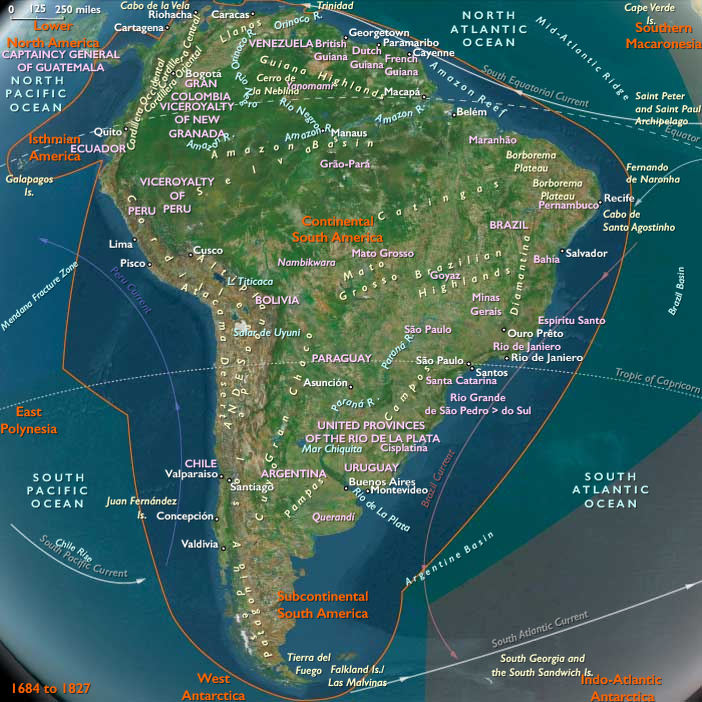
Subregions
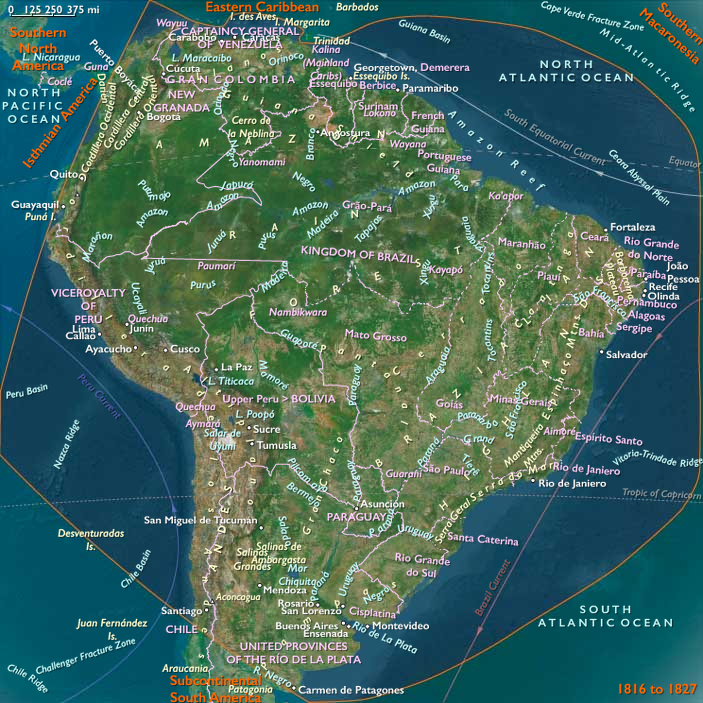
Related Events
Showing 10 events out of 20863 total
Years: 1816 - 1827
Locations
People
Groups
- Basque people
- Spaniards (Latins)
- Canary Islanders
- Britain, Kingdom of Great
- New Granada, Viceroyalty of
- Venezuela, Captaincy General of
- Spain, Bourbon Kingdom (first restoration) of
Topics
- Colonization of the Americas, Spanish
- Columbian Exchange
- Enlightenment, Age of
- Spanish American wars of independence
- Bolivar's War
- Venezuelan War of Independence
- Bolivar in Venezuela
- Bolívar's campaign to liberate New Granada
Commodoties
- Hides and feathers
- Domestic animals
- Grains and produce
- Slaves
- Fuels, lubricants and sealants
- Stimulants
- Tobacco
Subjects
Regions
Subregions