
Bono, an Akan state of West Africa, …
Years: 1723 - 1723
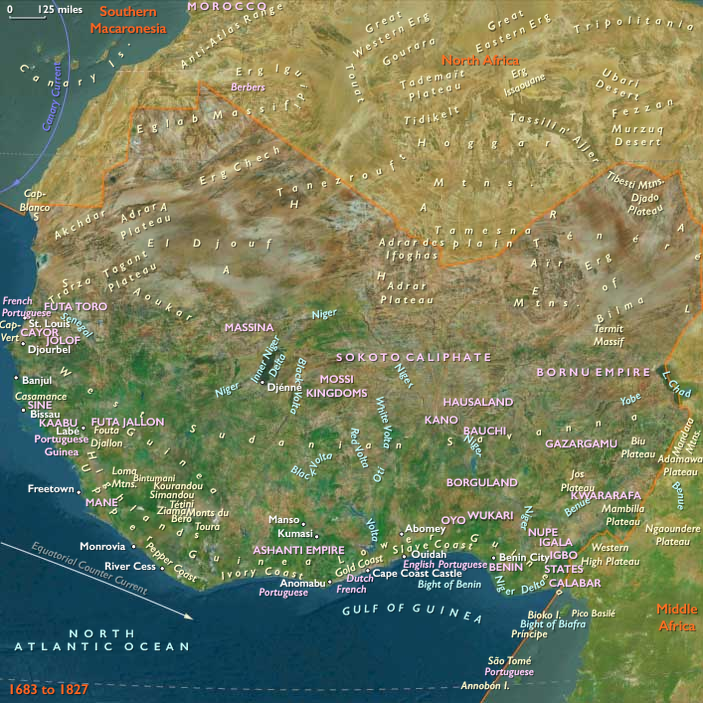
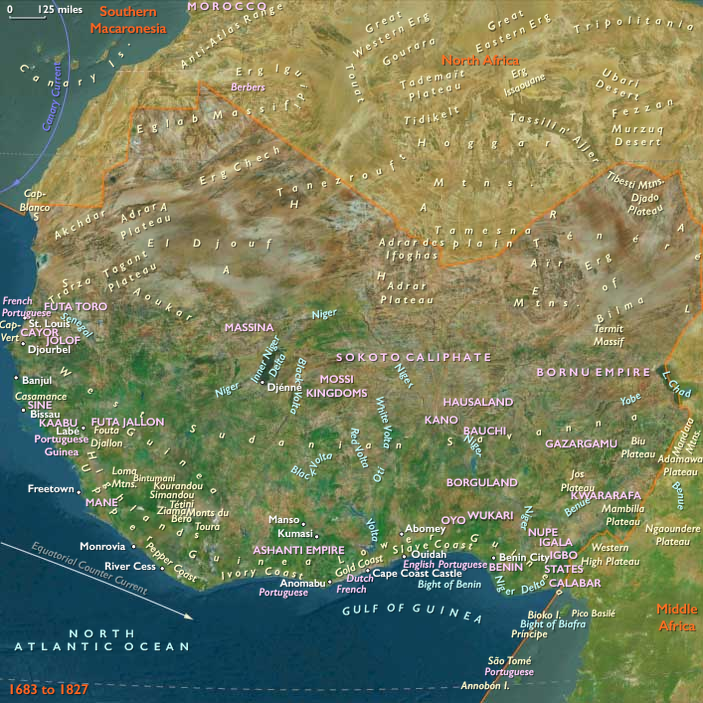
Bono, an Akan state of West Africa, located between the forests of Guinea and the savannas of the Sudan in what is now Brong-Ahafo Region in the Republic of Ghana, had probably been founded about 1450, and its rise was undoubtedly connected with the developing gold trade of Bighu, a Malian Muslim or Dyula commercial center forty miles (sixty-four kilometers) to the northwest.
From there Muslim traders came to Bono soon after its foundation, and many members of the royal household were later converted to Islam.
The kings of Bono are said to have played a major role in the gold-mining industry: both Obunumankoma (flourished from about 1450–75) and 'Ali Kwame (flourished from about 1550 to 60) are thought to have introduced new mining techniques from the western Sudan to the Akan fields, and Owusu Aduam (flourished around 1650) is reported to have completely reorganized the industry.
The gold from the Akan fields, passed through the entrepôts of the western Sudan along the trade routes of the Sahara to the terminal ports of North Africa and from there to Europe and elsewhere.
Bono has engaged in wars with Sumalia Ndewura Jakpa of Gonja and is finally subjugated in 1722–23 by Opoku Ware of the Asante empire.
Locations
Groups
Commodoties
Subjects
Regions
Subregions
Years: 1723 - 1723
Locations
Groups
Commodoties
Subjects
Regions
Subregions