The Spanish Invasion of Trás-os-Montes and the Rising Popular Revolt (April–May 1762)
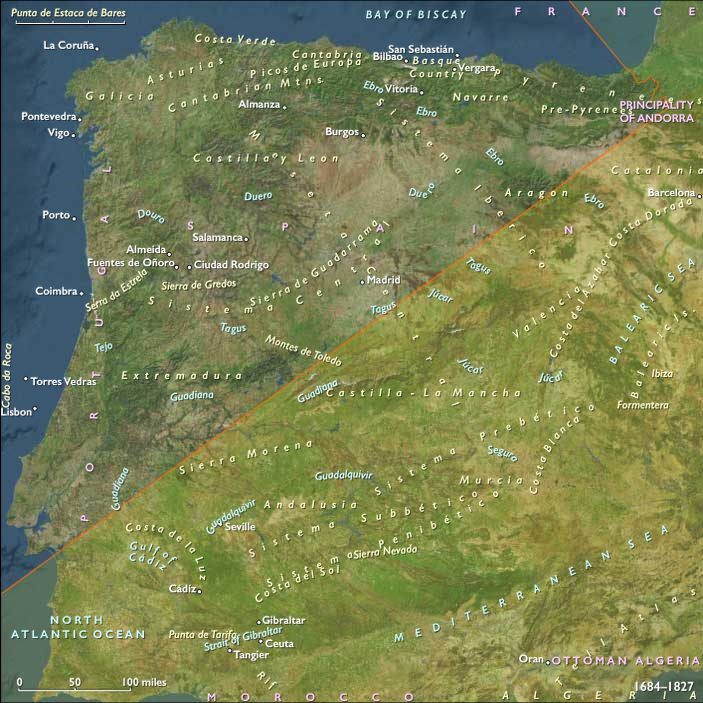
On April 30, 1762, a Spanish force crossed into Portugal through the province of Trás-os-Montes, marking the first incursion of the Franco-Spanish invasion during the Seven Years’ War. To justify their actions, the Spaniards posted a proclamation titled "Reasons for Entering Portugal," in which they claimed they were not invaders, but liberators, coming to free the Portuguese people from the "heavy shackles of England," which they denounced as the "tyrant of the seas."
However, these words were soon betrayed by actions, as Spain’s logistical failures led to widespread resentment and armed resistance among the Portuguese population.
The Main Invasion Begins (May 5, 1762)
On May 5, 1762, a major Spanish force of 22,000 men, led by the Marquis of Sarria, launched the full-scale invasion of Portugal. The response from Lisbon was immediate:
- On May 18, Portugal officially declared war on Spain and France, making its neutrality a thing of the past.
- British reinforcements were not yet in place, and the Portuguese army was still in disarray, forcing the defenders to rely on fortresses and guerrilla resistance.
The Spanish March Through Trás-os-Montes
The first target was the fortress of Miranda, the only well-fortified and provisioned stronghold in the province. However, fate turned against the defenders:
- On May 6, a catastrophic accidental explosion in the fortress's powder magazine—containing twenty tons of gunpowder—killed 400 Portuguese soldiers and opened two massive breaches in the walls.
- With no alternative, Miranda surrendered on May 9, giving the Spaniards their first victory.
With no remaining strongholds and no organized troops in Trás-os-Montes, the Spanish march became effortless:
- Bragança fell on May 12
- Chaves was occupied on May 21
- Torre de Moncorvo surrendered on May 23
These towns were undefended and surrendered without a single shot fired. Powder and provisions were nonexistent, and the Spanish general reportedly mocked Portugal’s lack of soldiers, joking:
"I cannot discover where these insects are."
Spanish Overconfidence and Logistical Failures
At first, the Spanish maintained good relations with the local population, even paying double for food and other provisions. Madrid had miscalculated, assuming that Portugal would quickly submit and that the mere presence of a powerful invading force would be enough to force surrender.
However, this assumption would prove to be a fatal error, for two critical reasons:
-
The Spanish Army Had Entered Portugal Without Enough Provisions
- Confident that Portugal would capitulate quickly, the Spanish had not brought adequate food and supplies.
- The campaign became unsustainable, as they were unable to feed their troops.
-
The Spanish Assumed That Portugal Could Sustain Their Army
- Spanish planners assumed local populations would be able to provide sufficient food and resources.
- When this proved an illusion, Spanish commanders resorted to forced requisitions, taking what they needed by force.
The Spark of Popular Revolt – "War for Food Feeding War"
The moment the Spanish began seizing food and supplies from the local populations, the relationship between the invaders and the Portuguese civilians collapsed.
- Peasants began resisting Spanish foraging parties, sometimes using improvised weapons.
- Local militias, supported by Portuguese irregulars, started attacking supply convoys, cutting off food to the Spanish troops.
- The initial goodwill was replaced by open hostility, turning Trás-os-Montes into a battleground of guerrilla warfare.
This "war for food feeding war" transformed the campaign. Instead of a swift and easy conquest, the Spanish found themselves bogged down, suffering from food shortages, harassment, and an increasingly organized resistance.
Strategic Consequences
The Spanish offensive, which had begun with little resistance, now faced a logistical nightmare:
- Troops were starving, forcing them to retreat to secure supply lines rather than advancing deeper into Portugal.
- The Portuguese irregulars and Ordenanças were gaining momentum, exploiting the terrain and Spanish weaknesses.
- The Bourbon plan for a quick Portuguese surrender unraveled, as the Portuguese populace refused to accept the invaders as "liberators".
While the Spanish and French still had a numerical advantage, their logistical failures and growing Portuguese resistance would ultimately doom the invasion. By the end of 1762, the Bourbon allies would be forced to withdraw, marking a humiliating failure in their attempt to bring Portugal into the Family Compact by force.