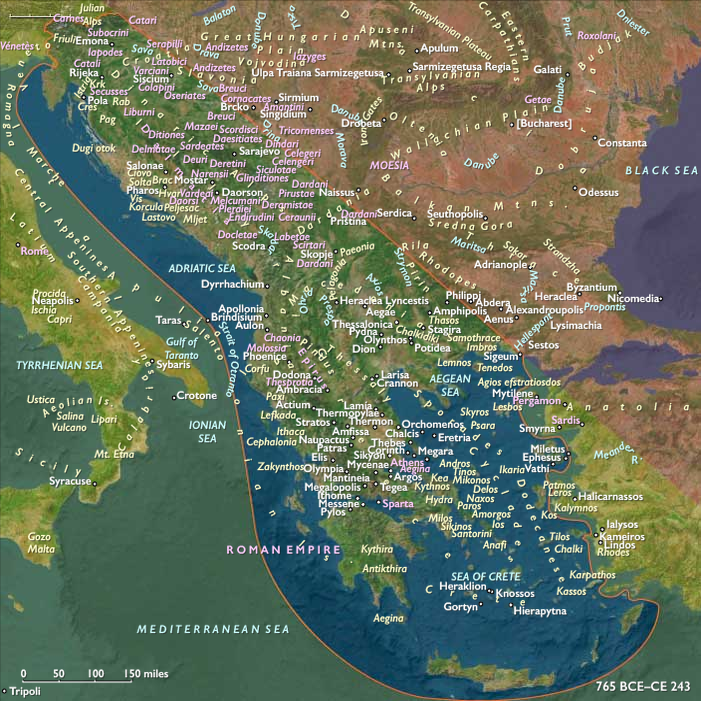
Both Pergamon and Rhodes, together with Egypt,…
201 BCE
Both Pergamon and Rhodes, together with Egypt, appeal to the Romans for help against Macedon, informing Rome of the alliance between the two Hellenistic kings and exaggerating reports of Philip’s aggression.
The Roman Senate, alarmed by the news (or rumors) of an alliance between Philip of Macedon and Antiochus of Syria, considers the request, but with the Second Punic War’s reduction of Rome’s citizen population to about two hundred and fourteen thousand, launching a new war seems unwise.
Senate leaders, mindful of its possession of a veteran army and proven commanders, deliver an ultimatum to Philip; despite the war-weary centuriate assembly's initial refusal to declare war, Rome moves to settle affairs with Philip after he refuses to guarantee to make no hostile moves against these states.
The Roman Senate now prepares to intervene decisively in the system of Hellenistic states.
Historians will debate Rome's reasons for this important decision.
Possible motives range from a desire to protect Athenians and other Greeks from Philip out of philhellenism to fear of the supposed secret alliance between Philip and Antiochus.
However, these suggestions are belied by the fact that Rome will later treat the Greek cities callously and that no fear is apparent in Rome's increasing demands on Philip and in its refusal to negotiate seriously with him through the course of the war.
Rather, the Second Macedonian War (201–196) fits the long pattern of Roman readiness to wage war in order to force increasingly distant neighbors to submit to superior Roman power.
Locations
Groups
Commodities
Subjects
Regions
Southeast Europe
View →Subregions