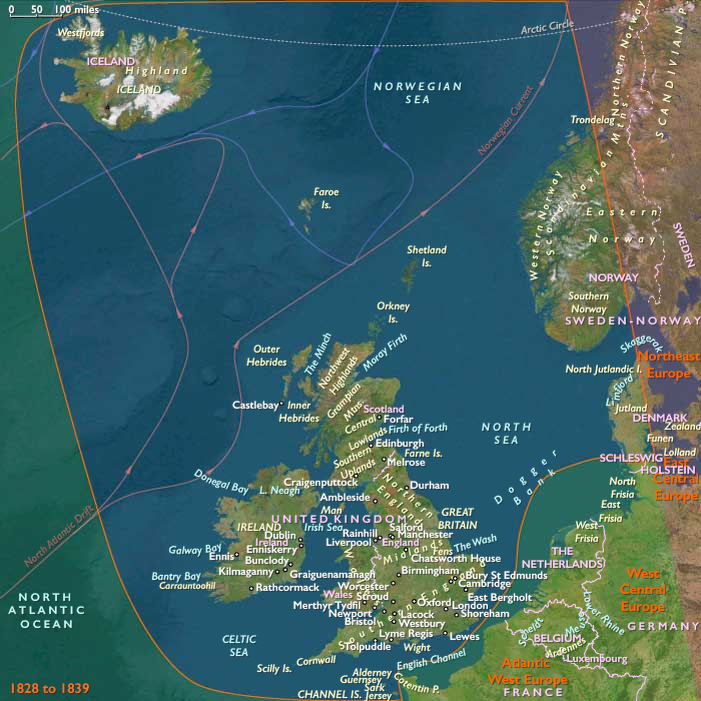
Chartism emerges in Britain after the 1832…
1828 CE to 1839 CE
Activists denounce the 'betrayal' of the working class and the 'sacrificing' of their interests by the 'misconduct' of the government.
In 1838, Chartists issue the People's Charter, demanding manhood suffrage, equal sized election districts, voting by ballots, payment of MPs (so poor men can serve), annual Parliaments, and abolition of property requirements.
Elites see the movement as pathological, so the Chartists are unable to force serious constitutional debate.
Historians will view Chartism as both a continuation of the eighteenth-century fight against corruption and as a new stage in demands for democracy in an industrial society.
Locations
Regions
North Europe
View →Subregions