The decades following the Sepoy Rebellion are…
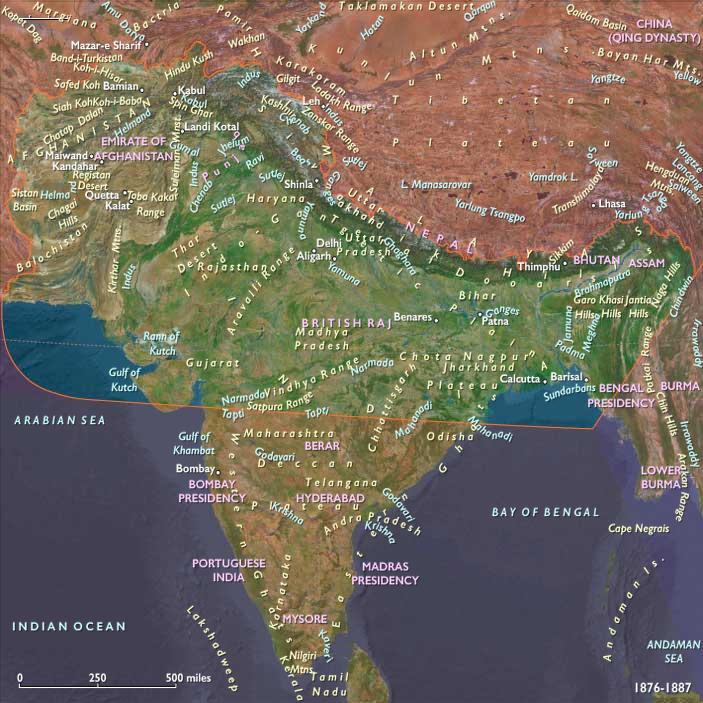
1876 CE to 1887 CE
The decades following the Sepoy Rebellion are a period of growing political awareness, manifestation of Indian public opinion, and emergence of Indian leadership at national and provincial levels.
Ominous economic uncertainties created by British colonial rule and the limited opportunities that await the ever-expanding number of Western-educated graduates begins to dominate the rhetoric of leaders who have begun to think of themselves as a "nation," despite fissures along the lines of region, religion, language, and caste.
Inspired by the suggestion made by A.O. Hume, a retired British civil servant, seventy-three Indian delegates meet in Bombay in 1885 and found the Indian National Congress.
They are mostly members of the upwardly mobile and successful Western-educated provincial elites, engaged in professions such as law, teaching, and journalism.
They have acquired political experience from regional competition in the professions and from their aspirations in securing nomination to various positions in legislative councils, universities, and special commissions.
People
Groups
Regions