Indian soldiers of the British Indian Army,…
1852 CE to 1863 CE
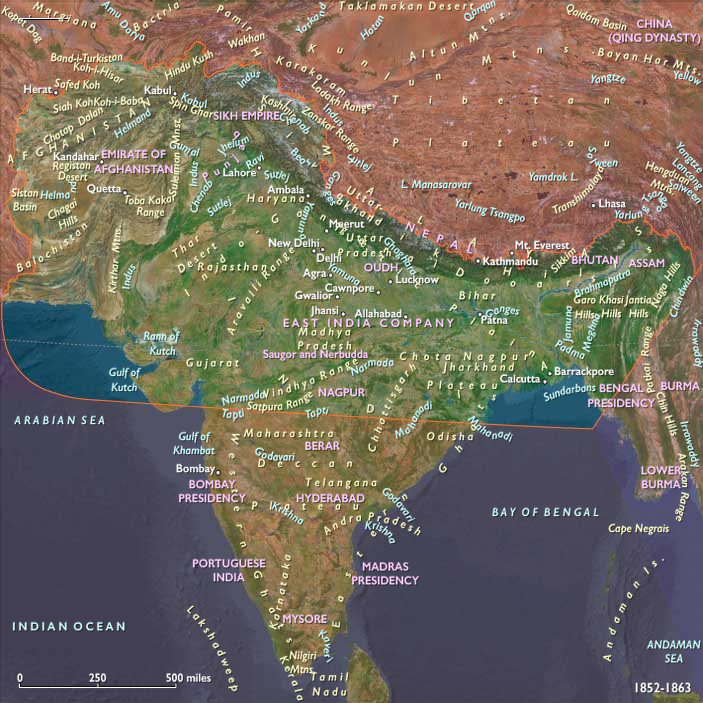
Indian soldiers of the British Indian Army, drawn mostly from Muslim units from Bengal, mutiny at the Meerut cantonment near Delhi on May 10, 1857, starting a year-long insurrection against the British.
The mutineers then march to Delhi and offer their services to the Mughal emperor, whose predecessors had suffered an ignoble defeat one hundred years earlier at Plassey.
The uprising, which seriously threatend British rule in India, has been called many names by historians, including the Sepoy Rebellion, the Great Mutiny, and the Revolt of 1857; many people of the subcontinent, however, prefer to call it India's "first war of independence."
The insurrection is sparked by the introduction of cartridges rumored to have been greased with pig or cow fat, which is offensive to the religious beliefs of Muslim and Hindu sepoys (soldiers).
In a wider sense, the insurrection is a reaction by the indigenous population to rapid changes in the social order engineered by the British over the preceding century and an abortive attempt by the Muslims to resurrect a dying political order.
When mutinous units finally surrender on June 20, 1858, the British exile Emperor Bahadur Shah to Burma, thereby formally ending the Mughal Empire.
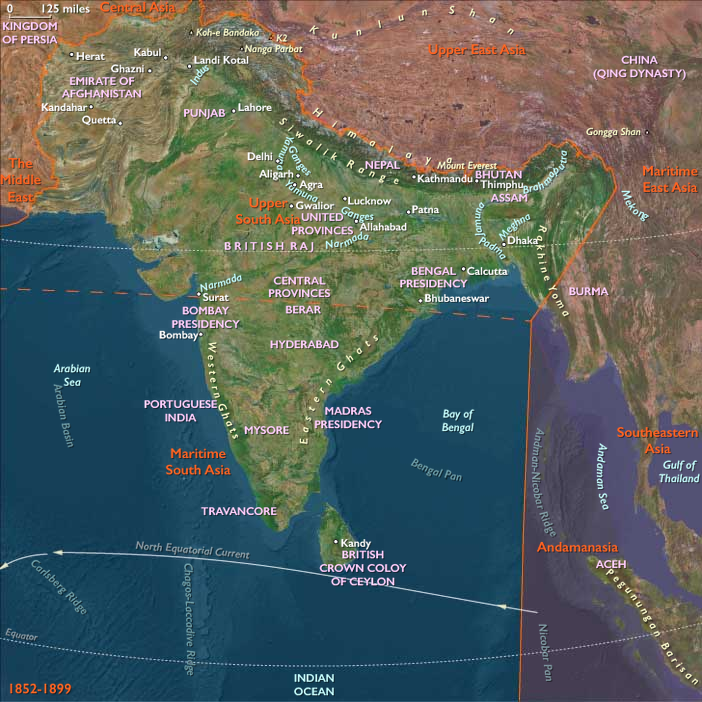
As a direct consequence of the revolt, the British also dissolve the British East India Company and assume direct rule over India, beginning the period of the British Raj.
British India is hereafter headed by a governor general (called viceroy when acting as the direct representative of the British crown).
The governor general, who embodies the supreme legislative and executive authority in India, is responsible to the secretary of state for India, a member of the British cabinet in London.
Locations
People
Groups
Topics
Regions
South Asia
View →Subregions