The turmoil of the 1890s and particularly…
1888 CE to 1899 CE
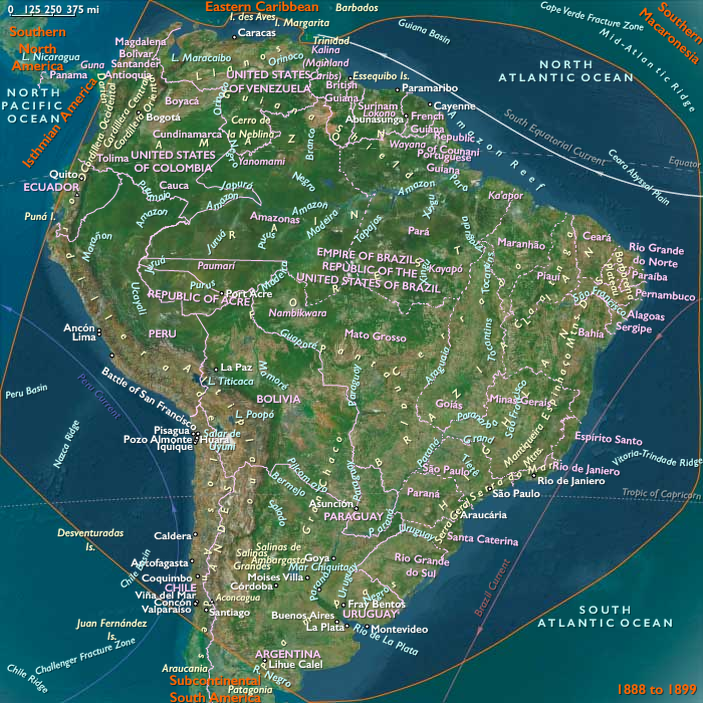
The turmoil of the 1890s and particularly Canudos suspends the Brazilian military's capability to exercise the moderating role that it has supposedly inherited from the monarchy.
By 1898 the rural-based regional oligarchies have regained command of the political system.
Their fiscal policies reflect their belief that Brazil is an agricultural country whose strength wis in supplying Europe and North America with coffee, rubber, sugar, tobacco, and many natural resources.
Brazil produces seventy-five percent of the world's coffee.
With competition increasing, however, prices fall continually, causing the government to devalue the currency against the British pound.
This devaluation forces up the price of imported goods, thus lowering consumption and government tax revenues from imports.
Those shortfalls lead to suspension of payments on the foreign debt, and the generally poor economy causes half of the banks to collapse.
The oligarchy responds to the situation by attempting to preserve its own position and by limiting national industry and infrastructure to that necessary to support the agricultural economy.
The society that the economy underlies is one in which the elites regard the majority of the people merely as cheap labor.
The elites encourage immigration to keep labor plentiful and inexpensive, although they also want to "whiten" the population.
They consider public education of little use and potentially subversive.
Topics
Subjects
Regions
South America
View →Subregions