
Charles the Bold Captures Nancy (November 30, …
Years: 1475 - 1475
Charles the Bold Captures Nancy (November 30, 1475)
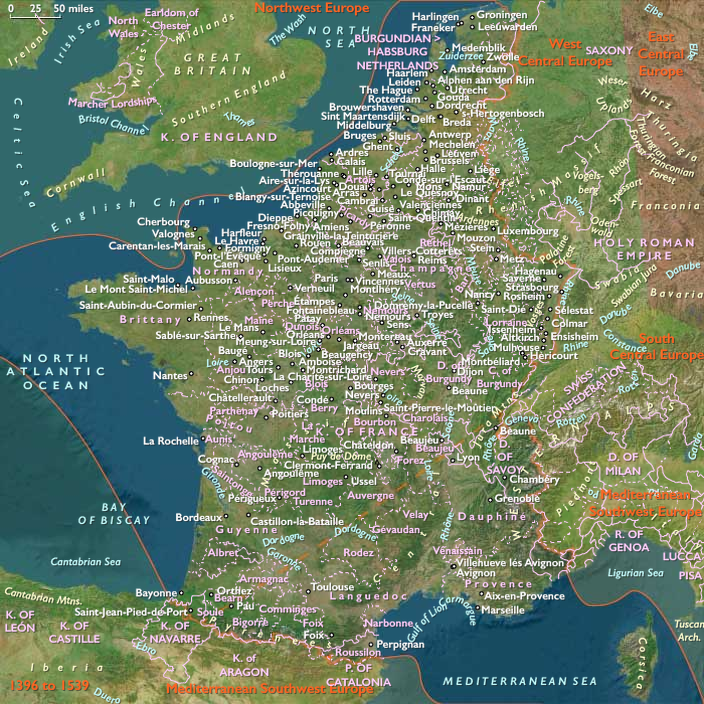
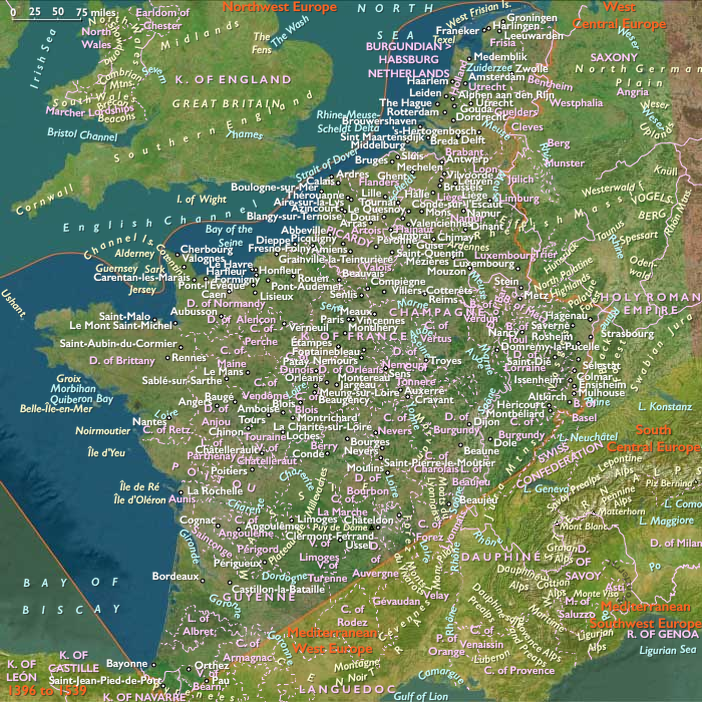
On November 30, 1475, Charles the Bold, Duke of Burgundy, secured a significant victory by seizing Nancy, the strategic and historic capital of the Duchy of Lorraine. Charles's conquest represented a critical step toward realizing his ambitious geopolitical objective: connecting his Burgundian heartlands with the prosperous Low Countries by controlling the strategically pivotal Lorraine region.
Historical and Strategic Importance of Nancy
Founded around 1050 by Gerard, Duke of Lorraine, the town of Nanciacum (Nancy) evolved from a modest fortified settlement into a significant administrative and political center. After being destroyed in 1218 during the War of Succession of Champagne and subsequently conquered by Emperor Frederick II, Nancy was rebuilt in stone over subsequent centuries, reflecting its growing strategic importance as the capital of the Duchy of Lorraine. Its geographical position—midway between Burgundy and the Low Countries—made control of Nancy essential to Charles’s overarching territorial ambitions.
Charles’s Military and Political Success
Charles's capture of Nancy in 1475 marked one of his few major successes during the turbulent years of the Burgundian Wars. By securing this vital stronghold, he temporarily succeeded in linking his fragmented territories, fulfilling a long-held strategic goal. The seizure of Nancy also dramatically elevated Charles’s prestige, enhancing Burgundian influence and reaffirming his authority across his extensive but disparate domains.
Economic and Cultural Consequences
Nancy’s capture had immediate economic implications. Control over Lorraine allowed Burgundy enhanced access to major trade routes connecting Northern Europe with southern and central territories, briefly expanding Burgundy’s commercial influence and reinforcing the economic foundations of Charles’s envisioned middle kingdom.
Culturally, Charles’s temporary control over Nancy introduced Burgundian artistic and administrative influences into the region, integrating Lorraine more closely into the cultural orbit of the prosperous Burgundian Netherlands.
Diplomatic Context and the Coming Storm
However, this success proved short-lived. Charles’s aggressive actions in Lorraine intensified local resentment, alienated regional rulers, and deepened existing opposition among neighbors, notably the Swiss Confederation, French king Louis XI, and other adversaries. These enemies quickly coalesced into a potent alliance that would soon undermine Charles’s position.
Long-Term Significance
Charles’s triumph at Nancy in 1475 was ultimately overshadowed by the catastrophic events that followed. Within two years, his control of the city would collapse spectacularly. The reconquest of Nancy by Duke René II of Lorraine and his allies in January 1477, culminating in Charles’s own death during the battle, ended Burgundian ambitions decisively.
Thus, the capture of Nancy in 1475 represented a fleeting high-water mark in Charles’s career, highlighting the transient nature of military success when unsupported by diplomatic strategy. Its subsequent loss illustrated the severe vulnerabilities underlying Burgundian power, signaling the definitive end of Burgundy’s brief ascendancy and significantly shaping the political landscape of late medieval Atlantic West Europe.
Locations
People
Groups
- Burgundy, Duchy of
- Lorraine, (second) Duchy of
- Swiss Confederacy, Old (Swiss Confederation)
- France, (Valois) Kingdom of
- England, (Plantagenet, Yorkist) Kingdom of
Topics
Commodoties
Subjects
Regions
Subregions
Years: 1475 - 1475
Locations
People
Groups
- Burgundy, Duchy of
- Lorraine, (second) Duchy of
- Swiss Confederacy, Old (Swiss Confederation)
- France, (Valois) Kingdom of
- England, (Plantagenet, Yorkist) Kingdom of
Topics
Commodoties
Subjects
Regions
Subregions