
Atlantic West Europe: Rivalries, Renaissance, and Expansion …
Years: 1492 - 1503
Atlantic West Europe: Rivalries, Renaissance, and Expansion (1492–1503)
The era spanning 1492 to 1503 in Atlantic West Europe is marked by a decisive shift toward early-modern dynamics, characterized by intensified rivalry between France and the Habsburgs, the accelerated spread of Renaissance humanism and arts from Italy into Northern Europe, and burgeoning overseas ambitions that initiate Europe's age of discovery. This period reshapes political boundaries, amplifies economic prosperity, and introduces new cultural impulses that will define the trajectory of the region into the sixteenth century.
Political and Military Developments
Charles VIII of France, who assumes full rule in 1491, dramatically alters Europe's geopolitical landscape by launching his Italian campaign in 1494, triggering the protracted and costly Italian Wars. Though initially successful—with French troops briefly occupying Naples—the campaign ultimately ends in retreat (1495), leaving enduring animosities and prompting the formation of the anti-French League of Venice. This sets the stage for ongoing Franco-Habsburg rivalry, as Maximilian I of Austria and his son Philip consolidate their rule over the Low Countries, positioning the Habsburgs as France’s chief adversaries.
In the Low Countries, tensions continue under Habsburg control, as Philip the Handsome matures into rulership, increasing centralization and further linking Flemish prosperity to Habsburg political ambitions. Meanwhile, in France, Louis XII ascends to the throne (1498) after Charles VIII’s sudden death, and quickly renews French efforts to expand into Italy, deepening existing geopolitical frictions.
Economic Developments
Economically, this era is transformative for the Atlantic West. Antwerp continues its rapid rise, benefiting significantly from increasing international trade flows that connect the Mediterranean, the German heartland, and the burgeoning trans-Atlantic exchanges initiated by Spain and Portugal. The flow of new goods from global exploration—spices, precious metals, and eventually New World commodities—begins reshaping European markets.
In France, royal patronage supports domestic production and trade, leading to urban prosperity in cities such as Paris, Lyon, and Rouen. Increased stability within the kingdom, despite costly military campaigns abroad, fosters internal economic development and innovation.
Cultural and Artistic Flourishing
The arrival of Italian Renaissance humanism deeply influences intellectual and artistic life in Atlantic West Europe during this era. The patronage of rulers such as Louis XII and noble families in the Low Countries accelerates the adoption of Renaissance style, characterized by a renewed interest in classical learning, naturalism in art, and innovation in architecture. Prominent artists such as Jean Hey (the Master of Moulins) in France and continuing Flemish masters, including Gerard David, shape a unique Northern Renaissance tradition blending realism and detailed observation with Italianate humanist influences.
Humanist scholarship flourishes in France, notably at the University of Paris, where figures like Jacques Lefèvre d’Étaples introduce critical approaches to religious and classical texts, foreshadowing later religious reform movements.
Technological and Societal Shifts
Military technology continues evolving significantly in these years, with artillery and fortifications developing in response to the new style of warfare prompted by the Italian campaigns. The establishment of permanent royal armies in France reflects this transformation.
Simultaneously, societal structures see subtle shifts, particularly with the rising influence of urban merchants who increasingly play decisive roles in funding royal ambitions, thus subtly challenging traditional feudal authority.
Long-term Consequences and Significance
The period 1492 to 1503 dramatically reshapes Atlantic West Europe. Politically, the region becomes entangled in complex European rivalries that will dominate the sixteenth century. Economically, the flourishing trade in Antwerp, along with the growing impact of Atlantic exploration, positions the region as central to emerging global commerce. Culturally, the deepening integration of Renaissance ideas and humanist thought stimulates intellectual ferment, paving the way for religious transformations and cultural achievements that will profoundly influence the European Renaissance. The era's transformations ultimately lay foundations for both the global reach of European empires and the cultural dynamism of Early Modern Europe.
People
- Charles VIII of France
- Gerard David
- Jacques Lefèvre d’Étaples
- Jean Hey
- Louis XII of France
- Philip I of Castile
Groups
Topics
Commodoties
Subjects
Regions
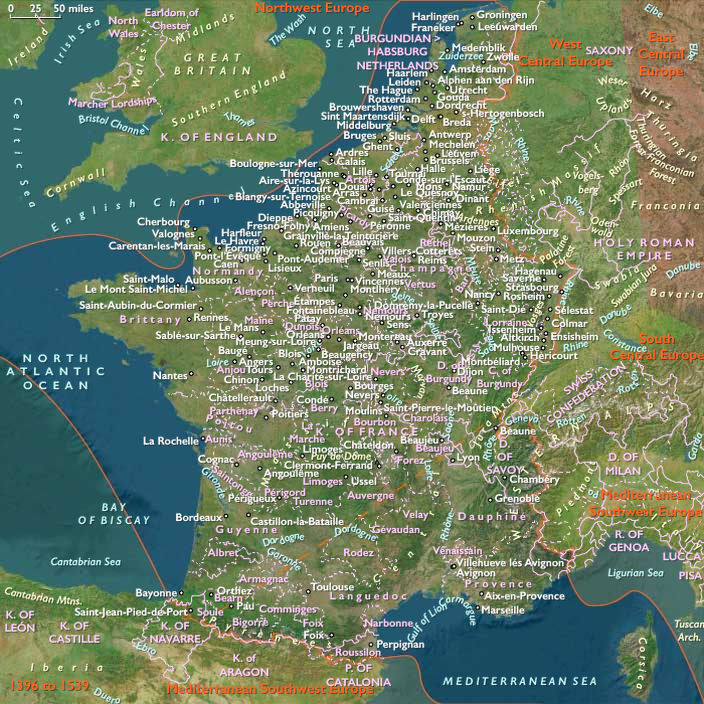
Subregions
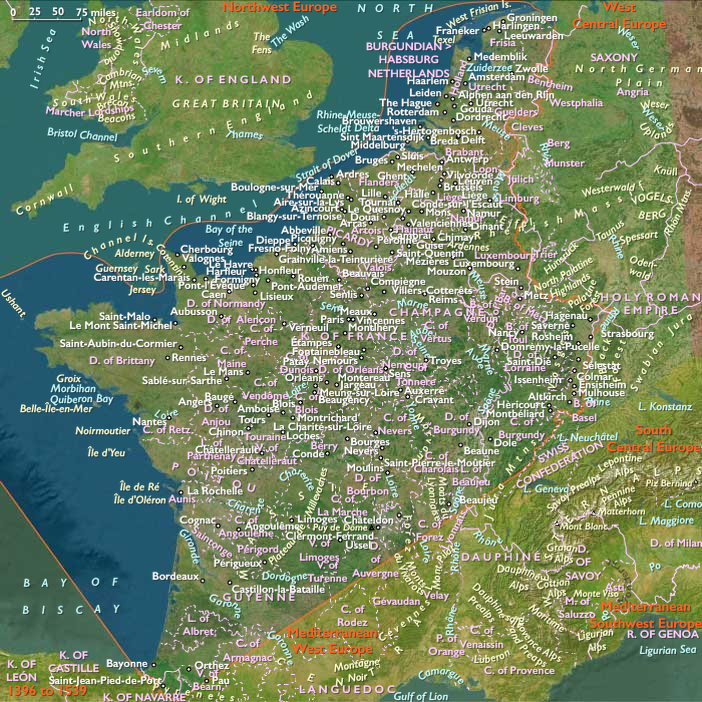
Related Events
Showing 10 events out of 40412 total
Years: 1492 - 1503
People
- Charles VIII of France
- Gerard David
- Jacques Lefèvre d’Étaples
- Jean Hey
- Louis XII of France
- Philip I of Castile
Groups
Topics
Commodoties
Subjects
Regions
Subregions