
At the start of 1808, the Captaincy …
Years: 1808 - 1808
At the start of 1808, the Captaincy General of Chile—one of the smallest and poorest colonies in the Spanish Empire—is under the administration of Luis Muñoz de Guzmán, an able, respected and well-liked Royal Governor.
In May 1808 the overthrow of Charles IV and Ferdinand VII, their replacement by Joseph Bonaparte and the start of the Peninsular War plunges the empire into a state of agitation.
In the meantime, Chile is facing its own internal political problems.
Governor Guzmán had suddenly died in February of this year and the crown had not been able to appoint a new governor before the invasion.
After a brief interim regency by Juan Rodríguez Ballesteros, and according to the succession law in place at the time, the position is laid claim to and assumed by the most senior military commander, who happens to be Brigadier Francisco García Carrasco.
García Carrasco takes over the post of Governor of Chile in April and in August the news of the Napoleonic invasion of Spain and of the formation of a Supreme Central Junta to govern the Empire in the absence of a legitimate king reaches the country.
In the meantime, Carlota Joaquina, sister of Ferdinand and wife of the King of Portugal, who is living in Brazil, also makes attempts to obtain the administration of the Spanish dominions in Latin America.
Since her father and brother are being held prisoners in France, she regards herself as the heiress of her captured family.
Allegedly among her plan is to send armies to occupy Buenos Aires and northern Argentina and to style herself as Queen of La Plata.
Brigadier García Carrasco is a man of crude and authoritarian manners, who manages in a very short time to alienate the criollo elites under his command.
Already in Chile, as in most of Latin America, there had been some independence agitation but minimal and concentrated in the very ineffectual Conspiracy of the Tres Antonios back in 1781.
The majority of the people are fervent royalists but are divided into two groups: those who favor the status quo and the divine right of Ferdinand VII (known as absolutists) and those who want to proclaim Charlotte Joaquina as Queen (known as carlotists).
A third group is composed of those who propose the replacement of the Spanish authorities with a local junta of notable citizens, which would conform a provisional government to rule in the absence of the king and an independent Spain (known as juntistas).
Locations
People
- Carlota Joaquina of Spain
- Charles IV of Spain
- Ferdinand VII of Spain
- Joseph Bonaparte
- José Miguel Carrera
- Napoleon
Groups
- Chile (Spanish colony)
- Portugal, Bragança Kingdom of
- Brazil, Viceroyalty of
- Spain, Bonapartist Kingdom of
- Supreme Central and Governing Junta of the Kingdom
- Chile, Republic of
Topics
- Colonization of the Americas, Spanish
- Spanish American wars of independence
- Chilean Revolt
- Chilean War of Independence
Subjects
Regions
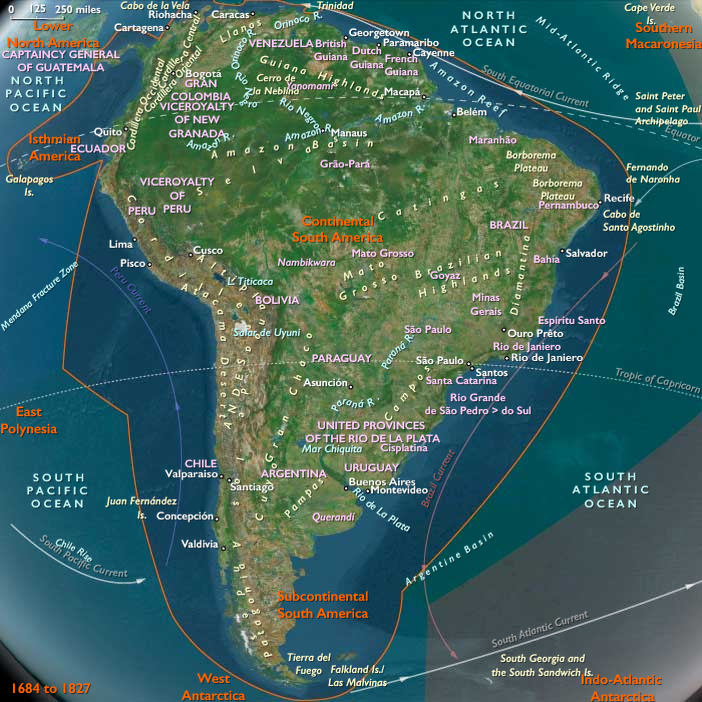
Subregions
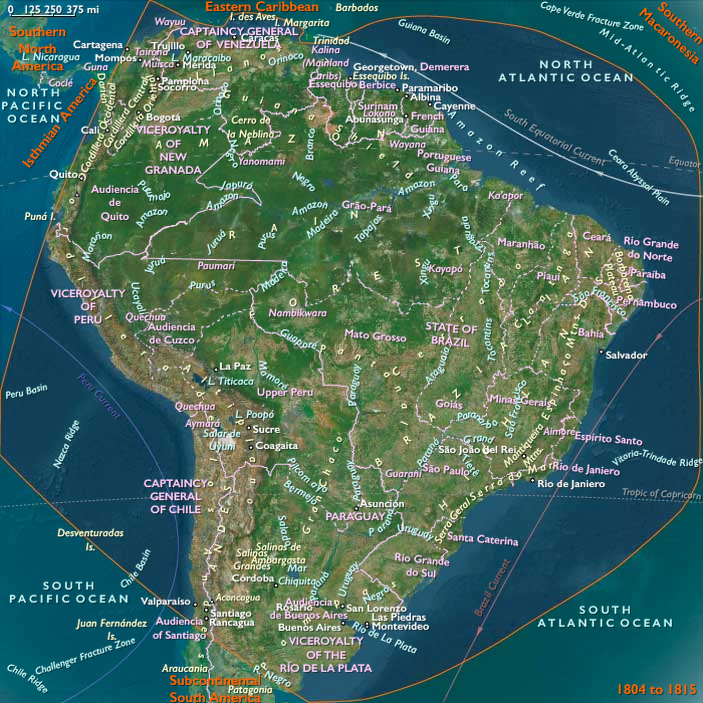
Related Events
Showing 10 events out of 21882 total
Years: 1808 - 1808
Locations
People
- Carlota Joaquina of Spain
- Charles IV of Spain
- Ferdinand VII of Spain
- Joseph Bonaparte
- José Miguel Carrera
- Napoleon
Groups
- Chile (Spanish colony)
- Portugal, Bragança Kingdom of
- Brazil, Viceroyalty of
- Spain, Bonapartist Kingdom of
- Supreme Central and Governing Junta of the Kingdom
- Chile, Republic of
Topics
- Colonization of the Americas, Spanish
- Spanish American wars of independence
- Chilean Revolt
- Chilean War of Independence
Subjects
Regions
Subregions