Claude Du Vall, born n 1643 to…
January 1670 CE
Claude Du Vall, born n 1643 to a poor family in Domfront, Orne, Normandy, had been sent at the age of fourteen to Paris, where he worked as a domestic servant.
He later became a stable boy for a group of English royalists and moved to England in the time of the English Restoration as a footman of the Duke of Richmond and rented a house in Wokingham.
Du Vall had before long become a successful highwayman who robbed the passing stagecoaches in the roads to London, especially Holloway between Highgate and Islington.
Unlike most other brigands, however, he has distinguished himself with rather gentlemanly behavior and fashionable clothes.
He reputedly has never used violence.
One of his victims was squire Roper, Master of the Royal Buckhounds, whom he relieved of fifty guineas and tied to a tree.
Among the most famous of the many tales about Du Vall—placed in more than one location and later published by William Pope—claims that he took only a part of his potential loot from a gentleman when his wife agreed to dance with him in the wayside, a scene immortalized by William Powell Frith in his 1860 painting Claude Duval.
The apparently gallant highwayman inspired a number of biographers and playwrights to add to his legend, including claims of alchemy, gambling, and much womanizing.
If Du Vall’s intention was to deter pursuit by his non-threatening behavior, he did not totally succeed.
After the authorities promised a large reward, he fled to France for some time but returned a few months later.
Shortly afterwards he had been arrested in the Hole-in-the-Wall tavern in London's Chandos Street, Covent Garden.
Judge Sir William Morton on January 17, 1670, finds him guilty of six robberies (others remain unsolved) and on January 21 he is executed at Tyburn.
He is reputed to have stopped for his last drink at the Swan Inn on the Bayswater Road, London, on the way to Tyburn, now commemorated at the pub by a plaque.
Locations
Subjects
Regions
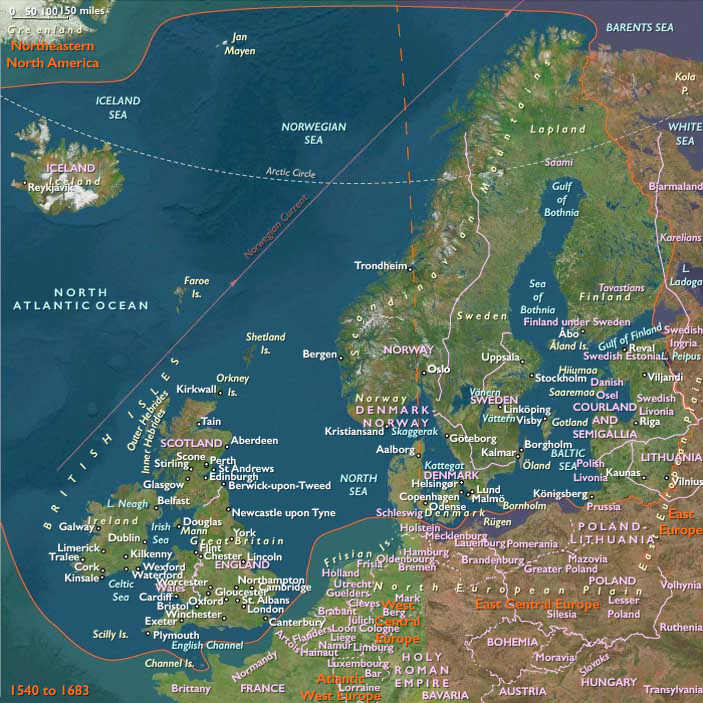
North Europe
View →Subregions