
Atlantic West Europe (333–190 BCE): Indigenous Growth, …
Years: 333BCE - 190BCE
Atlantic West Europe (333–190 BCE): Indigenous Growth, Trade Expansion, and Early Mediterranean Influences
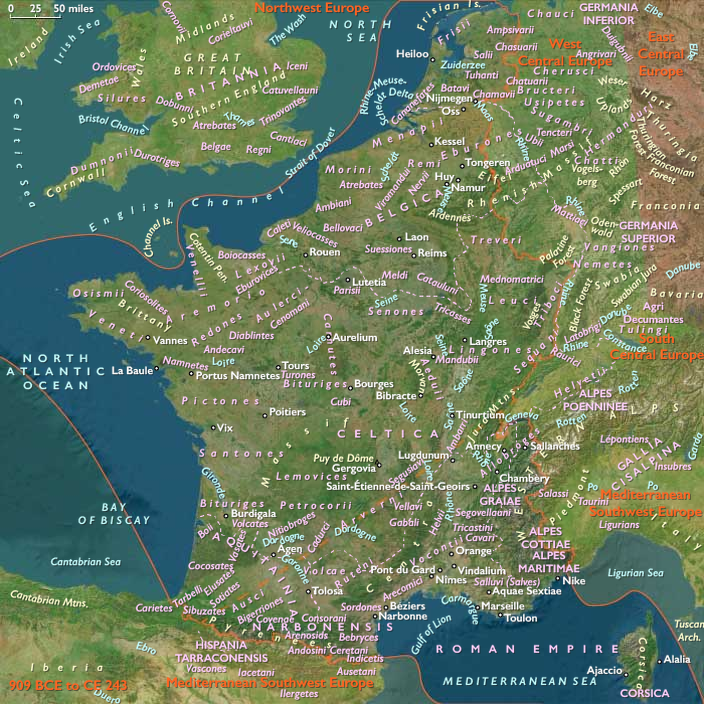
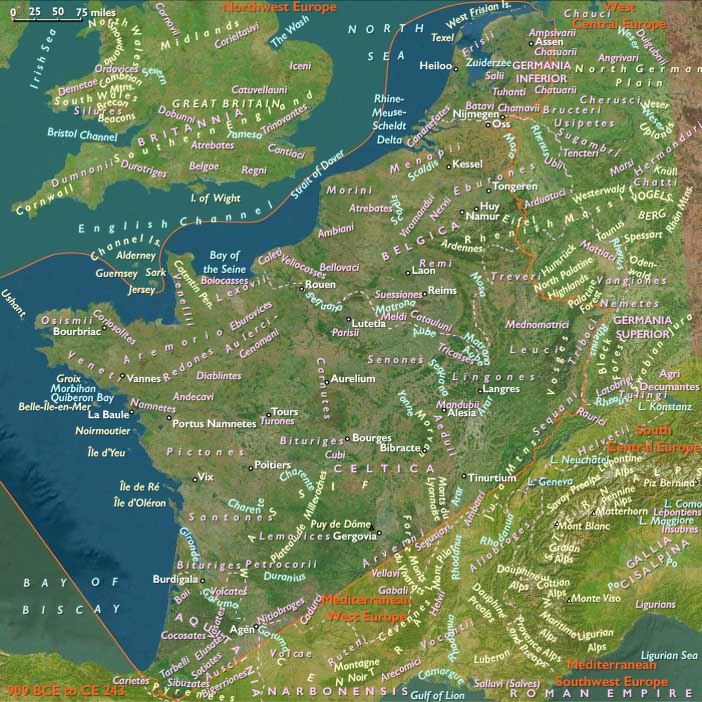
From 333 to 190 BCE, Atlantic West Europe—including Aquitaine, the Atlantic coast, northern and central Gaul, Alsace, and the Low Countries—underwent significant indigenous political consolidation, economic expansion, and early interactions with Mediterranean societies. This era was characterized by increasing complexity among Celtic tribal societies, evolving trade networks, and cultural exchanges facilitated by Mediterranean contact points such as Massalia (Marseille) and direct maritime trade with Carthage.
Political and Military Developments
Emergence and Consolidation of Celtic Tribes
-
Major tribes, including the Arverni and Aedui in central Gaul, and the maritime-oriented Veneti along the Brittany coast, solidified their political control through strategic alliances, territorial expansion, and strengthened military capabilities.
-
In northern regions, early Belgae tribal groups (notably the Bellovaci, Nervii, and Remi) began forming defensive confederations, responding proactively to both internal rivalries and external threats.
Early Mediterranean and Carthaginian Contacts
-
Direct Roman involvement remained minimal, with attention primarily toward Mediterranean and eastern affairs; however, indirect Roman and Greek influence gradually increased via trade and diplomatic contacts through southern Gaul, especially Massalia.
-
Significantly, Carthaginian maritime traders directly engaged Atlantic coastal tribes such as the Veneti, Namnetes, Pictones, Santones, and Coriosolites, fostering increased maritime expertise and economic prosperity among these coastal communities.
-
Diplomatic exchanges with Mediterranean colonies laid foundations for future interactions, subtly shaping regional tribal dynamics and alliances.
Economic and Social Developments
Expansion of Regional and Long-Distance Trade
-
Atlantic West Europe's economic landscape flourished, driven by active trade networks connecting regional tribes with distant Mediterranean markets. Commodities such as metals (particularly tin and silver), amber, salt, textiles, timber, grain, and slaves were extensively traded, enriching tribal elites.
-
Maritime tribes like the Veneti significantly enhanced their shipbuilding technologies and maritime navigation skills through interactions with Carthaginian traders, securing dominance over Atlantic seaways and benefiting from expanded Mediterranean commerce.
Proto-Urban Settlements and Agricultural Growth
-
Larger fortified settlements (oppida), including early versions of Bibracte, Cenabum, and Gergovia, emerged as important economic, administrative, and cultural hubs, reflecting greater societal organization and urbanization.
-
Advancements in agricultural practices increased productivity, supporting population growth and enabling the emergence of more complex societal structures.
Cultural and Religious Developments
Flourishing of Early La Tène Culture
-
La Tène artistic traditions significantly matured during this period, distinguished by intricate metalwork, decorative weaponry, elaborate jewelry, and pottery, highlighting regional wealth, status, and identity.
-
Elite burials increasingly included valuable imported Mediterranean and Carthaginian goods, underscoring evolving cultural interactions and deepening social hierarchies.
Rise of Druidic Authority and Religious Cohesion
-
Druids rose to prominence as influential spiritual, judicial, and cultural leaders, centralizing religious practices and reinforcing cultural cohesion among disparate tribes.
-
Expansion of ritual sites, sacred groves, and communal sanctuaries promoted regional unity and strengthened collective tribal identities.
Notable Tribal Groups and Settlements
-
Arverni: Emerged as dominant central Gallic powers, strategically controlling vital inland trade routes and fertile agricultural lands.
-
Aedui: Strengthened economically and diplomatically through advantageous positioning along major riverine trade corridors, effectively connecting north-south commerce.
-
Veneti: Asserted maritime dominance, significantly influenced by Carthaginian contacts, controlling critical Atlantic trade networks and coastal regional dynamics.
-
Belgae Tribes (Bellovaci, Nervii, Remi): Increasingly organized military and political structures, solidifying influence across the northern and Low Countries region.
Long-Term Significance and Legacy
Between 333 and 190 BCE, Atlantic West Europe:
-
Experienced critical indigenous political consolidation, setting foundational power structures that later shaped regional resistance and adaptation to external influences, including Roman expansion.
-
Developed extensive trade networks with the Mediterranean and Carthaginian societies, fostering economic prosperity, societal complexity, and early cultural integration.
-
Established enduring cultural identities, artistic sophistication, and religious institutions, significantly influencing the future trajectory of the region.
This formative era laid essential groundwork for subsequent historical developments, positioning Atlantic West Europe as a dynamic and integral region increasingly connected to the broader Mediterranean and Atlantic worlds.
Groups
- Polytheism (“paganism”)
- Arverni (Gaulish tribe)
- Veneti (Gaul)
- Celts
- Carthage, Kingdom of
- Massalia (Ionian Greek) city-state of
- Roman Republic
- Pictones
- Aedui (Gaulish tribe)
- Sequani (Gaulish tribe)
- Santones (Gaulish tribe)
- Nervii (Belgic tribe)
- La Tène culture
- Bellovaci (Belgic tribe)
- Coriosolites (Gaulish tribe)
- Namnetes (Gaulish tribe)
- Remi (Gaulish tribe)
Topics
Commodoties
- Weapons
- Gem materials
- Domestic animals
- Grains and produce
- Textiles
- Ceramics
- Slaves
- Salt
- Beer, wine, and spirits
- Manufactured goods
Subjects
Regions
Subregions
Years: 333BCE - 190BCE
Groups
- Polytheism (“paganism”)
- Arverni (Gaulish tribe)
- Veneti (Gaul)
- Celts
- Carthage, Kingdom of
- Massalia (Ionian Greek) city-state of
- Roman Republic
- Pictones
- Aedui (Gaulish tribe)
- Sequani (Gaulish tribe)
- Santones (Gaulish tribe)
- Nervii (Belgic tribe)
- La Tène culture
- Bellovaci (Belgic tribe)
- Coriosolites (Gaulish tribe)
- Namnetes (Gaulish tribe)
- Remi (Gaulish tribe)
Topics
Commodoties
- Weapons
- Gem materials
- Domestic animals
- Grains and produce
- Textiles
- Ceramics
- Slaves
- Salt
- Beer, wine, and spirits
- Manufactured goods
Subjects
Regions
Subregions