The Second Major Wave of the Plague …
Years: 580 - 591
The Second Major Wave of the Plague (588 CE): Devastation in the Frankish Kingdom and the Mediterranean
In 588 CE, a second major wave of plague spreads across the Mediterranean and into Gaul (modern-day France), echoing the Plague of Justinian (541–542 CE). This pandemic causes widespread mortality, economic collapse, and political instability, further weakening the already fragmented Merovingian Frankish kingdoms.
1. The Scale of the Epidemic
- The estimated death toll reaches up to twenty-five million, making this one of the most catastrophic outbreaks in early medieval Europe.
- The plague follows trade and military routes, devastating coastal cities and riverine settlements first before spreading inland.
- Areas most affected include:
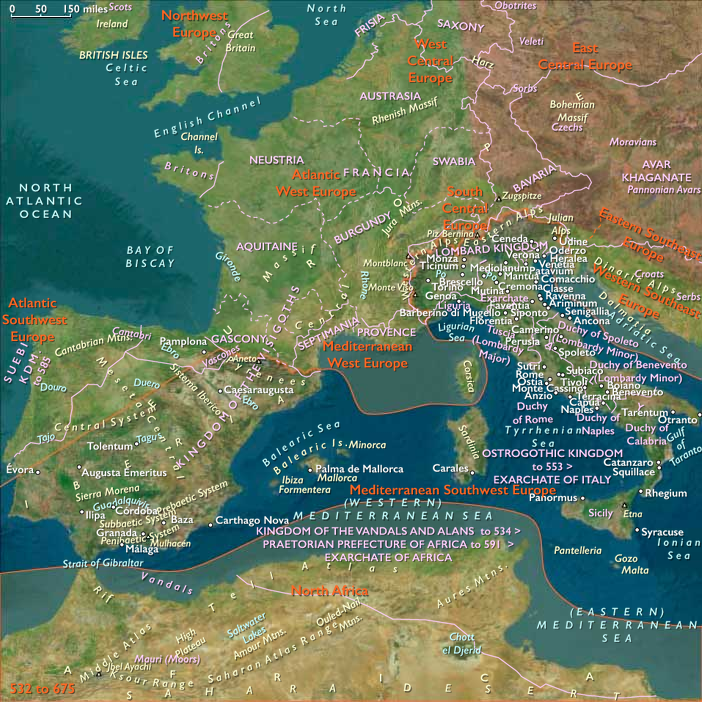
- Byzantine territories in Italy, North Africa, and Spain
- Frankish Gaul, particularly cities with strong Mediterranean connections
2. Impact on Frankish Gaul
- The epidemic weakens the Frankish economy, as major trade centers experience population collapse.
- Nobles and clergy succumb to the plague, causing disruptions in administration and Church leadership.
- Peasant populations decline, exacerbating labor shortages and hastening the transition to a more localized, feudal economy.
- Chroniclers such as Gregory of Tours note that entire towns and villages were depopulated, further fragmenting Frankish political power.
3. The Plague’s Role in Medieval History
- This second wave of bubonic plague is part of the longer Justinianic Plague cycle, which persists in waves until the 8th century.
- The devastation contributes to the continued decline of Mediterranean urban centers, reinforcing the transition to rural economies and decentralized power.
- The loss of manpower and resources weakens both the Frankish Kingdom and the Byzantine Empire, setting the stage for later power shifts in Europe and the Middle East.
Conclusion: A Pandemic That Reshapes Western Europe
The 588 CE plague wave is one of the deadliest outbreaks in early medieval history, decimating populations, crippling economies, and accelerating the political transformation of post-Roman Europe. The epidemic’s role in the fragmentation of Merovingian Gaul and the long-term decline of Mediterranean trade marks it as a pivotal event in the shaping of medieval Western civilization.
Related Events
Showing 10 events out of 57370 total
Years: 580 - 591
Topics
Subjects
Regions


Subregions
- Eastern Southeast Europe
- Western Southeast Europe
- Mediterranean West Europe
- Mediterranean Southwest Europe
- Atlantic West Europe