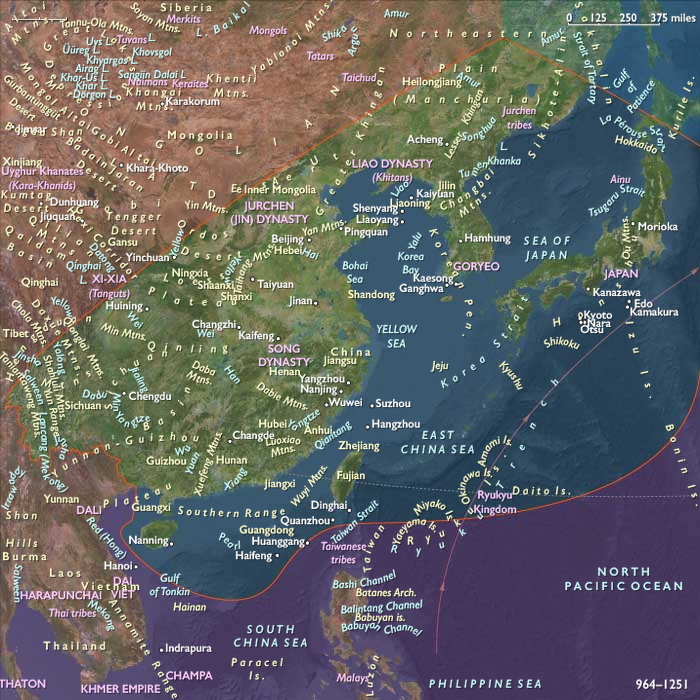
The Neo-Confucian Song philosophers, finding a certain…
1108 CE to 1251 CE
The Neo-Confucian Song philosophers, finding a certain purity in the originality of the ancient classical texts, write commentaries on them.
The most influential of these philosophers is Zhu Xi (1130-1200), whose synthesis of Confucian thought and Buddhist, Taoist, and other ideas becomes the official imperial ideology from late Song times to the late nineteenth century.
As incorporated into the examination system, Zhu Xi's philosophy evolves into a rigid official creed, which stresses the one-sided obligations of obedience and compliance of subject to ruler, child to father, wife to husband, and younger brother to elder brother.
The effect is to inhibit the societal development of premodern China, resulting both in many generations of political, social, and spiritual stability and in a slowness of cultural and institutional change up to the nineteenth century.
Neo-Confucian doctrines also come to play the dominant role in the intellectual life of Korea, Vietnam, and Japan.
Locations
People
Groups
Commodities
Regions
East Asia
View →Subregions