
Hans Christian Anderson had begun writing children’s…
1837 CE
Hans Christian Anderson had begun writing children’s stories in 1835, publishing the first installment of his immortal Fairy Tales (Danish: Eventyr).
More stories, completing the first volume, had been published in 1836 and 1837.
The quality of these stories is not immediately recognized, and they sell poorly.
At the same time, Andersen has enjoyed more success with two novels: O.T. (1836) and Only a Fiddler.
His specialty book that is still known today is the Ugly Duckling (1837), which, with "Thumbelina" and other tales, demonstrates Andersen's identification with, and his sympathies for, the 'outsider' searching for his or her place in society.
The Little Mermaid, a fairy tale about a young mermaid willing to give up her life in the sea and her identity as a mer-person to gain a human soul and the love of a human prince, is first published in 1837.
It will eventually be adapted to various media including musical theater and animated film.
Groups
Subjects
Regions
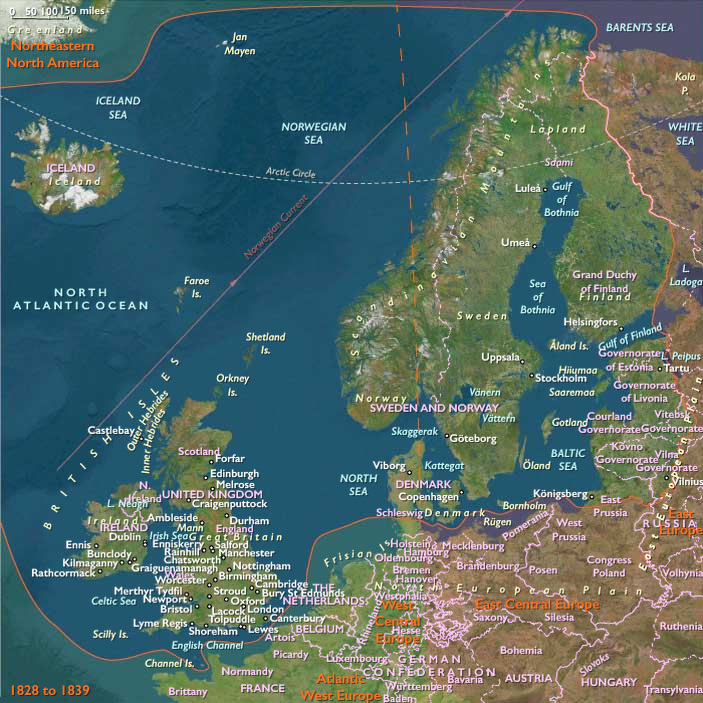
North Europe
View →Subregions
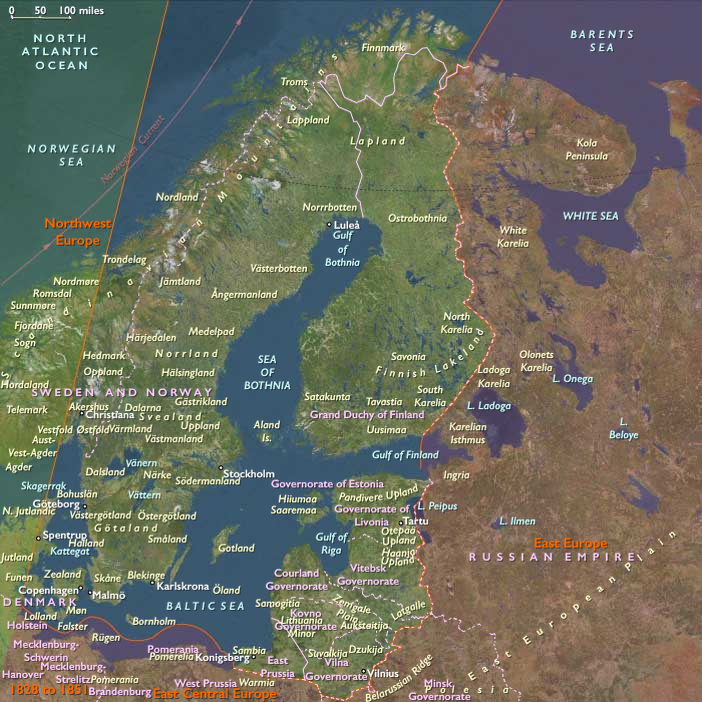
Northeast Europe
View →Related Events
Showing 9 events out of 9 total
Franklin Pierce is elected a U.S. Senator in 1837 and takes his seat as the Senate’s youngest member, after having been elected to the U.S. House of representatives in 1833 and, after serving two terms in Congress.
Staunchly partisan, he is also firmly opposed to abolition. (In 1853, Pierce is to become the fourteenth president of the United States.)
The New Hampshire lawyer had begun his political career in 1828, when he was elected, at twenty-four, to the lower house of the New Hampshire General Court, the New Hampshire House of Representatives, is a Democrat and a "doughface" (a Northerner with Southern sympathies).
A Bowdoin College graduate, he is the son of New Hampshire’s twice-governor Benjamin Pierce.
Both the Pierces had joined the Jacksonian party; Franklin, who had soon emerged as the party’s state leader, served as New Hampshire’s House speaker in 1831.
Northeastern North America
(1840 to 1851 CE): Epidemics, Industrial Development, and Social Reform
From 1840 to 1851, Northeastern North America experienced severe health crises, significant industrial expansion, transformative immigration patterns, and dynamic social and cultural movements. This era was characterized by devastating epidemics, burgeoning industries, powerful intellectual and artistic movements, and growing anti-slavery activism.
Epidemics and Public Health Crises
Cholera and Typhus Epidemics
In the early 1840s, cholera killed thousands in New York, a major destination for Irish immigrants. In 1843, a typhus epidemic originating from an earlier outbreak in Philadelphia claimed the life of the son of Franklin Pierce, future fourteenth President of the United States, in Concord, New Hampshire. Another severe typhus epidemic, from 1847 to 1848, resulted in more than twenty thousand deaths in Canada, primarily among Irish immigrants fleeing the Great Irish Famine. These immigrants contracted the disease aboard crowded "coffin ships," and health officials, unaware of effective sanitation and disease prevention methods, quarantined victims ineffectively. Additionally, the cholera outbreak of 1849–1850 claimed the life of former U.S. President James K. Polk in Nashville.
Industrial and Economic Growth
Bluestone Industry
The bluestone industry in Ulster County, New York, began with Silas Brainard recognizing the industrial potential of this deep-blue sandstone in the 1840s. By 1850, the local bluestone industry had become well-established, with significant quarries in Sawkill and Hurley, and major shipment points in Wilbur on the Rondout Creek and Malden on the Hudson. Bluestone from Wilbur, also known as Twaalfskill, notably paved the sidewalks of New York City. Before its commercial development, bluestone was utilized by natives and early settlers for tools and practical items such as chicken troughs, chimney caps, and tombstones.
Ice Harvesting and Brick Manufacturing
Ice harvesting continued to thrive along the Hudson River, with ice blocks preserved year-round in warehouses insulated with straw, serving as a rudimentary form of refrigeration for local communities including Rondout, Kingston, and Wilbur. Concurrently, large brick-making factories emerged near these shipping hubs, complementing the growing local economy.
Immigration and Canadian Developments
Irish and Scottish Immigration
Immigration resumed significantly after the War of 1812, with over nine hundred and sixty thousand arrivals from Britain to Canada between 1815 and 1850. These included refugees from the Great Irish Famine and Gaelic-speaking Scots displaced by the Highland Clearances. The influx of these immigrants deeply affected the demographic and cultural landscape of Canada and Northeastern United States.
Canadian Political Union
The Act of Union in 1841 merged Upper and Lower Canada into the Province of Canada, establishing responsible government across British North America by 1849. This union aimed to stabilize political tensions and foster more coherent governance, following earlier rebellions and demands for reform.
Social Reform and Abolitionism
Abolitionist Movement
The abolitionist movement intensified during this period, particularly under influential figures such as William Lloyd Garrison, who published the radical anti-slavery newspaper The Liberator, and Frederick Douglass, who began writing for Garrison’s newspaper around 1840 before founding his own abolitionist paper, North Star, in 1847. While radicals like Garrison considered slavery a sin demanding immediate eradication, moderate abolitionists, including future president Abraham Lincoln, regarded slavery as a regrettable social evil rather than a religious transgression.
Transcendentalist Movement
The Transcendentalist movement, led by Ralph Waldo Emerson, emphasized personal freedom, individualism, and a belief in the inherent goodness of people. Influenced by Romantic ideals, Transcendentalists sought to reconcile individual spirituality with empirical scientific understanding, profoundly shaping American thought and culture.
Artistic and Cultural Developments
Hudson River School
The Hudson River School of painting flourished, reflecting themes of discovery, exploration, and settlement, and depicting the American landscape as a harmonious pastoral setting where humans and nature coexist peacefully. These artists, inspired by European masters such as Claude Lorrain, John Constable, and J.M.W. Turner, portrayed nature as a divine manifestation, capturing both the idyllic agricultural landscapes and rapidly disappearing wilderness. Their work complemented contemporary literary voices like Henry David Thoreau and Ralph Waldo Emerson.
Artists associated with the Hudson River School, such as members trained under the Düsseldorf school of painting and German painter Paul Weber, often composed their scenes from multiple observations made during arduous travels, creating realistic yet idealized landscapes.
Legacy of the Era (1840–1851 CE)
From 1840 to 1851, Northeastern North America navigated a transformative period defined by devastating epidemics, significant industrial and economic developments, dynamic immigration, robust abolitionist and reform movements, and profound artistic and intellectual achievements. These developments reshaped the region's cultural and social identity, set the stage for intensified sectional tensions, and further entrenched industrialization as a defining feature of American society.
A typhus epidemic that had broken out in Philadelphia in 1837 kills the son of Franklin Pierce (fourteenth President of the United States) in Concord, New Hampshire, in 1843.
Northeastern North America
(1852 to 1863 CE): Epidemics, Industrial Expansion, Cultural Flourishing, and the American Civil War
From 1852 to 1863, Northeastern North America faced severe public health crises, rapid industrial expansion, significant cultural achievements, and intensifying national tensions culminating in the American Civil War. This era witnessed serious epidemics, urban growth, booming industrial activities, and the peak of artistic movements, all occurring amid escalating debates over slavery, states' rights, and national identity.
Epidemics and Public Health
Cholera and Typhus Epidemics
In 1854, a severe outbreak of cholera struck Chicago, resulting in about thirty-five hundred deaths, around five and a half percent of the city's population. Cholera also devastated New York, exacerbated by crowded conditions due to a major influx of Irish immigrants. Concurrently, a typhus epidemic originating in 1837 continued into the 1840s and 1850s, killing thousands of Irish immigrants in Canada, who had fled the Great Irish Famine aboard overcrowded ships.
Industrial and Economic Expansion
Bluestone Industry Flourishes
The bluestone industry reached new heights, with extensive usage for sidewalks, curbstones, building foundations, and architectural adornments in cities such as New York and Kingston. Shipped from significant distribution points like Rondout and Malden on barges and tugboats owned by entrepreneur Thomas Cornell, bluestone became a defining feature of urban infrastructure. Notably, Kingston’s sidewalks and curbstones were predominantly made from bluestone. Architectural landmarks such as Kingston's Old Dutch Church, designed by Minard Lefever and built between 1850 and 1852, and an Italian villa constructed in 1858 by leather tanning entrepreneur Henry Samson on West Chestnut Street, exemplified the widespread architectural use of this distinctive stone.
Ice Harvesting and Brick Manufacturing
Ice harvesting along the Hudson River expanded, providing year-round ice preserved in straw-insulated warehouses for critical refrigeration in communities like Rondout, Kingston, and Wilbur. Simultaneously, large-scale brick manufacturing factories near these shipping hubs further strengthened local economies.
Indigenous Trade and Relations
Arapaho Trade Networks
The Arapaho actively traded with farming villages of the Arikara, Mandan, and Hidatsa along the upper Missouri River, exchanging meat and hides for corn, squash, and beans. Known as the "Colored Stone Village People" by the Arikara, possibly due to gemstones from the Southwest among traded items, and as E-tah-leh or Ita-Iddi ("bison-path people") by the Hidatsa, the Arapaho played a critical role in regional indigenous economies and relations.
Artistic and Cultural Peak
Hudson River School
The Hudson River School of painting reached its artistic zenith during this period, profoundly influencing American culture and aesthetics. Led by artists such as John Frederick Kensett, George Inness, Asher B. Durand, Thomas Doughty, Jasper Cropsey, Sanford Robinson Gifford, and Frederick Edwin Church, the school was deeply inspired by Romanticism. Paintings from this period captured sublime landscapes of the Hudson River Valley, Catskill Mountains, Adirondack Mountains, and White Mountains of New Hampshire, emphasizing themes of exploration, settlement, and harmonious coexistence with nature.
Rising Tensions and the American Civil War
Political and Social Struggles
Tensions over slavery intensified, driven by abolitionist activism and political debates over states' rights. Radical abolitionists like William Lloyd Garrison, publisher of The Liberator, and former slave Frederick Douglass, who published the influential newspaper North Star, heightened public awareness and resistance against slavery. These debates significantly polarized American society.
Outbreak of the Civil War
By 1861, conflicts between Northern free states and Southern slave states erupted into the American Civil War, fundamentally altering the nation. The Northeast mobilized extensive resources, both industrial and human, contributing significantly to Union efforts. The war demanded major shifts in manufacturing, infrastructure, and transportation, laying foundations for future industrialization and urbanization.
Legacy of the Era (1852–1863 CE)
From 1852 to 1863, Northeastern North America navigated an era defined by industrial growth, severe public health crises, cultural expression, and the deep national trauma of the Civil War. These events profoundly shaped the region's economy, culture, and social structure, with legacies that would influence American identity for generations.
The influence of the Hudson River School is at its peak.
Led John Frederick Kensett, George Inness, Asher B. Durand, Thomas Doughty, Jasper Cropsey, Sanford Robinson Gifford, and Frederick Edwin Church, their aesthetic vision influenced by romanticism, the movement’s paintings depict the Hudson River Valley and the surrounding area, as well as the Catskill Mountains, Adirondack Mountains, and White Mountains of New Hampshire.
Northeastern North America
(1864 to 1875 CE): Conclusion of the Civil War, Reconstruction, Canadian Confederation, and Continued Industrial Expansion
From 1864 to 1875, Northeastern North America experienced the conclusion of the American Civil War, complex Reconstruction efforts, the formation of the Canadian Confederation, significant industrial and economic growth, and ongoing cultural development. This period was characterized by intense political restructuring, expanding infrastructure, evolving relationships with indigenous peoples, and the continued flourishing of regional industries.
American Civil War and Reconstruction
Conclusion and Aftermath
The American Civil War concluded in 1865, marking a profound turning point for Northeastern North America. The Northeast played a crucial role, contributing industrial resources, manpower, and economic support that proved vital for Union victory. Indigenous participation was significant; about twenty thousand Native Americans fought on both sides, including prominent contributions by the Cherokee, Choctaw, Chickasaw, Creek, Seminole, and Iroquois peoples. Notably, about forty-five Iowa tribesmen served in the Union Army, including Chief James White Cloud, grandson of Chief Mahaska. Irish and other immigrant communities also fought prominently, exemplifying the complex demographic dynamics of the war. The post-war Reconstruction era saw efforts to integrate formerly enslaved populations into society and rebuild a nation divided by war, facing resistance, social upheaval, and political struggle.
Formation of the Canadian Confederation
Constitutional Conferences and Confederation
Following several constitutional conferences, the Constitution Act officially proclaimed the Canadian Confederationon July 1, 1867, initially uniting four provinces: Ontario, Quebec, Nova Scotia, and New Brunswick. This marked a significant political realignment aimed at ensuring stability, economic prosperity, and defense against potential American expansionism.
Expansion and Indigenous Relations
In 1870, Canada assumed control of Rupert's Land and the North-Western Territory, forming the Northwest Territories. Tensions surrounding land rights and governance ignited the Red River Rebellion, led by the Métis under Louis Riel, resulting in the creation of the province of Manitoba in July 1870. Further territorial expansion occurred as British Columbia, including Vancouver Island (united in 1866), joined the Confederation in 1871, and Prince Edward Island followed in 1873.
Industrial and Economic Growth
Bluestone and Infrastructure Development
The bluestone industry continued to thrive, playing a critical role in urban development. Cities like New York and Kingston relied on shipments from hubs like Rondout and Malden, utilizing barges and tugboats operated by entrepreneurs such as Thomas Cornell. Bluestone became a staple material for sidewalks, curbstones, and building foundations, defining the architectural character of urban environments.
Notable examples included Kingston’s sidewalks and curbstones and the Old Dutch Church in Kingston, designed by Minard Lefever, constructed of native-dressed bluestone blocks between 1850 and 1852. Similarly, in 1858, entrepreneur Henry Samson built an Italian villa using ashlar and rusticated bluestone blocks on West Chestnut Street in Kingston.
Ice Harvesting and Brick Manufacturing
Ice harvesting along the Hudson River remained essential for refrigeration and food preservation, supported by large warehouses and extensive straw insulation methods. Brick manufacturing near major waterways and transportation hubs further reinforced the economic vitality and industrial capability of the region.
Artistic and Cultural Continuity
Hudson River School Influence
The Hudson River School, though past its zenith, continued influencing American art and culture. Paintings from artists such as Frederick Edwin Church and Sanford Robinson Gifford persisted in capturing landscapes that symbolized America's natural beauty and national identity, reflecting ongoing themes of exploration, settlement, and harmony with nature.
Legacy of the Era (1864–1875 CE)
Between 1864 and 1875, Northeastern North America navigated the challenging aftermath of the Civil War, fostered the political and territorial growth of Canada, and sustained industrial and cultural advancement. The transformations of this era, from Reconstruction to Confederation and industrial prosperity, continued to shape the region’s historical trajectory, significantly influencing the subsequent decades.
Northeastern North America
(1864 to 1875 CE): Conclusion of the Civil War, Reconstruction, Canadian Confederation, and Continued Industrial Expansion
From 1864 to 1875, Northeastern North America experienced the conclusion of the American Civil War, complex Reconstruction efforts, the formation of the Canadian Confederation, significant industrial and economic growth, and ongoing cultural development. This period was characterized by intense political restructuring, expanding infrastructure, evolving relationships with indigenous peoples, and the continued flourishing of regional industries.
American Civil War and Reconstruction
Conclusion and Aftermath
The American Civil War concluded in 1865, marking a profound turning point for Northeastern North America. The Northeast played a crucial role, contributing industrial resources, manpower, and economic support that proved vital for Union victory. Indigenous participation was significant; about twenty thousand Native Americans fought on both sides, including prominent contributions by the Cherokee, Choctaw, Chickasaw, Creek, Seminole, and Iroquois peoples. Notably, about forty-five Iowa tribesmen served in the Union Army, including Chief James White Cloud, grandson of Chief Mahaska. Irish and other immigrant communities also fought prominently, exemplifying the complex demographic dynamics of the war. The post-war Reconstruction era saw efforts to integrate formerly enslaved populations into society and rebuild a nation divided by war, facing resistance, social upheaval, and political struggle.
Formation of the Canadian Confederation
Constitutional Conferences and Confederation
Following several constitutional conferences, the Constitution Act officially proclaimed the Canadian Confederationon July 1, 1867, initially uniting four provinces: Ontario, Quebec, Nova Scotia, and New Brunswick. This marked a significant political realignment aimed at ensuring stability, economic prosperity, and defense against potential American expansionism.
Expansion and Indigenous Relations
In 1870, Canada assumed control of Rupert's Land and the North-Western Territory, forming the Northwest Territories. Tensions surrounding land rights and governance ignited the Red River Rebellion, led by the Métis under Louis Riel, resulting in the creation of the province of Manitoba in July 1870. Further territorial expansion occurred as British Columbia, including Vancouver Island (united in 1866), joined the Confederation in 1871, and Prince Edward Island followed in 1873.
Industrial and Economic Growth
Bluestone and Infrastructure Development
The bluestone industry continued to thrive, playing a critical role in urban development. Cities like New York and Kingston relied on shipments from hubs like Rondout and Malden, utilizing barges and tugboats operated by entrepreneurs such as Thomas Cornell. Bluestone became a staple material for sidewalks, curbstones, and building foundations, defining the architectural character of urban environments.
Notable examples included Kingston’s sidewalks and curbstones and the Old Dutch Church in Kingston, designed by Minard Lefever, constructed of native-dressed bluestone blocks between 1850 and 1852. Similarly, in 1858, entrepreneur Henry Samson built an Italian villa using ashlar and rusticated bluestone blocks on West Chestnut Street in Kingston.
Ice Harvesting and Brick Manufacturing
Ice harvesting along the Hudson River remained essential for refrigeration and food preservation, supported by large warehouses and extensive straw insulation methods. Brick manufacturing near major waterways and transportation hubs further reinforced the economic vitality and industrial capability of the region.
Artistic and Cultural Continuity
Hudson River School Influence
The Hudson River School, though past its zenith, continued influencing American art and culture. Paintings from artists such as Frederick Edwin Church and Sanford Robinson Gifford persisted in capturing landscapes that symbolized America's natural beauty and national identity, reflecting ongoing themes of exploration, settlement, and harmony with nature.
Legacy of the Era (1864–1875 CE)
Between 1864 and 1875, Northeastern North America navigated the challenging aftermath of the Civil War, fostered the political and territorial growth of Canada, and sustained industrial and cultural advancement. The transformations of this era, from Reconstruction to Confederation and industrial prosperity, continued to shape the region’s historical trajectory, significantly influencing the subsequent decades.
Mary Baker Eddy and her students establish the Church of Christ, Scientist, in 1879, “to commemorate the word and works of our Master [Jesus], which should reinstate primitive Christianity and its lost element of healing.” (Eddy, Mary Baker (1910), Church Manual of The First Church of Christ, Scientist, in Boston, Mass, Boston: The First Church of Christ, Scientist.)
Born Mary Baker Grove Patterson, she claims to have found healing power through a higher sense of God as Spirit and man as God's spiritual "image and likeness."
She has become convinced by her own study of the Bible, especially Genesis 1, and through experimentation, that illness can be healed through an awakened thought brought about by a clearer perception of God and the explicit rejection of drugs, hygiene and medicine based upon the observation that Jesus did not use these methods for healing.
She eventually calls this spiritual perception the operation of the Christ Truth on human consciousness.
Claiming to have first healed herself after a fall in Lynn, Massachusetts in February 1866 caused a spinal injury, and then others, and having learned from these experiences, Eddy feels anyone can perceive what she called "the Kingdom of Heaven" or spiritual reality on earth.
For her, this healing method is based on scientific principles and can be taught to others.
This positive rule of healing, she teaches, results from a new understanding of God as infinite Spirit beyond the limitations of the material senses.
By the 1870’s, Mary had begun telling her students “Some day I will have a church of my own.” (Peel, Robert (1971), Mary Baker Eddy, The Years of Trial, Boston: The Christian Science Publishing Society)
Mary has became well known as a healer, and firsthand accounts survive claiming that miracles occurred similar to miracles performed by Jesus, who calmed a storm and raised people from the dead.
She divorced Daniel Patterson in 1873, Mary for adultery, to which he readily admitted.
After several years of testing the effectiveness of her healing method, Mary published her discovery in 1875 in a book entitled Science and Health (years later retitled Science and Health with Key to the Scriptures), which she calls the textbook of Christian Science.
The first publication run was one thousand copies, which she self-published.
In the final edition, she will write "In the year 1866, I discovered the Christ Science or divine laws of Life, Truth, and Love, and named my discovery Christian Science" (p. 107).
During these years, she teaches what she considers the science of "primitive Christianity" to at least eight hundred people.
Many of her students become healers themselves.
The last one hundred pages of Science and Health (the chapter entitled "Fruitage") contains testimonies of people who claimed to have been healed by reading her book.
She will make numerous revisions to her book from the time of its first publication until shortly before her death.
In 1877, Mary weds Asa Gilbert Eddy.
Taking his surname, Mary Baker Eddy will devote the rest of her life to the establishment of her church, writing its bylaws, The Manual of The Mother Church, and revising Science and Health.
While Eddy is a highly controversial religious leader, author, and lecturer, thousands of people flock to her teachings.