
Filters:
The Osage are descendants of cultures of …
Years: 1540 - 1683
The Osage are descendants of cultures of indigenous peoples who had been in North America for thousands of years.
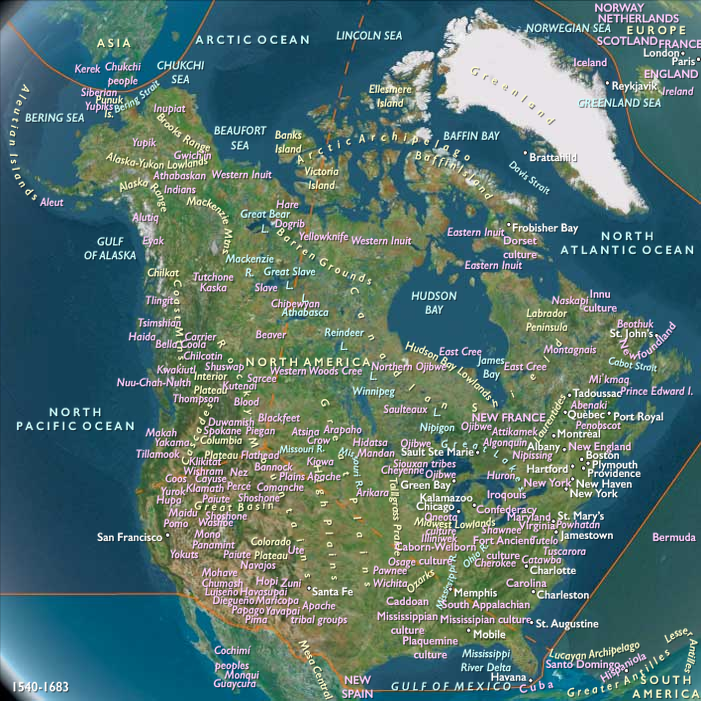
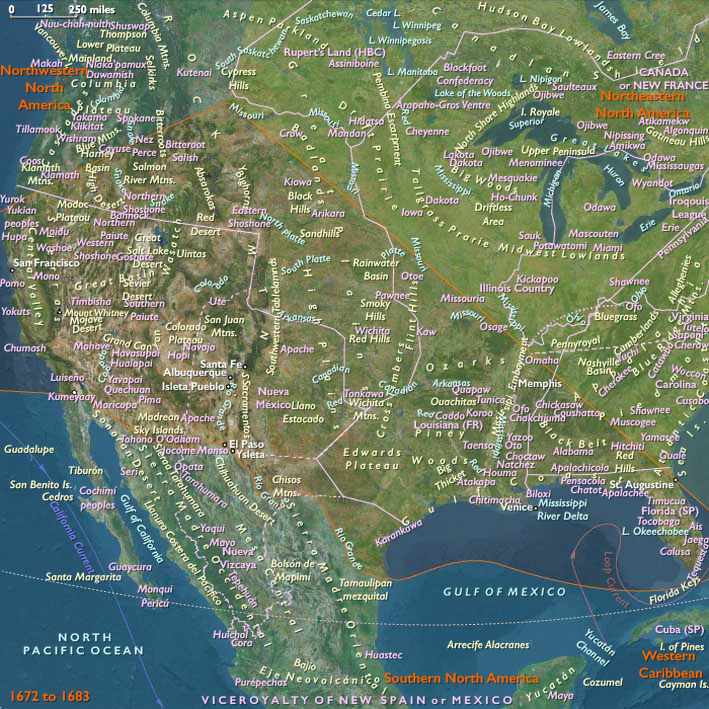
Studies of their traditions and language show that they were part of a group of Dhegian-Siouan speaking people who lived in the Ohio River valley area, extending into present-day Kentucky. According to their own stories (common to other Dhegian-Siouan tribes, such as the Ponca, Omaha, Kaw and Quapaw), they migrated west as a result of war with the Iroquois and/or to reach more game.
Scholars are divided as to whether they think the Osage and other groups left before the Beaver Wars of the Iroquois.
Some believe that the Osage started migrating west as early as 1200 CE and are descendants of the Mississippian culture in the Ohio and Mississippi valleys.
They attribute their style of government to effects of the long years of war with invading Iroquois.
After resettling west of the Mississippi River, the Osage are sometimes allied with the Illiniwek and sometimes competing with them, as that tribe had also been driven west of Illinois by warfare with the powerful Iroquois.
The Osage and other Dhegian-Siouan peoples eventually reached their historic lands, likely developing and splitting into the above mentioned tribes in the course of the migration to the Great Plains.
By 1673, when they are recorded by the French, many of the Osage have settled near the Osage River in the western part of present-day Missouri.
They are recorded in 1690 as having adopted the horse (a valuable resource often acquired through raids on other tribes.)
The desire to acquire more horses contributes to their trading with the French.
Studies of their traditions and language show that they were part of a group of Dhegian-Siouan speaking people who lived in the Ohio River valley area, extending into present-day Kentucky. According to their own stories (common to other Dhegian-Siouan tribes, such as the Ponca, Omaha, Kaw and Quapaw), they migrated west as a result of war with the Iroquois and/or to reach more game.
Scholars are divided as to whether they think the Osage and other groups left before the Beaver Wars of the Iroquois.
Some believe that the Osage started migrating west as early as 1200 CE and are descendants of the Mississippian culture in the Ohio and Mississippi valleys.
They attribute their style of government to effects of the long years of war with invading Iroquois.
After resettling west of the Mississippi River, the Osage are sometimes allied with the Illiniwek and sometimes competing with them, as that tribe had also been driven west of Illinois by warfare with the powerful Iroquois.
The Osage and other Dhegian-Siouan peoples eventually reached their historic lands, likely developing and splitting into the above mentioned tribes in the course of the migration to the Great Plains.
By 1673, when they are recorded by the French, many of the Osage have settled near the Osage River in the western part of present-day Missouri.
They are recorded in 1690 as having adopted the horse (a valuable resource often acquired through raids on other tribes.)
The desire to acquire more horses contributes to their trading with the French.
Locations
Groups
- Iroquois (Haudenosaunee, also known as the League of Peace and Power, Five Nations, or Six Nations)
- Osage Nation (Amerind tribe)
- Quapaw, or Arkansas (Amerind tribe)
- Illinois confederacy, or Illiniwek
- Omaha (Amerind tribe)
- Kaw, or Kanza, people (Amerind tribe)
- Ponca (Amerind tribe)
- New France (French Colony)
- France, (Bourbon) Kingdom of
- Louisiana (New France)
Topics
Commodoties
Subjects
Regions
Subregions
Years: 1540 - 1683
Locations
Groups
- Iroquois (Haudenosaunee, also known as the League of Peace and Power, Five Nations, or Six Nations)
- Osage Nation (Amerind tribe)
- Quapaw, or Arkansas (Amerind tribe)
- Illinois confederacy, or Illiniwek
- Omaha (Amerind tribe)
- Kaw, or Kanza, people (Amerind tribe)
- Ponca (Amerind tribe)
- New France (French Colony)
- France, (Bourbon) Kingdom of
- Louisiana (New France)
Topics
Commodoties
Subjects
Regions
Subregions