
David Livingstone is determined not to leave…
May 1873 CE
David Livingstone is determined not to leave Africa until his mission is complete, despite Henry Morton Stanley's urgings.
His illness makes him confused and he has judgment difficulties at the end of his life.
He explores the Lualaba and, failing to find connections to the Nile, returns to Lake Bangweulu and its swamps to explore possible rivers flowing out northwards.
David Livingstone dies in thjs area in Chief Chitambo's village at Ilala southeast of Lake Bangweulu in present-day Zambia on May 1, 1873 from malaria and internal bleeding caused by dysentery.
He takes his final breaths while kneeling in prayer at his bedside. (His journal indicates that the date of his death would have been May !, but his attendants noted the date as 4 May, which they carve on a tree and will later report ; this is the date on his grave.)
Britain wants the body to give it a proper ceremony, but the tribe will not give his body to them.
Finally they relent, but cut the heart out and put a note on the body that says, "You can have his body, but his heart belongs in Africa!".
Livingstone's heart is buried under a Mvula tree near the spot where he died, now the site of the Livingstone Memorial.
His body together with his journal will be carried over a thousand miles by his loyal attendants Chuma and Susi to the coast to Bagamoyo, and will be returned to Britain for burial.
After lying in repose at No. 1 Savile Row—the headquarters of the Royal Geographical Society, today the home of bespoke tailors Gieves & Hawkes— his remains will be interred at Westminster Abbey.
Groups
Regions
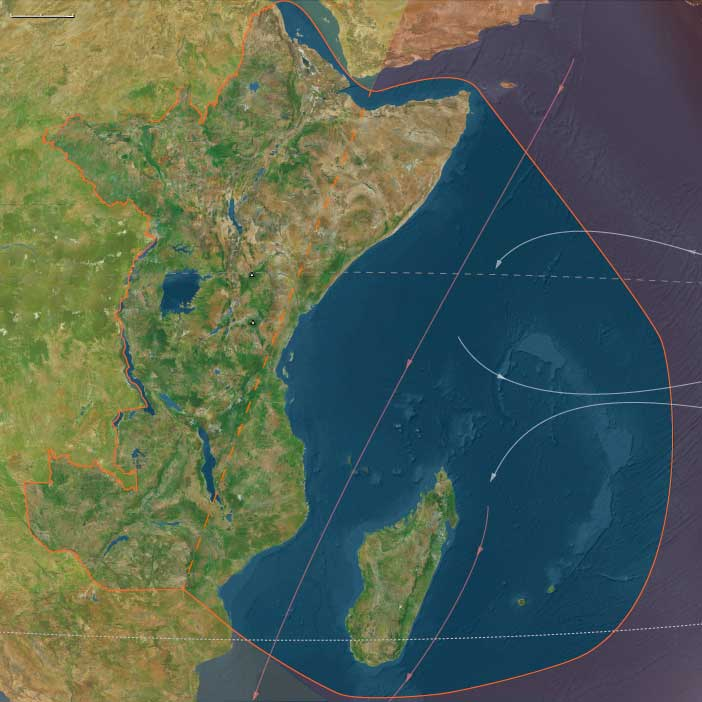
East Africa
View →Subregions
