Many of the early Meiji reforms are…
January 1874 CE
Many of the early Meiji reforms are seen as detrimental to samurai interests, despite the support they have given to the imperial court.
The creation of a conscript army made of commoners, as well as the loss of hereditary prestige and stipends has antagonized many former samurai.
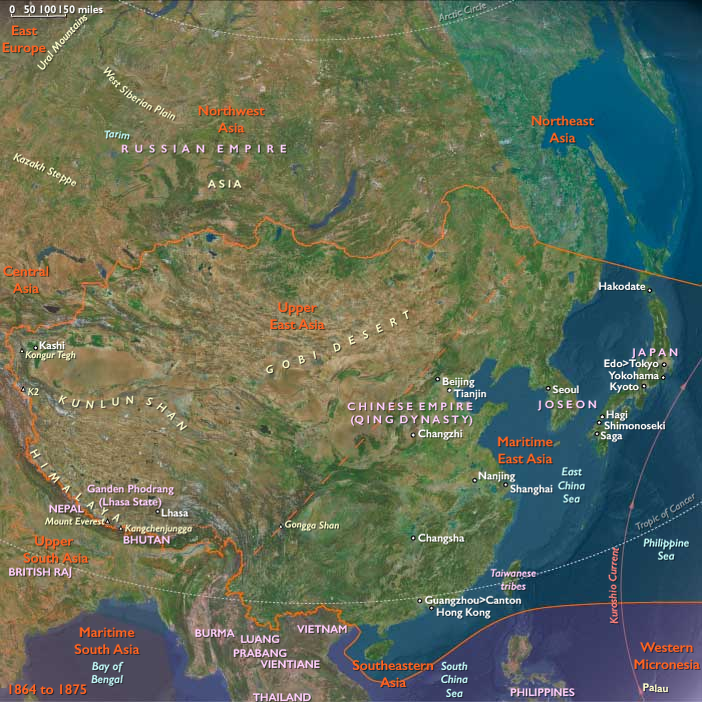
Tensions run particularly high in the south, leading to the 1874 Saga Rebellion.
Etō Shimpei, former Justice Minister and sangi (Councilor) in the early Meiji government, had resigned his posts in 1873 to protest the government's refusal to launch a military expedition against Korea (Seikanron).
Eto had then assisted Itagaki Taisuke in organizing the Aikoku Kōtō political party, and in composing the Tosa Memorial, a sharp criticism of the government.
In January 1874, frustrated by the government's rejection of his efforts, he returns to his native Saga, where both the traditionalists and the Seikantō samurai rally to his support.
Locations
Topics
Regions
East Asia
View →Subregions