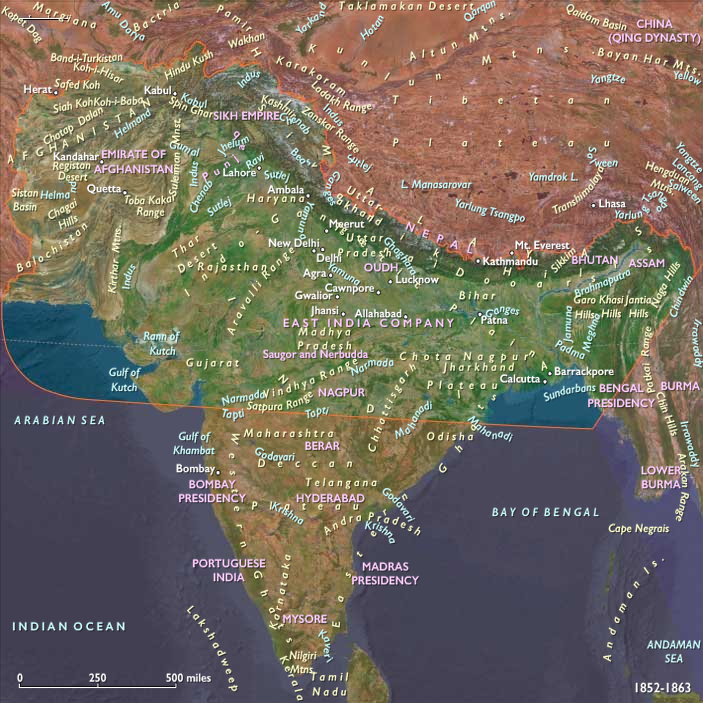
The Nepalese invasion of Tibet in spring…
April 1855 CE
Since the Sino-Nepalese War of 1792, the Nepalese government had renounced all claims of influence in Tibet and maintained a policy of non-intervention in its affairs.
With their victory in the war, the Qing Empire had made Nepal a tributary state, but the wave of rebellions that afflict China in the 1850s, such as the Taiping Rebellion, have crippled her capacity to enforce Imperial authority so far from Beijing.
The Nepalese Prime Minister, Jang Bahadur Rana, sees an opportunity to press for Nepalese objectives in Tibet without the threat of Chinese interference.
Jang Bahadur uses the alleged ill-treatment to the 1852 embassy, abuses to Nepalese traders in Lhasa, and a boundary dispute in the Kuti area, among other grievances, to justify the Nepalese demands to the Tibetan government, which include territorial concessions and the payment of an indemnity.
He declares war in March 1855 and sets April 17, 1855 as the date limit for his conditions to be met.
War
In early April 1855, Nepalese troops attack across the major passes between Tibet and Nepal, from Walungchung to Jara, with the center of their advance in the Kuti and Kerong districts, and are joined shortly later by reinforcements completing a total of twenty-seven thousand men, with thirty-six guns and eight mortars.
The Kerung Axis is commanded by General Bom Bahadur Kunwar, with approximately 25,728 troops.
The Kuti Axis is commanded by General Dhir Sumsher with 4,678 troops.
Humla and Mustang are commanded by General Krishna Dhoj Kunwar with 2,500 troops, and Olangchunggola Axis is commanded by Colonel Prithvi Dhoj Kunwar with a force of 2,000 men.
Sethya Kaji is the main Tibetan commander with about fifty thousand troops under his command. There are eight thousand Tibetan troops stationed on Dirgacha front, whereas forty thousand troops are concentrated in the Tingri area.
On April 3 general Dhir Shamsher defeats a small Tibetan detachment at Chusan, captures Kuti, and advances to Suna Gompa.
Kerong is occupied by Bam Bahadur without opposition and a Tibetan force at Kukurghat, north of Kerong, after which the Nepalese push on to Dzongka, the Tibetan main point of resistance in the area.
The battle for Dzongka lasts nine days, after which the Tibetans retreat to Tingri.
The capture of Dzongka is the last action of the campaign, after which negotiations for a cease fire begin.
The campaign has proven more costly for Jang Bahadur than he had expected.
Locations
Groups
Topics
Regions
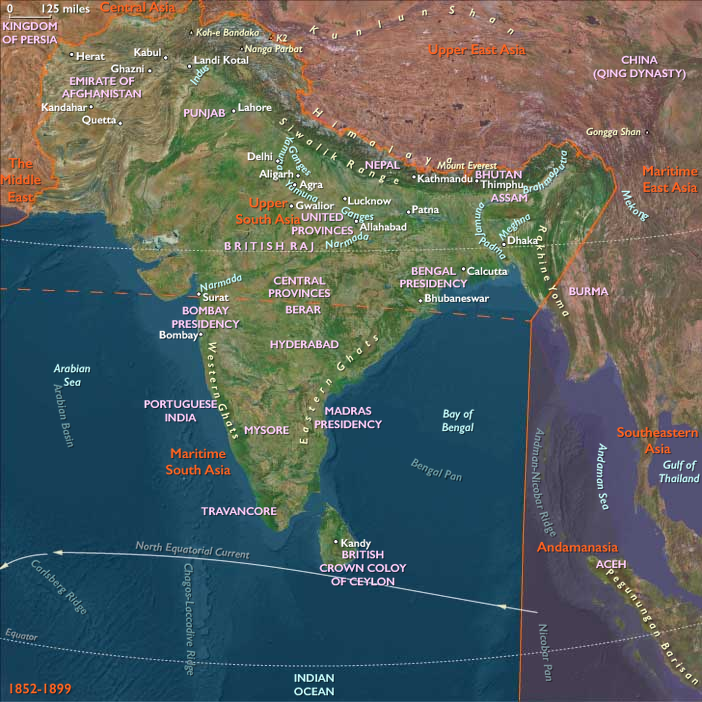
South Asia
View →Subregions