The increasing concentration of power in the…
244 CE to 387 CE
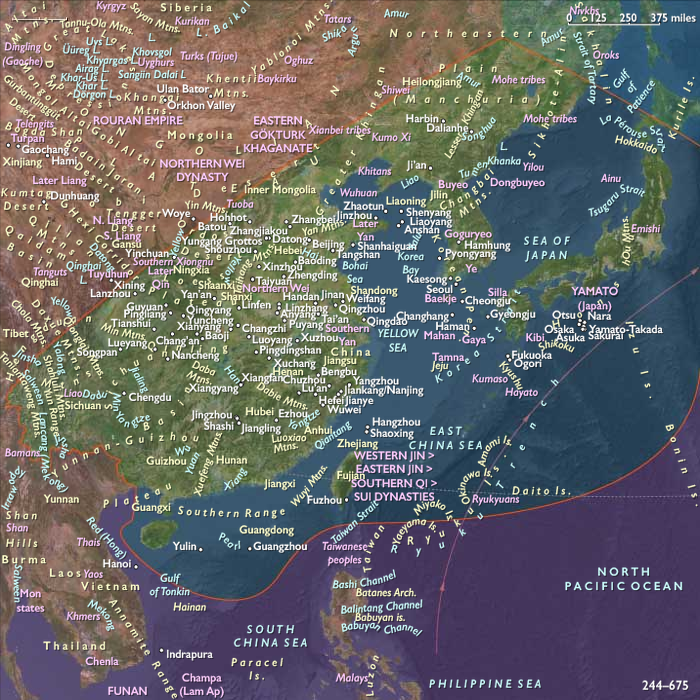
The increasing concentration of power in the hands of the great clans of central Japan, symbolized by massive mounded tombs, culminate in the unification of the nation under the imperial clan during Japan’s Tumulus period, lasting from the mid-third through the sixth century.
Whereas the artifacts such as mirrors found in the earlier tombs indicate continuation of the ritual orientation of the Yayoi culture, the later tombs contain equestrian trappings and weaponry suggestive of invasion or infiltration by a warlike Mongoloid people from northeast Asia.
The culture of the later Tumulus period is most vividly represented in the haniwa clay figures set around the center and later the borders of the great tombs.
These lively, mass-produced grave guardians include figures of shamans, crowned figures, soldiers, court ladies, dancers, houses, ships, and animals; they provide very literal images of the daily life of this period and, in addition, seem to indicate a much changed attitude toward the afterlife.
Commodities
Regions
East Asia
View →Subregions