
There had been some sympathy during the…
1784 CE
There had been some sympathy during the American Revolution for the American cause among the Canadiens and the New Englanders in Nova Scotia.
Neither party had joined the rebels, although several hundred individuals had joined the revolutionary cause.
An invasion of Canada by the Continental Army in 1775, intended to take Quebec from British control, had been halted by Guy Carleton, with the assistance of local militias, at the Battle of Quebec.
The defeat of the British army during the Siege of Yorktown in October 1781 had signaled the end of Britain's struggle to suppress the American Revolution.
When the British evacuated New York City in 1783, they had taken many Loyalist refugees to Nova Scotia, while other Loyalists had gone to southwestern Quebec.
After the Seven Years' War, most of present-day New Brunswick (and parts of Maine) had been confirmed as part of the colony of Nova Scotia and designated as Sunbury County.
After the American Revolution, loyalists such as Harvard-educated Edward Winslow see themselves as the natural leaders of their community.
They are not appreciated by the pre-loyalist population in Nova Scotia.
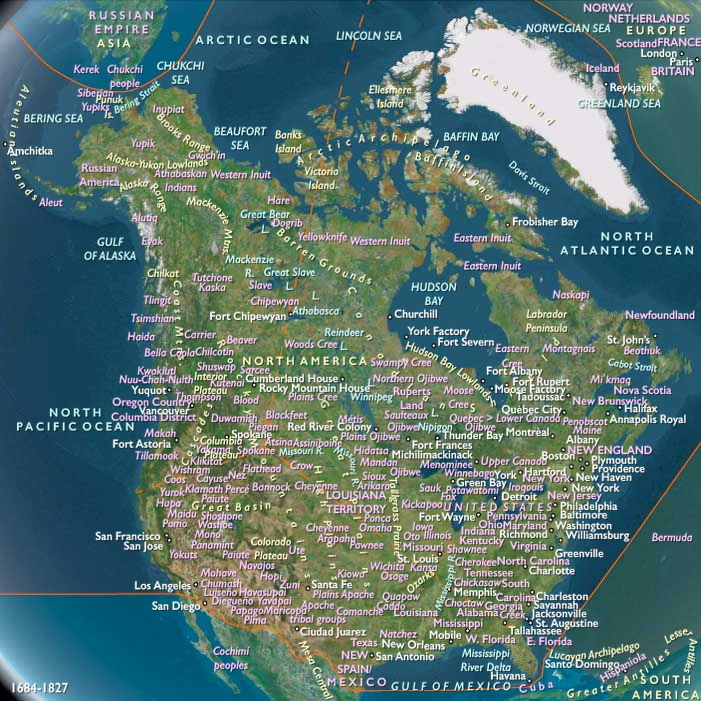
So many Loyalists have arrived on the shores of the St. John River that a British separate colony—New Brunswick—is created in 1784.
Nova Scotia is partitioned.
Britain splits the colony of Nova Scotia into three separate colonies: New Brunswick, Cape Breton Island, and present-day peninsular Nova Scotia, in addition to the adjacent colonies of St. John's Island (which will be renamed Prince Edward Island in 1798) and Newfoundland.
The colony of New Brunswick is established as a separate province by an Order-in-Council in Great Britain on June 18, 1784; Sir Thomas Carleton is appointed as Lieutenant-Governor on August 3, 1784, and in 1785 a new legislative assembly will be established with the first elections.
The new colony was almost called New Ireland after a failed attempt to establish a colony of that name in Maine during the war.
Locations
Groups
Subjects
Regions
Northern North America
View →Subregions
