
Muybridge has made a sequence of images…
1872 CE
Muybridge has made a sequence of images of the he construction of the San Francisco Mint in 1870–1872, using the power of time-lapse photography to document changes in the building's progress over time.
In 1872, the former governor of California, Leland Stanford, a businessman and racehorse owner, hires Muybridge for some photographic studies.
Stanford has taken a position on a popularly debated question of the day—whether all four feet of a horse are off the ground at the same time while trotting.
The same question had arisen about the actions of horses during a gallop.
The human eye cannot break down the action at the quick gaits of the trot and gallop.
Up until this time, most artists paint horses at a trot with one foot always on the ground; and at a full gallop with the front legs extended forward and the hind legs extended to the rear, and all feet off the ground.
Stanford sides with the assertion of "unsupported transit" in the trot and gallop, and decides to have it proven scientifically.
Stanford had sought out Muybridge and hired him to settle the question.
Muybridge settles Stanford's question with a single photographic negative showing his Standardbred trotting horse Occident airborne at the trot.
This negative is lost, but the image survives through woodcuts made at the time (the technology for printed reproductions of photographs was still being developed).
In 1872 also, Muybridge marries Flora Shallcross Stone, a divorcee twenty-one years old, and half his age.
Groups
Topics
Commodities
Regions
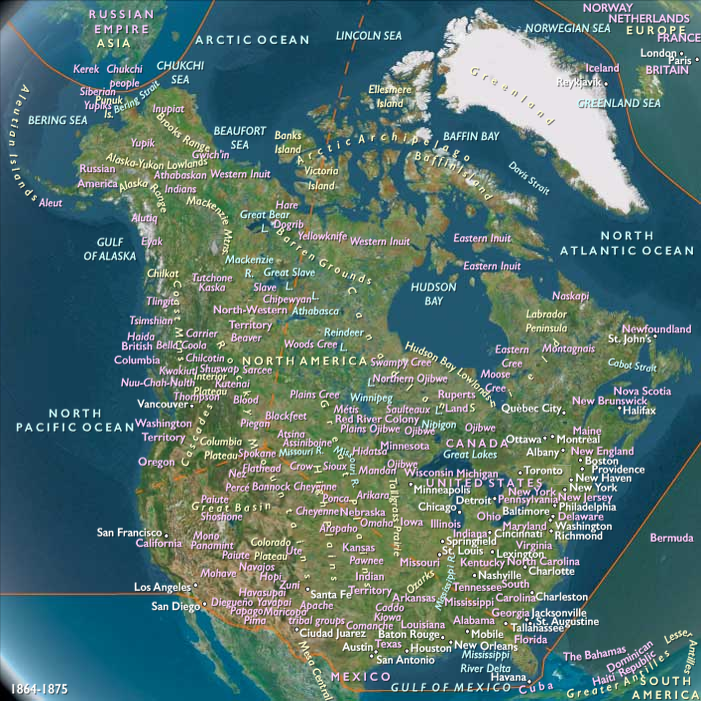
Northern North America
View →Subregions
