
The Panic of 1837 sends the United…
May 1837 CE
The Panic of 1837 sends the United States into a five-year economic depression.
The average reserve rates of U.S. banks had not been decreasing during the early 1830s but had remained relatively stable.
During this time, the money supply had been increasing (approximately two hundred percent) despite the stable reserve rates of banks.
This increase in the supply of money had not come from within the United States, but had resulted from a positive inflow of specie (gold and silver coinage) from foreign investors.
British investors had found it increasingly attractive to lend to the state governments in the United States in the 1830s.
This increased level of available credit has allowed the states to fund the building of canals with state-issued bonds (e.g., the Erie Canal).
The Specie Circular Act of 1836 had required potential property buyers to use specie rather than bank notes.
Although the use of bank notes is easier than carrying specie around, banks are required to exchange such notes for specie as promised.
A potential property owner would simply go to the bank and exchange the note for specie in order to purchase the property.
The British Central Bank, uncomfortable with the increased flow of funds into U.S. by British investors, has increased its deposit rate to combat this negative flow of funds.
The increase in the deposit rate has made it more attractive for British investors to invest within the UK, thus pulling funds from the U.S. As with any "credit" bubble, once the available credit shrinks, the "crash" quickly ensues.
The bubble bursts on May 10, 1837 in New York City, when every bank stops payment in specie.
Within two months, the failures in New York alone aggregated nearly one hundred million dollars in value.
Of eight hundred and fifty banks in the United States, three hundred and forty-three close entirely, sixty-two fail partially, and the system of State banks receives a shock from which it will never fully recover.
Topics
Commodities
Regions
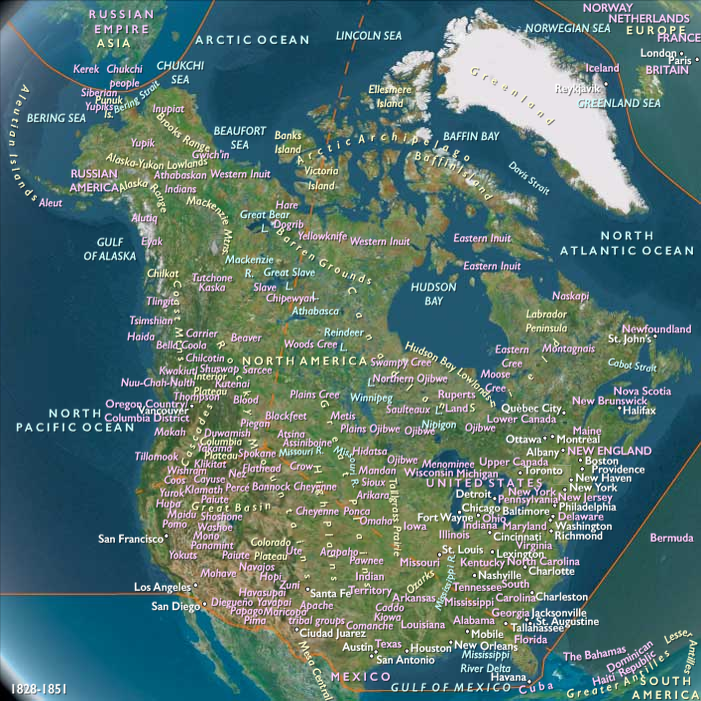
Northern North America
View →Subregions
