
East Central Europe (292–303 CE): Diocletian, the …
Years: 292 - 303
East Central Europe (292–303 CE): Diocletian, the Tetrarchy, and Frontier Renewal
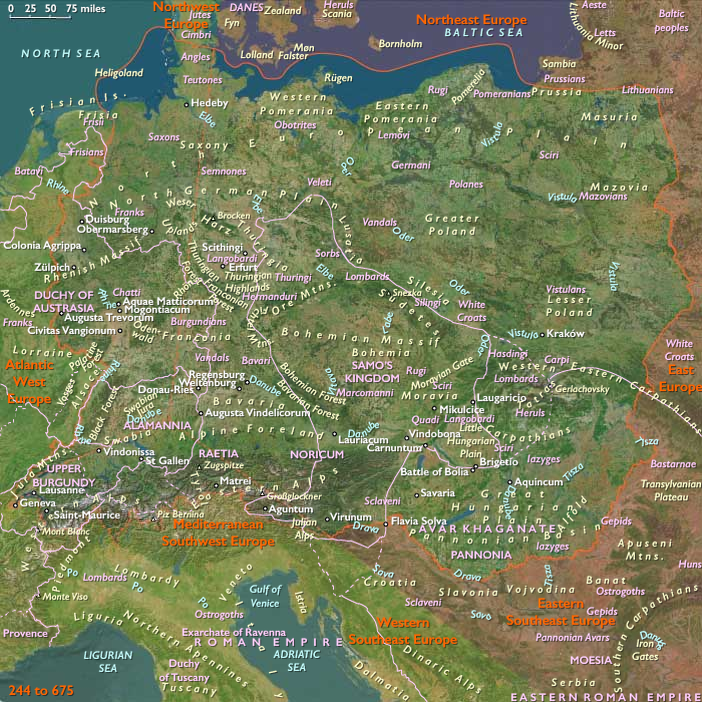
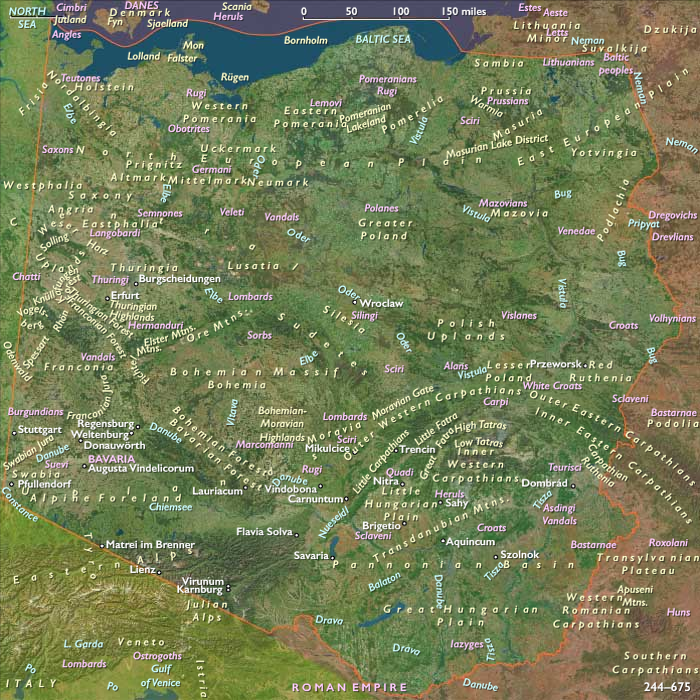
Between 292 and 303 CE, East Central Europe—covering Poland, Czechia, Slovakia, Hungary, and those portions of Germany and Austria lying east of 10°E and north of a line stretching from roughly 48.2°N at 10°E southeastward to the Austro-Slovenian border near 46.7°N, 15.4°E—ntered a significant era of stabilization and recovery under Emperor Diocletian (284–305 CE) and the newly established Tetrarchy system. The Roman provinces of Pannonia Superior, Pannonia Inferior, and Noricum experienced renewed frontier defenses, administrative reforms, and enhanced diplomatic relationships with neighboring tribal groups, significantly strengthening regional security and prosperity.
Political and Military Developments
Diocletian's Reforms and the Tetrarchy
-
Emperor Diocletian's establishment of the Tetrarchy (293 CE)—a four-emperor system—dramatically improved administrative efficiency, military responsiveness, and governance along the Danube frontier.
-
Roman military presence intensified, fortifications were systematically rebuilt or expanded, and strategic military reforms greatly improved frontier security against incursions.
Administrative Reorganization of Pannonia (296 CE)
-
In 296 CE, as part of Diocletian’s comprehensive provincial reorganization, the two previous Roman provinces of Pannonia were divided into four smaller and more manageable provinces: Pannonia Prima, Pannonia Secunda, Pannonia Savia, and Pannonia Valeria. This administrative restructuring significantly enhanced local governance, allowed more effective frontier defenses, and improved responsiveness to military and diplomatic challenges.
Strengthened Diplomatic Relations
-
Diplomatic engagements with major tribal confederations—particularly the Marcomanni, Quadi, and Iazyges—remained stable and productive under clear and effective Roman provincial management.
-
Improved diplomatic management limited incursions by the Goths and Vandals, stabilizing the region and facilitating peaceful coexistence.
Economic and Technological Developments
Economic Stability and Regional Prosperity
-
The strengthened Roman administration and security facilitated thriving cross-border commerce. Trade routes became safer and more reliable, increasing economic prosperity in frontier settlements and adjacent tribal territories.
Frontier Infrastructure Revitalization
-
Significant investments were made in roads, fortresses, bridges, and settlements, reflecting the Tetrarchy's emphasis on frontier security and economic stability. Infrastructure improvements supported commerce and military logistics.
Cultural and Artistic Developments
Cultural Renewal and Integration
-
Renewed stability encouraged vibrant cultural interactions between Roman frontier communities and neighboring tribal groups. Artistic production—ceramics, jewelry, metalwork—flourished, reflecting creative synthesis of Roman and Germanic artistic traditions.
Artistic Innovation and Flourishing
-
Stability enabled artisans to produce increasingly sophisticated and decorative objects, blending Roman craftsmanship with tribal aesthetics, creating unique cultural expressions along the frontier.
Settlement and Urban Development
Urban Expansion and Fortification
-
Frontier towns—such as Carnuntum, Vindobona, and Aquincum—experienced significant growth, fortified infrastructure expansion, and vibrant commercial revival, emerging as critical centers for trade, administration, and military logistics.
Tribal Settlement Stabilization
-
Neighboring tribal settlements consolidated their territorial and economic positions, benefiting from stable trade relations and improved diplomatic ties with Roman authorities.
Social and Religious Developments
Tribal Leadership Stability
-
Germanic and Sarmatian societies maintained stable leadership structures, increasingly focused on diplomacy, economic growth, and peaceful coexistence alongside strengthened Roman provinces.
Religious and Cultural Continuity
-
Tribal religious practices and cultural traditions continued strongly, emphasizing community cohesion, prosperity, and peaceful relationships, reflecting the relative stability of this period.
Long-Term Consequences and Historical Significance
The era 292–303 CE represented a pivotal period of frontier renewal and stabilization in East Central Europe. Diocletian’s Tetrarchic reforms, including the essential administrative restructuring of Pannonia, significantly improved Roman administrative and military effectiveness, ensuring regional stability and economic prosperity. Strengthened diplomatic relationships and revitalized cultural interactions set the foundations for sustainable regional security, influencing the subsequent historical trajectory of East Central Europe well into the fourth century.
People
Groups
- Iazyges, or Iazygians
- Vandals (East Germanic tribe)
- Marcomanni (Germanic tribe)
- Quadi (Germanic tribe)
- Goths (East Germanic tribe)
- Germans
- Noricum (Roman province)
- Pannonia Inferior (Roman province)
- Pannonia Superior (Roman province)
- Roman Empire: Tetrarchy
- Pannonia Savia (Roman province)
- Pannonia Secunda (Roman province)
- Pannonia Prima (Roman province)
- Pannonia Valeria (Roman province)
Topics
Commodoties
Subjects
Regions
Subregions
Years: 292 - 303
People
Groups
- Iazyges, or Iazygians
- Vandals (East Germanic tribe)
- Marcomanni (Germanic tribe)
- Quadi (Germanic tribe)
- Goths (East Germanic tribe)
- Germans
- Noricum (Roman province)
- Pannonia Inferior (Roman province)
- Pannonia Superior (Roman province)
- Roman Empire: Tetrarchy
- Pannonia Savia (Roman province)
- Pannonia Secunda (Roman province)
- Pannonia Prima (Roman province)
- Pannonia Valeria (Roman province)
Topics
Commodoties
Subjects
Regions
Subregions