
East Central Europe (316–327 CE): Tribal Migrations, …
Years: 316 - 327
East Central Europe (316–327 CE): Tribal Migrations, Gothic Pressure, and Roman Frontier Adaptation
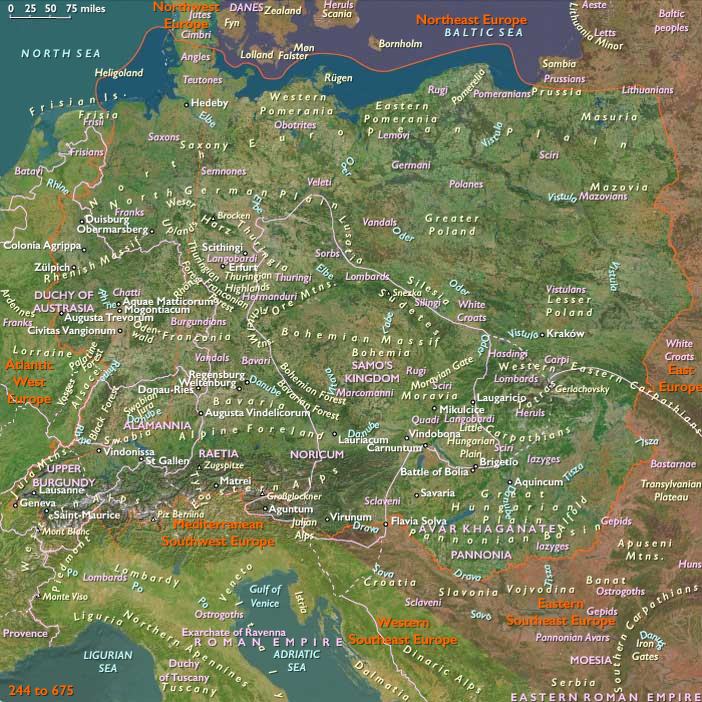
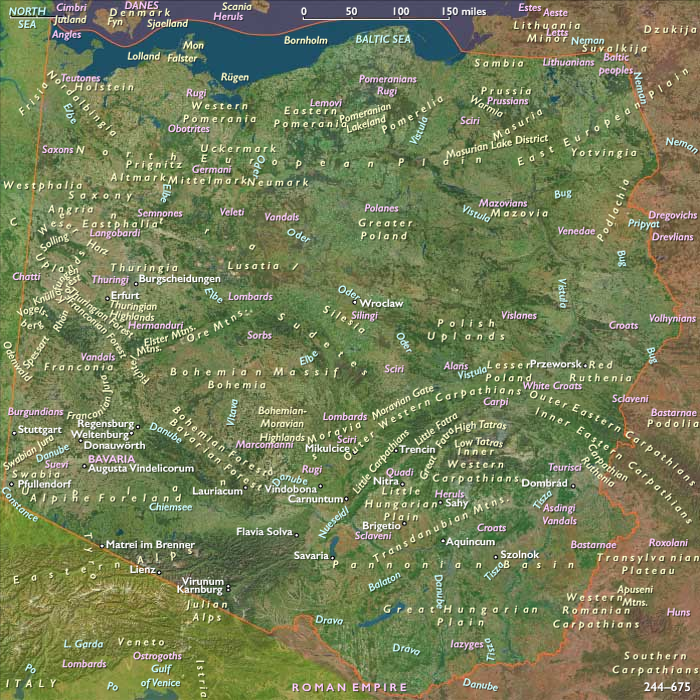
Between 316 and 327 CE, East Central Europe—including Poland, Czechia, Slovakia, Hungary, and those portions of Germany and Austria lying east of 10°E and north of a line stretching from roughly 48.2°N at 10°E southeastward to the Austro-Slovenian border near 46.7°N, 15.4°E—witnessed significant shifts due to new tribal movements and regional transformations. Most notably, substantial numbers of the Rugii, migrating south from their original homeland in Pomerania, settled near the upper Tisza River in Roman Pannonia, significantly altering frontier dynamics. Simultaneously, expanding Gothic dominance in Eastern Europe influenced many proto-Slavic peoples, who mostly remained in their ancestral territories, adjusting to new power structures, while a smaller contingent migrated northward, integrating with Finnic-speaking populations in northern forests.
Political and Military Developments
Migration of the Rugii into Roman Pannonia
-
Around this era, the Rugii, originally based along the Baltic coast (Pomerania), migrated southward and established settlements along the upper Tisza River in Roman-controlled Pannonia (modern northeastern Hungary).
-
This significant tribal movement intensified frontier diplomacy, prompting Roman provincial authorities to adapt rapidly, incorporating new diplomatic relationships and defensive strategies into their management of the Danube frontier.
Continued Gothic Expansion and Proto-Slavic Adaptation
-
Gothic influence remained strong across Eastern Europe, particularly affecting the region’s proto-Slavic populations. Although largely subdued by Gothic authority, these proto-Slavic communities predominantly stayed in place, continuing their agricultural way of life while adapting culturally to Gothic hegemony.
-
A smaller portion of proto-Slavic peoples, however, fled northward into the forests and wetlands of northern and northeastern Europe, merging culturally and economically with local Finnic-speaking populations.
Economic and Technological Developments
Continued Frontier Economic Stability
-
Despite shifts in tribal settlement patterns, frontier economic conditions remained relatively stable. Rugian integration near the Tisza enhanced cross-border trade with Roman settlements, further stabilizing economic interactions.
Infrastructure and Technological Continuity
-
Roman infrastructure and technological improvements continued modestly, adapting fortifications and settlements to accommodate changing frontier conditions and the new Rugian presence.
Cultural and Artistic Developments
Increased Cultural Integration with Rugii
-
The Rugian settlement in Pannonia spurred cultural exchanges, creating distinctive hybrid styles in pottery, metalwork, and jewelry, integrating Rugian Germanic traditions with Roman provincial influences.
Proto-Slavic Cultural Resilience
-
Proto-Slavic communities, remaining primarily in their traditional lands, preserved cultural traditions despite Gothic influence. Those who migrated northward integrated with Finnic populations, creating distinctive cultural blends.
Settlement and Urban Development
Adaptation of Frontier Towns
-
Roman frontier settlements (Carnuntum, Vindobona, Aquincum) continued development and fortification enhancements, adapting to new regional dynamics and incorporating interactions with newly arrived Rugian groups.
Consolidation of Rugian Settlements
-
The Rugii established stable, fortified communities along the upper Tisza region, influencing local settlement patterns and demographics, and contributing to a new stability in their adopted area.
Social and Religious Developments
Integration of Rugii into Local Hierarchies
-
Rugian tribal structures adjusted to their new settlements, maintaining strong warrior leadership while developing diplomatic and economic ties with Roman authorities and neighboring tribes.
Proto-Slavic Religious and Social Continuity
-
Proto-Slavic communities maintained their traditional religious practices, reflecting cultural resilience despite Gothic dominance. Northern migrants, integrating with Finnic groups, adapted culturally, blending Slavic traditions with northern European influences.
Long-Term Consequences and Historical Significance
The era 316–327 CE significantly reshaped East Central Europe's cultural and geopolitical landscape. The Rugian migration into Roman Pannonia altered frontier diplomacy and local demographics, highlighting the region’s fluid tribal interactions. Meanwhile, the persistence and adaptation of proto-Slavic populations, combined with Gothic influence, established enduring patterns of cultural diversity and resilience. These movements and adjustments laid important foundations for future historical developments, influencing regional dynamics and shaping ethnic and cultural identities across East Central Europe for centuries.
People
Groups
- Polytheism (“paganism”)
- Slavs, Proto-
- Finns
- Iazyges, or Iazygians
- Vandals (East Germanic tribe)
- Marcomanni (Germanic tribe)
- Rugii (East Germanic tribe )
- Germans
- Quadi (Germanic tribe)
- Goths (East Germanic tribe)
- Christians, Early
- Noricum (Roman province)
- Roman Empire: Tetrarchy
- Pannonia Savia (Roman province)
- Pannonia Prima (Roman province)
- Pannonia Secunda (Roman province)
- Pannonia Valeria (Roman province)
- Roman Empire: Constantinian dynasty (Nicomedia)
Topics
Commodoties
Subjects
Regions
Subregions
Years: 316 - 327
People
Groups
- Polytheism (“paganism”)
- Slavs, Proto-
- Finns
- Iazyges, or Iazygians
- Vandals (East Germanic tribe)
- Marcomanni (Germanic tribe)
- Rugii (East Germanic tribe )
- Germans
- Quadi (Germanic tribe)
- Goths (East Germanic tribe)
- Christians, Early
- Noricum (Roman province)
- Roman Empire: Tetrarchy
- Pannonia Savia (Roman province)
- Pannonia Prima (Roman province)
- Pannonia Secunda (Roman province)
- Pannonia Valeria (Roman province)
- Roman Empire: Constantinian dynasty (Nicomedia)
Topics
Commodoties
Subjects
Regions
Subregions