
East Central Europe (532–543 CE): Gepid-Lombard Rivalry, …
Years: 532 - 543
East Central Europe (532–543 CE): Gepid-Lombard Rivalry, Byzantine Diplomacy, and Early Slavic Differentiation
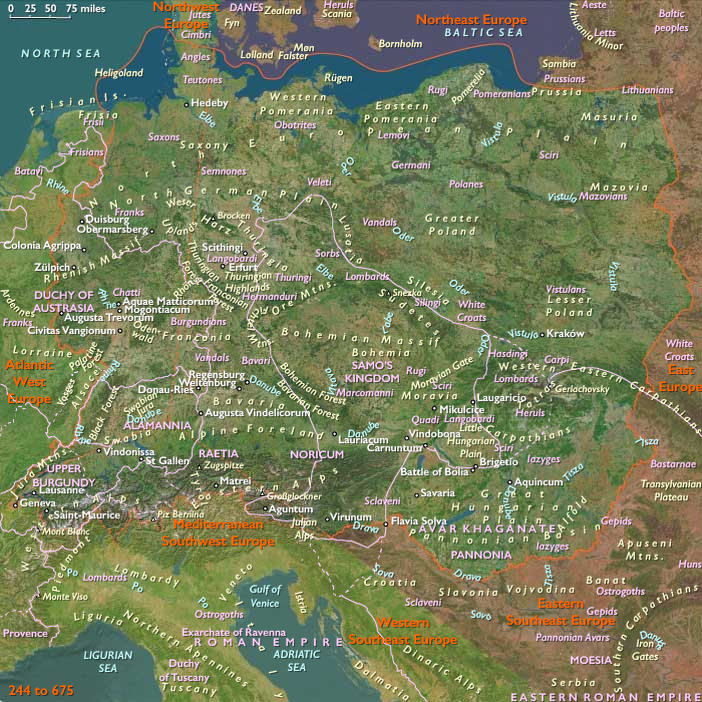
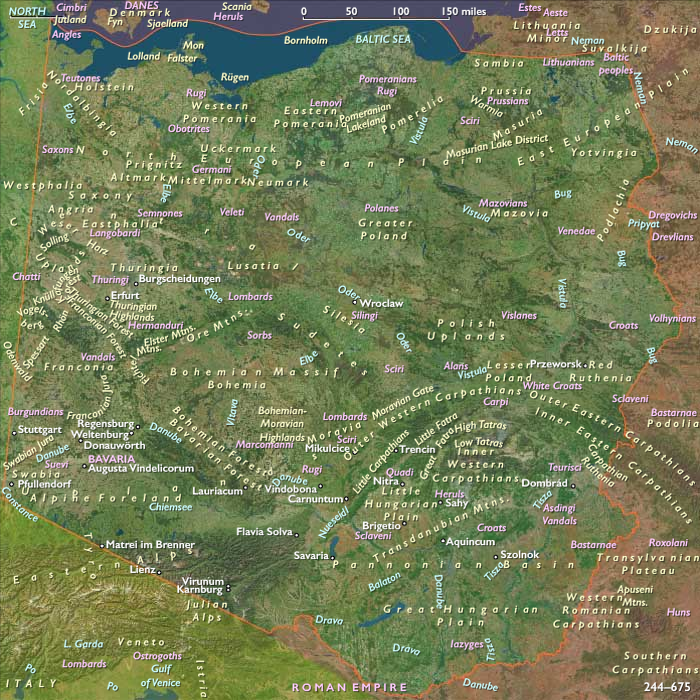
Between 532 and 543 CE, East Central Europe—encompassing Poland, Czechia, Slovakia, Hungary, and those portions of Germany and Austria lying east of 10°E and north of a line stretching from roughly 48.2°N at 10°E southeastward to the Austro-Slovenian border near 46.7°N, 15.4°E—experienced intensified rivalry and periodic conflicts between the dominant Gepids and assertive Lombards. The period was further marked by active diplomatic engagement from the Byzantine Empire, aiming to manipulate regional powers to their advantage. Simultaneously, this era marked a critical juncture in Slavic history, as earlier unified proto-Slavicpopulations clearly differentiated into recognizable groups: primarily the Sclaveni and the Antes. Additional Slavic and related populations—including the Wends, Sorbs, Obotrites, Veleti, Pomeranians, Polanes, Vislanes, White Croats, Venedae, Lemovi, Carpi, and the Germanic Sciri—emerged into historical clarity, significantly shaping regional demographics and cultural identities.
Political and Military Developments
Escalating Gepid-Lombard Rivalry
-
Ongoing tensions and periodic warfare between Gepids and Lombards shaped regional alliances, particularly impacting modern Hungary, Slovakia, Czechia, and eastern Austria, influencing broader geopolitical alignments.
Byzantine Diplomatic Influence
-
The Byzantine Empire actively engaged in regional diplomacy, supporting or negotiating alliances alternately with the Gepids and Lombards to maintain a favorable balance of power north of the Danube frontier.
Emergence of Distinct Slavic Groups
-
By approximately 540 CE, proto-Slavic communities were distinctly recognized by Byzantine chroniclers as two major groups:
-
Sclaveni (Sklavenoi): primarily located in modern Poland, Czechia, Slovakia, and the Balkans.
-
Antes: primarily eastward in modern Ukraine and Moldova.
-
-
Within this broader Slavic differentiation, several more specifically identifiable Slavic tribal identities also emerged clearly during this period:
-
The broadly named Wends, a collective term for West Slavic peoples in central Europe, began to consolidate into distinct groups, notably the Sorbs, Obotrites, Veleti, and Pomeranians. These West Slavic communities settled primarily in areas corresponding to modern eastern Germany (Mecklenburg, Brandenburg), northern Poland, and regions along the Elbe River.
-
In modern central Poland, distinct West Slavic tribes such as the Polanes and Vislanes emerged, forming early stable political and cultural communities crucial to later Polish state formation.
-
The White Croats, settled primarily along the Carpathian foothills (modern southern Poland, western Ukraine, and Slovakia), gained historical prominence. Later in the 6th and 7th centuries, they migrated southward into the Balkans, becoming instrumental ancestors of the South Slavic Croats.
-
The earlier-identified Venedae (Veneti) and Lemovi transitioned from broader Proto-Slavic identities into West Slavic tribal groups, ultimately absorbed into emergent communities such as Sorbs, Polanes, and Vislanes.
-
The Carpi, a transitional Proto-Slavic or possibly Dacian group from earlier centuries, had largely assimilated into expanding Slavic populations, losing distinct historical presence by this period.
-
The Sciri, clearly identified as Germanic migrants from Eastern Europe, continued their migration southward. Although not Slavic themselves, their interactions and settlements alongside Slavic populations had notable cultural impacts before their eventual assimilation into other Germanic groups.
-
Economic and Technological Developments
Regional Stability Amid Tensions
-
Despite military competition, stable Gepid and Lombard governance allowed for consistent agricultural production, animal husbandry, and robust localized trade networks.
Infrastructure Maintenance
-
Roads, fortified settlements, and communications infrastructure continued to be maintained, facilitating secure trade, mobility, and military logistics.
Cultural and Artistic Developments
Cultural Exchange between Germanic, Slavic, and Byzantine Worlds
-
Material culture—including jewelry, pottery, and weaponry—reflected increased interactions, displaying blended Gepid, Lombard, early Slavic, and subtle Byzantine stylistic influences.
Clearer Slavic Cultural Identities
-
Distinctive cultural identities emerged among groups like Sclaveni, Antes, Polanes, White Croats, and Sorbs, evident through settlement patterns, pottery styles, and communal traditions.
Settlement and Urban Development
Stability of Key Regional Centers
-
Important regional settlements—Augusta Vindelicorum (Augsburg), Vindobona, Carnuntum, and Aquincum—remained crucial economic, military, and administrative hubs, benefiting from stable governance under Gepid and Lombard control.
Consolidation of Slavic Settlement Patterns
-
Clearly identifiable Slavic settlement patterns formed in areas like modern Poland, Czechia, Slovakia, and Ukraine, setting foundations for future Slavic states and cultures.
Social and Religious Developments
Hierarchical Social Structures
-
Gepid and Lombard societies maintained robust hierarchical structures built around warrior elites, traditional rituals, and internal community cohesion.
Slavic Social Differentiation
-
Slavic communities—such as Polanes, Sorbs, and White Croats—began exhibiting clearer social differentiation and stronger regional identities, laying foundations for later political entities.
Long-Term Consequences and Historical Significance
The era 532–543 CE represented a pivotal moment in East Central Europe’s historical development. Intensified rivalry between Gepids and Lombards, complicated by Byzantine diplomatic influence, reshaped regional politics. The explicit emergence of historically distinct Slavic groups—including Sclaveni, Antes, Polanes, Vislanes, Sorbs, Obotrites, Veleti, Pomeranians, and White Croats—marked a crucial transition from earlier Proto-Slavic identities. These developments significantly impacted future regional dynamics, as Slavic differentiation laid the groundwork for the emergence of medieval Slavic states and identities, profoundly influencing East Central Europe’s historical trajectory.
Groups
- Polytheism (“paganism”)
- Slavs, Proto-
- Lombards (West Germanic tribe)
- Gepids (East Germanic tribe)
- Goths (East Germanic tribe)
- Germans
- Ostrogoths, Realms of the
- Christianity, Chalcedonian
- Gepids, Kingdom of the
- Francia (Merovingians)
- Antes (Slavic tribal confederation)
- Sclaveni (Slavic tribal confederation)
- Roman Empire, Eastern: Justinian dynasty
Topics
Commodoties
Subjects
Regions
Subregions
Years: 532 - 543
Groups
- Polytheism (“paganism”)
- Slavs, Proto-
- Lombards (West Germanic tribe)
- Gepids (East Germanic tribe)
- Goths (East Germanic tribe)
- Germans
- Ostrogoths, Realms of the
- Christianity, Chalcedonian
- Gepids, Kingdom of the
- Francia (Merovingians)
- Antes (Slavic tribal confederation)
- Sclaveni (Slavic tribal confederation)
- Roman Empire, Eastern: Justinian dynasty
Topics
Commodoties
Subjects
Regions
Subregions