
Eastern Southeast Europe (784–795 CE): Religious Restoration, …
Years: 784 - 795
Eastern Southeast Europe (784–795 CE): Religious Restoration, Regional Stability, and Administrative Reorganization
Settlement and Migration Patterns
Stabilization and Territorial Consolidation
From 784 to 795 CE, Eastern Southeast Europe continued to solidify as a stable entity despite past territorial contractions from Slavic and Islamic incursions. The Byzantine state was now grounded firmly in the Balkans and Asia Minor, securing regional cohesion.
Political and Military Developments
Territorial Stability and Defense
The Byzantine state maintained its territorial integrity, anchored in the Balkans and Asia Minor despite previous losses from Slavic migrations and Islamic conquests. Continued investment in military infrastructure reinforced territorial defense and ensured sustained imperial security.
Administrative Reorganization: Formation of Thrace and Macedonia Themes
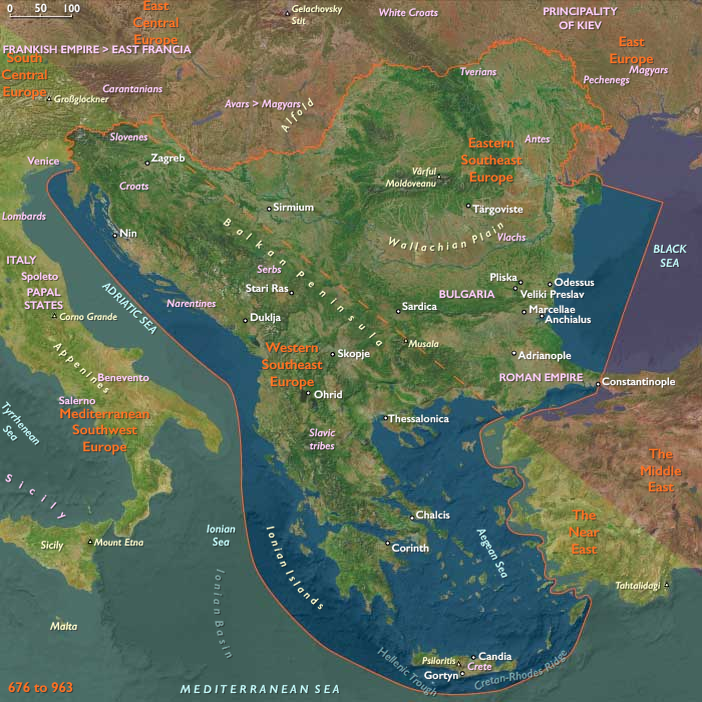
In response to the persistent instability resulting from Slavic incursions, the Byzantine Empire initially established the theme of Thrace in the late 7th century within the hinterlands of Thessaloniki. However, due to ongoing challenges, the Empire withdrew its defensive lines southward along the Aegean coast. Consequently, between 789 (or 797) and 801/802 CE, Empress Irene of Athens created the new theme of Macedonia from the older Thrace theme. Byzantine Macedonia primarily encompassed modern Southern Thrace, with Adrianople as its administrative center.
Economic and Technological Developments
Economic Stability and Growth
Ongoing peace and political stability facilitated continued economic prosperity, enhancing agricultural productivity and securing trade routes vital for regional economic resilience.
Continued Military and Defensive Innovations
Strategic defense initiatives and infrastructure investments, particularly in frontier areas, supported regional security and preparedness against external threats, contributing significantly to imperial stability.
Cultural and Artistic Developments
Flourishing Cultural Expression
Cultural and artistic activities thrived during this period, supported by sustained peace and stability. Investment in religious and cultural institutions continued to enrich regional artistic expression and identity.
Scholarly Continuity
Intellectual and educational institutions actively preserved and advanced classical and theological knowledge, ensuring cultural continuity and resilience.
Social and Religious Developments
Restoration of Religious Iconography
The Seventh Ecumenical Council, convened at the urging of Empress Irene and supported by Pope Adrian and Patriarch Nikephoros, ended the Eastern Church's official policy of Iconoclasm. The council clarified the veneration of images, distinguishing it from the worship reserved for God alone, declaring this practice legitimate and affirming the intercession of saints. This restoration had profound implications for Byzantine religious practice and cultural identity.
Strengthening of Eastern Orthodox Identity
The restoration of religious imagery significantly bolstered the influence and social cohesion fostered by Eastern Orthodox Christianity, reinforcing its central societal role and communal identity.
Long-Term Consequences and Historical Significance
The period from 784 to 795 CE was marked by significant religious restoration, territorial stability, and administrative reorganization. The establishment of the Macedonia theme, combined with the decisions of the Seventh Ecumenical Council, fundamentally shaped Byzantine religious practice and regional identity, leaving enduring legacies for Eastern Orthodox Christianity and influencing the subsequent historical trajectory of Eastern Southeast Europe.
People
Groups
- Thrace, Theme of
- Macedonia, (East) Roman
- Slavs, South
- Christianity, Chalcedonian
- Roman Empire, Eastern: Isaurian dynasty
- Macedonia, East Roman Theme of
Topics
- Migration Period
- Migration Period Pessimum
- Arab-Byzantine Wars
- Iconoclastic period, first
- Akroinon, Battle of
Commodoties
Subjects
Regions
Subregions

Years: 784 - 795
People
Groups
- Thrace, Theme of
- Macedonia, (East) Roman
- Slavs, South
- Christianity, Chalcedonian
- Roman Empire, Eastern: Isaurian dynasty
- Macedonia, East Roman Theme of
Topics
- Migration Period
- Migration Period Pessimum
- Arab-Byzantine Wars
- Iconoclastic period, first
- Akroinon, Battle of
Commodoties
Subjects
Regions
Subregions