
Eastern Southeast Europe (808–819 CE): Bulgarian Expansion …
Years: 808 - 819
Eastern Southeast Europe (808–819 CE): Bulgarian Expansion and Byzantine Decline
Settlement and Migration Patterns
Bulgarian Territorial Expansion
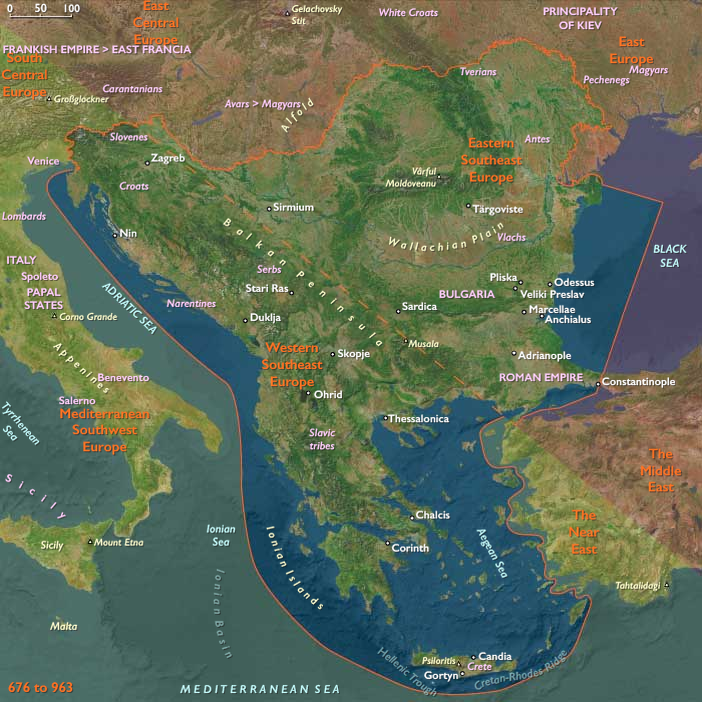
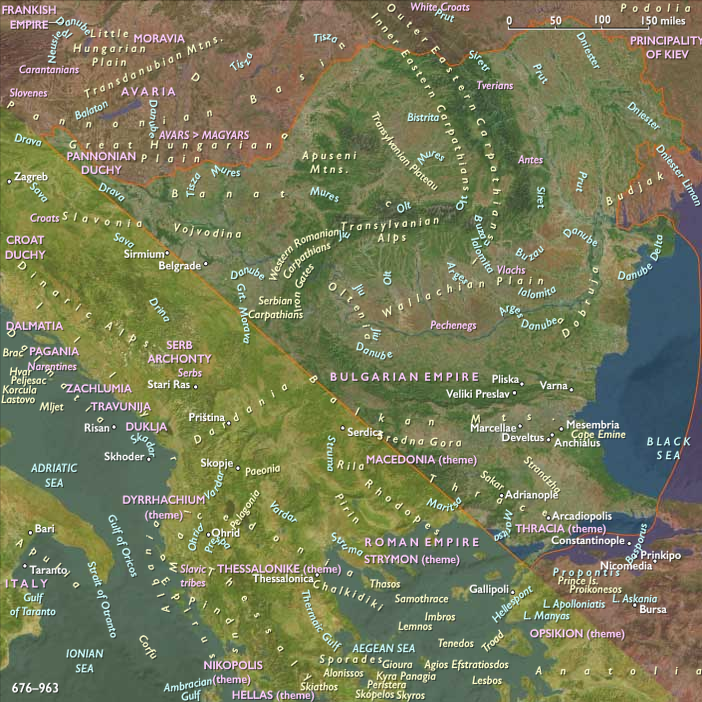
From 808 to 819 CE, Eastern Southeast Europe underwent significant demographic and geopolitical shifts driven by the aggressive territorial expansion of the Bulgarian Empire. This expansion eastward to the Black Sea, southward to encompass Macedonia, and northwestward reaching present-day Belgrade, markedly altered regional dynamics and settlement patterns.
Political and Military Developments
Decline of Byzantine Influence
The Bulgarian Empire’s expansion severely undermined Constantinople’s control over the southern Balkans. This period marked a noticeable disintegration of Byzantine authority, leading to the establishment of a stronger Bulgarian presence in territories once firmly under imperial influence.
Bulgarian Dominance
Under strong leadership, Bulgaria significantly extended its influence, solidifying its position as a formidable regional power. This territorial growth diminished Byzantine strategic capabilities and shifted the geopolitical balance in the region.
Economic and Technological Developments
Economic Reorientation
The expansion of the Bulgarian state reshaped regional economic networks, redirecting trade and commerce routes. The diminished Byzantine presence necessitated economic adjustments as communities adapted to new political realities.
Fortifications and Defense
Both the Bulgarian and Byzantine states continued investing in military fortifications to secure newly acquired territories and defend remaining imperial areas. These efforts reflected heightened regional competition and strategic tensions.
Cultural and Artistic Developments
Cultural Adaptation
The shifting political landscape led to significant cultural exchanges between Byzantine and Bulgarian traditions. Artistic and cultural expressions adapted to reflect the changing influences and power structures within the region.
Scholarly and Intellectual Continuity
Despite geopolitical upheavals, scholarly and educational institutions persevered in preserving classical and theological traditions. The intellectual resilience displayed during this period helped maintain cultural continuity.
Social and Religious Developments
Shifts in Religious Influence
The Bulgarian expansion introduced new social dynamics, influencing religious practices and organizational structures. Eastern Orthodoxy continued its influential role but adapted to the changing political realities and Bulgarian influence.
Community Cohesion and Identity
Communities navigated complex identities shaped by both Byzantine heritage and Bulgarian expansion. These evolving identities highlighted the adaptive social dynamics and resilience of the local populations.
Long-Term Consequences and Historical Significance
The period from 808 to 819 CE was defined by Bulgaria’s expansive territorial growth and the corresponding decline of Byzantine power in the southern Balkans. These developments significantly reshaped Eastern Southeast Europe's geopolitical landscape, setting the stage for enduring regional power dynamics and cultural exchanges.
Groups
- Thrace, Theme of
- Slavs, South
- Christianity, Chalcedonian
- Bulgarian Empire (First)
- Roman Empire, Eastern: Nikephorian dynasty
- Roman Empire, Eastern: Non-dynastic
Topics
Commodoties
Subjects
Regions
Subregions
Years: 808 - 819
Groups
- Thrace, Theme of
- Slavs, South
- Christianity, Chalcedonian
- Bulgarian Empire (First)
- Roman Empire, Eastern: Nikephorian dynasty
- Roman Empire, Eastern: Non-dynastic
Topics
Commodoties
Subjects
Regions
Subregions