
Eastern West Indies (1503–1515 CE): Conquest, Colonization, …
Years: 1504 - 1515
Eastern West Indies (1503–1515 CE): Conquest, Colonization, and Resistance
Early Spanish Colonization and Expansion
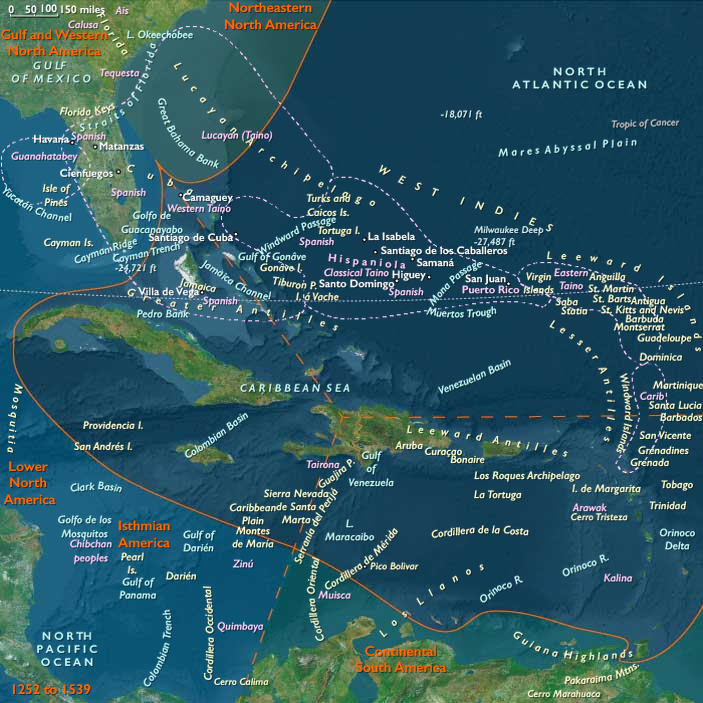
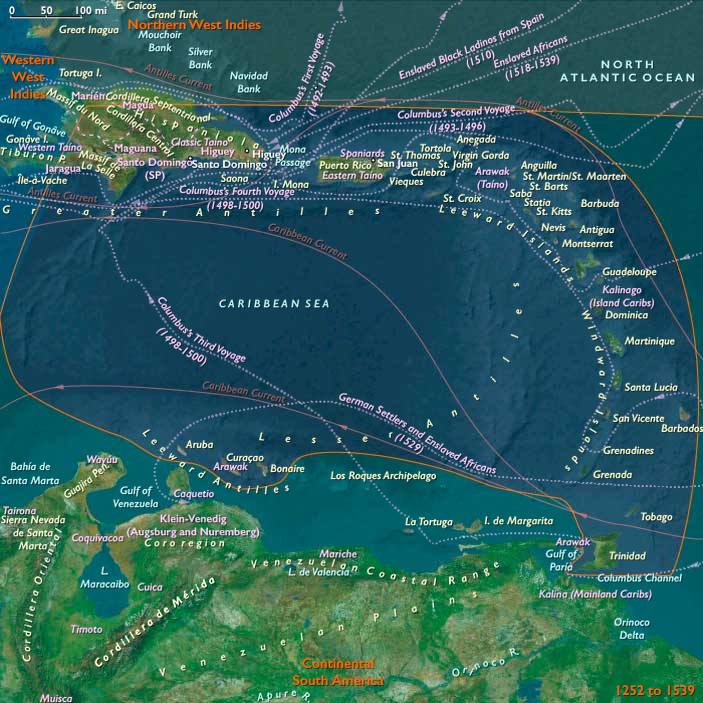
By the early sixteenth century, Spanish explorers rapidly consolidated their hold on the Eastern West Indies, encompassing present-day Haiti, the Dominican Republic, Puerto Rico, and extending explorations toward the mainland territories of Florida, the Yucatán Peninsula, and Honduras. Jamaica was formally colonized in 1509, followed by Trinidad in 1510. These settlements solidified Spain's dominance over the Greater Antilles, although the fiercely resistant Kalinago (Caribs) maintained their stronghold on the Lesser Antilles, successfully repelling European penetration well into subsequent centuries.
Demographic Catastrophe and Forced Labor
The indigenous peoples of the Caribbean, particularly the Taíno and Guanahatabey, experienced catastrophic population declines due to epidemics of smallpox, measles, malaria, and dysentery introduced by Europeans and enslaved Africans. The harsh conditions of Spanish forced labor systems further compounded these losses, reducing thriving native communities to a fraction of their original numbers.
By 1510, the systematic importation of enslaved West Africans began, fundamentally reshaping the Caribbean's demographic and cultural landscape. These early imports set a precedent for the expansive slave trade that would later dominate the region.
Economic Developments: Sugar and Gold
The Spanish, seeking profitable commodities, turned increasingly to sugar production. By around 1515, Spanish monks reportedly offered loans in gold to colonists willing to establish sugar mills, marking the nascent stages of a sugar-based plantation economy. This shift would profoundly impact the region's economic trajectory, laying groundwork for sugar's eventual dominance in Caribbean commerce.
Governance and Administration
Christopher Columbus's son, Diego Columbus, assumed the governorship of Santo Domingo in 1509, ushering in a turbulent period marked by increasing administrative centralization and royal oversight. Diego's ambitious authority alarmed the Spanish crown, prompting the establishment of the audiencia in 1511, a tribunal designed to check gubernatorial power.
Initially composed of three judges, the audiencia's jurisdiction covered the entirety of the West Indies, evolving rapidly into the Royal Audiencia of Santo Domingo (Audiencia Real de Santo Domingo) by 1524. This expanded institution held administrative, legislative, and consultative authority, exerting direct Spanish royal influence across the Caribbean, Central America's Atlantic coast, Mexico, and northern South America.
Key Developments (1503–1515 CE)
-
1509: Formal colonization of Jamaica and the appointment of Diego Columbus as governor of Santo Domingo.
-
1510: Colonization of Trinidad and initiation of systematic importation of enslaved Africans.
-
1511: Establishment of the audiencia in Santo Domingo to oversee colonial governance.
-
Circa 1515: Early encouragement of sugar cultivation through loans offered by Spanish monastic institutions.
Long-Term Implications
This period significantly shaped the Caribbean’s demographic, economic, and political landscape. The introduction of enslaved African labor and the establishment of sugar as a primary economic driver laid the foundations for centuries of plantation agriculture. The profound population loss among indigenous communities drastically altered the region’s cultural fabric, paving the way for a diverse, multicultural society marked by ongoing tensions between colonial interests, indigenous resilience, and African heritage.
People
Groups
- Arawak peoples (Amerind tribe)
- Taíno
- Kalinago (Amerind tribe)
- Castillian people
- Aragon, Crown of
- Castile, Crown of
- Santo Domingo, Captaincy General of
Topics
- Formative Stage (Americas)
- Colonization of the Americas, Portuguese
- Colonization of the Americas, Spanish
Commodoties
Subjects
- Commerce
- Sculpture
- Labor and Service
- Decorative arts
- Games and Sports
- Faith
- Government
- Custom and Law
Regions
Subregions
Related Events
Showing 1 events out of 1 total
Years: 1504 - 1515
People
Groups
- Arawak peoples (Amerind tribe)
- Taíno
- Kalinago (Amerind tribe)
- Castillian people
- Aragon, Crown of
- Castile, Crown of
- Santo Domingo, Captaincy General of
Topics
- Formative Stage (Americas)
- Colonization of the Americas, Portuguese
- Colonization of the Americas, Spanish
Commodoties
Subjects
- Commerce
- Sculpture
- Labor and Service
- Decorative arts
- Games and Sports
- Faith
- Government
- Custom and Law
Regions
Subregions